By Hamza Faisal
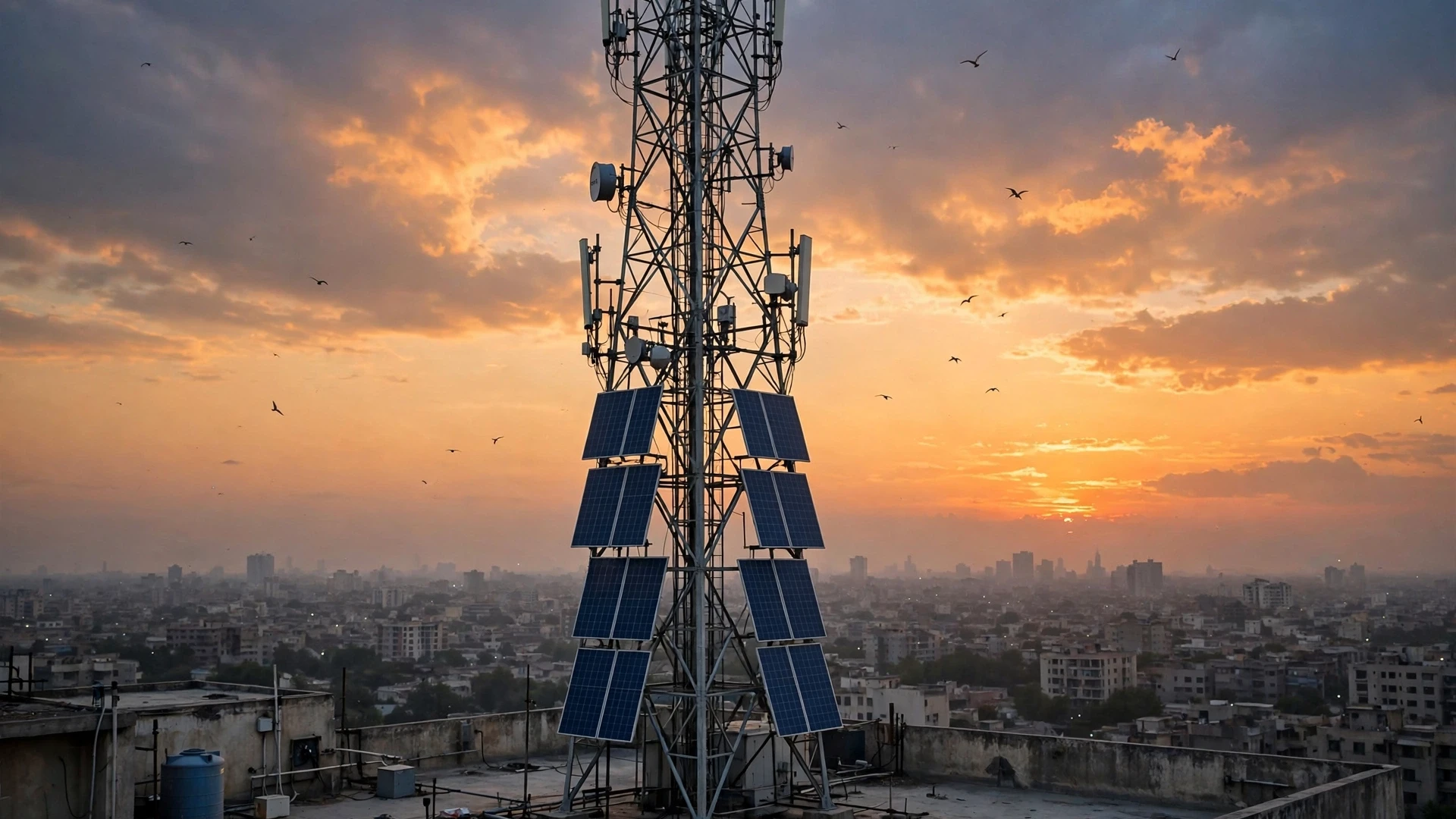
Pakistan's telecom regulator wants the country's mobile towers to run on sunshine. The Pakistan Telecommunication Authority (PTA) has proposed a phased shift of telecom towers to alternative energy — solar power, battery storage and hybrid systems — to cut diesel dependence, survive frequent power outages and keep networks running when the grid fails.
Under the proposal, cellular operators and tower companies would submit time-bound plans to move their Base Transceiver Stations (BTS) onto alternative energy. The framework would be technology-neutral and industry-led, the regulator said, rather than imposing a single conversion target on every site.
The PTA has invited industry feedback by December 7, 2026, as it draws up a roadmap for alternative energy across telecom infrastructure.
High-outage sites first
Operators would first identify the sites hit hardest by power cuts, assess whether solar or hybrid power is technically and commercially viable there, and propose investment plans with one-, two- or three-year timelines.
The regulator has singled out sites suffering outages of 5% or more in a month as high-outage locations, and is asking the industry whether renewable installations should be made mandatory at such sites. It has also asked operators to draw up plans to progressively cut diesel use at their 10% most diesel-hungry BTS sites, setting out current consumption, proposed reductions and timelines.
The proposal comes weeks after the PTA's own inspection drive found power and backup faults across the network. Between October 29 and November 11, its teams inspected 226 mobile sites in 16 cities and areas and found faulty batteries, failing generators and unreliable electricity supplies, taking the running total of sites checked past 1,127.
Keeping the signal on after dark
The PTA was careful to add that going green must not mean going dark. Towers cannot suspend operations during outages, and solar output dips at night, in cloudy weather and in snowfall — so adequate battery backup and other arrangements would remain necessary to keep connectivity uninterrupted.
Operators currently keep towers alive with a mix of grid electricity, batteries and diesel generators, with remote and weak-grid locations facing the greatest difficulty. The regulator also noted that a blanket renewable obligation for every BTS site may not be practical, given the differences between reliable-grid, weak-grid and off-grid locations, investment needs and commercial viability.
Instead, the PTA is considering regulatory facilitation for operators that meet energy-efficiency or renewable benchmarks, plus an annual recognition mechanism for companies showing progress. It also floated shared solar systems, batteries and energy-management infrastructure at sites used by multiple operators, which could cut duplicated investment.
Part of a wider power fight
The proposal lands as the telecom industry presses the government on the cost of power from a different direction. Pakistan's big operators — Jazz, Zong, Ufone, Telenor and PTCL — have jointly asked the prime minister to extend industrial electricity tariffs to telecom infrastructure, saying commercial rates have risen about 197% since 2018 and are threatening some $2 billion of planned investment in 5G, fibre and AI-ready data centres over the next three years.
For the PTA's roadmap, the first steps would be an industry-wide energy baseline, a list of critical outage sites, measures to reduce diesel dependency and monitoring of operators' commitments — before any further regulatory targets are considered. The regulator said it would coordinate with NEPRA, power distribution companies and other agencies to improve electricity reliability for telecom infrastructure, and would collect site-level data on downtime, backup arrangements, grid availability and diesel use, aggregated from union council level up to national level.