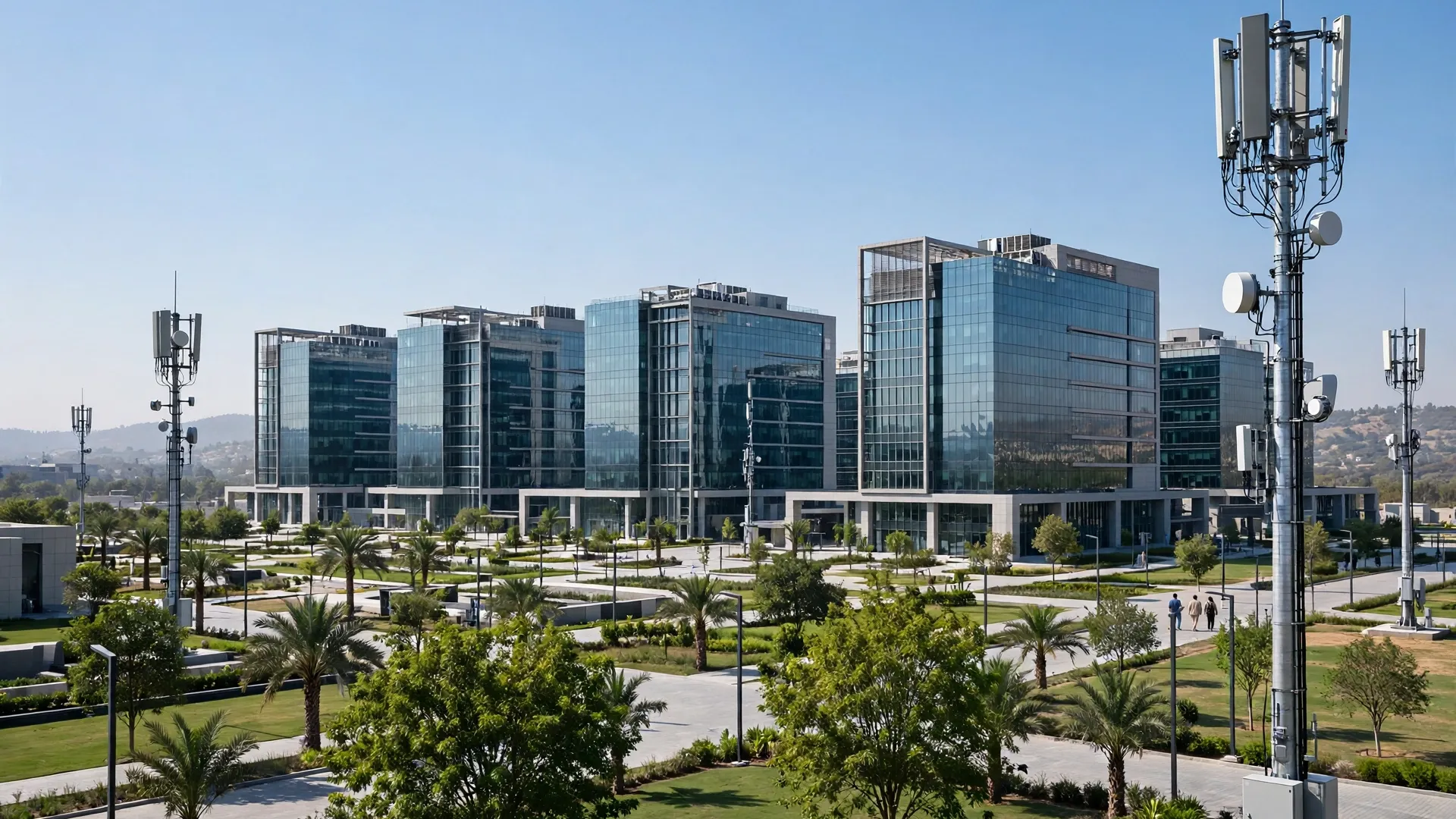
Prime Minister Shehbaz Sharif has ordered an independent, third-party audit of every operational technology park in Pakistan, alongside a full review of the law governing the country's special technology zones.
Chairing a review of the Ministry of Information Technology and Telecommunication in Islamabad on Wednesday, the prime minister directed officials to form a committee to carry out the audit of all parks operating under the Special Technology Zones Authority (STZA). He said the zones must function strictly as hubs for innovation and export growth, and that the law review should stop any misuse of the provisions under which companies are established inside them.
What the audit will cover
The audit will examine all operational IT parks under the STZA, while the law review will look at whether the rules governing how companies set up inside the zones need tightening. No membership, terms of reference or completion date for the audit committee has been published yet, and the meeting was held behind closed doors.
Officials told the meeting that 32 technology zones are being developed across seven clusters nationwide. Of these, 21 are operational and 11 are still under construction. Around 300 technology companies have set up offices inside the zones, bringing in Rs100 billion in realised investment, with proposals worth a further Rs105 billion under consideration.
Exports, 5G and the Alibaba super app
The review also heard that Pakistan's IT exports reached $4.6 billion in the financial year ending June 2026, with a further $1.24 billion recorded in the July–September quarter. Freelance exports stood at $1.165 billion in the last financial year, while more than 931,000 people had completed training under the government's DigiSkills programme by June 2026.
On the telecom side, officials said preparations for 5G services were progressing satisfactorily, with operators having completed network upgrades in 86 cities. The prime minister also called for faster internet speeds and more reliable connectivity across the country, and directed officials to accelerate training programmes to equip young people with skills for the international labour market.
The meeting was also told that Alibaba is developing a government "super app" under the Strategic Transformative Framework, which would bring public services together on a single digital platform and make them more accessible to citizens.
Why it matters
The audit order puts Pakistan's tech-zone experiment under the microscope at a moment when the government is pitching the zones as a central pillar of its export strategy. The zones already host around 300 firms and Rs100 billion of investment, and the government is counting on them to keep IT exports climbing from last year's $4.6 billion.
For the firms already operating inside the zones, the audit could mean new scrutiny of how they qualified for zone status. For investors weighing the Rs105 billion pipeline of proposals, it is a signal that the government wants the zones' books in order before the next wave of money arrives — and that the privileges of operating inside a technology zone will come with closer oversight.