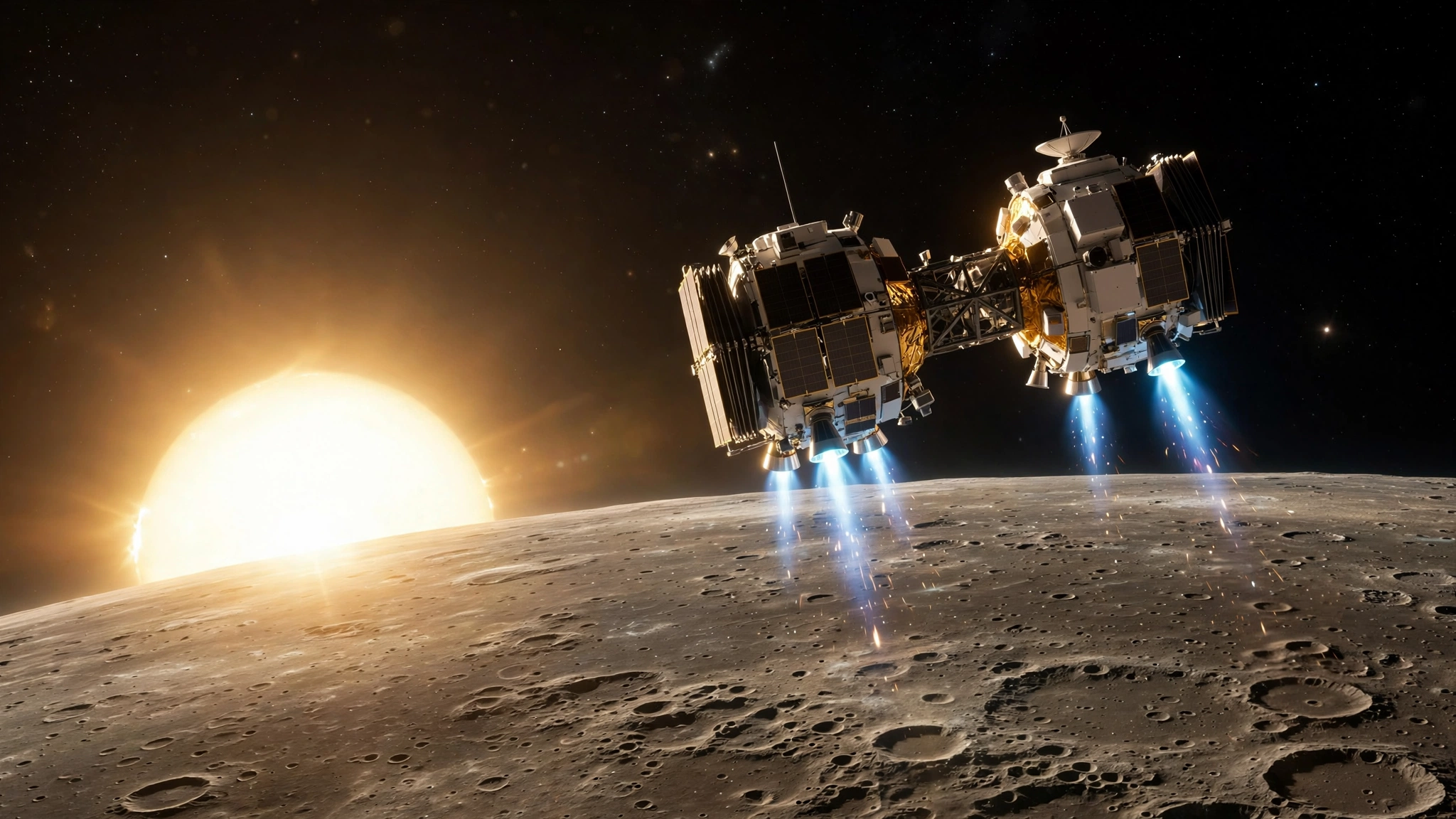
Four years after NASA crashed a spacecraft into the asteroid moonlet Dimorphos, Europe's Hera mission has sent back the first close-up images of the aftermath — and the damage is far more dramatic than expected. The European Space Agency unveiled the pictures on November 25, showing a crater as wide as a sports stadium carved into the small space rock, with hundreds of boulders drifting around the asteroid pair.
Hera reached the Didymos system in November after a journey of just over two years. It launched on October 7, 2024, aboard a SpaceX Falcon 9 rocket, swung past Mars in March 2025 for a gravity boost, and first spotted its target in early October. Reliable thrusters and an aggressive braking plan moved its arrival forward a month, from December to November.
A crater as wide as a stadium
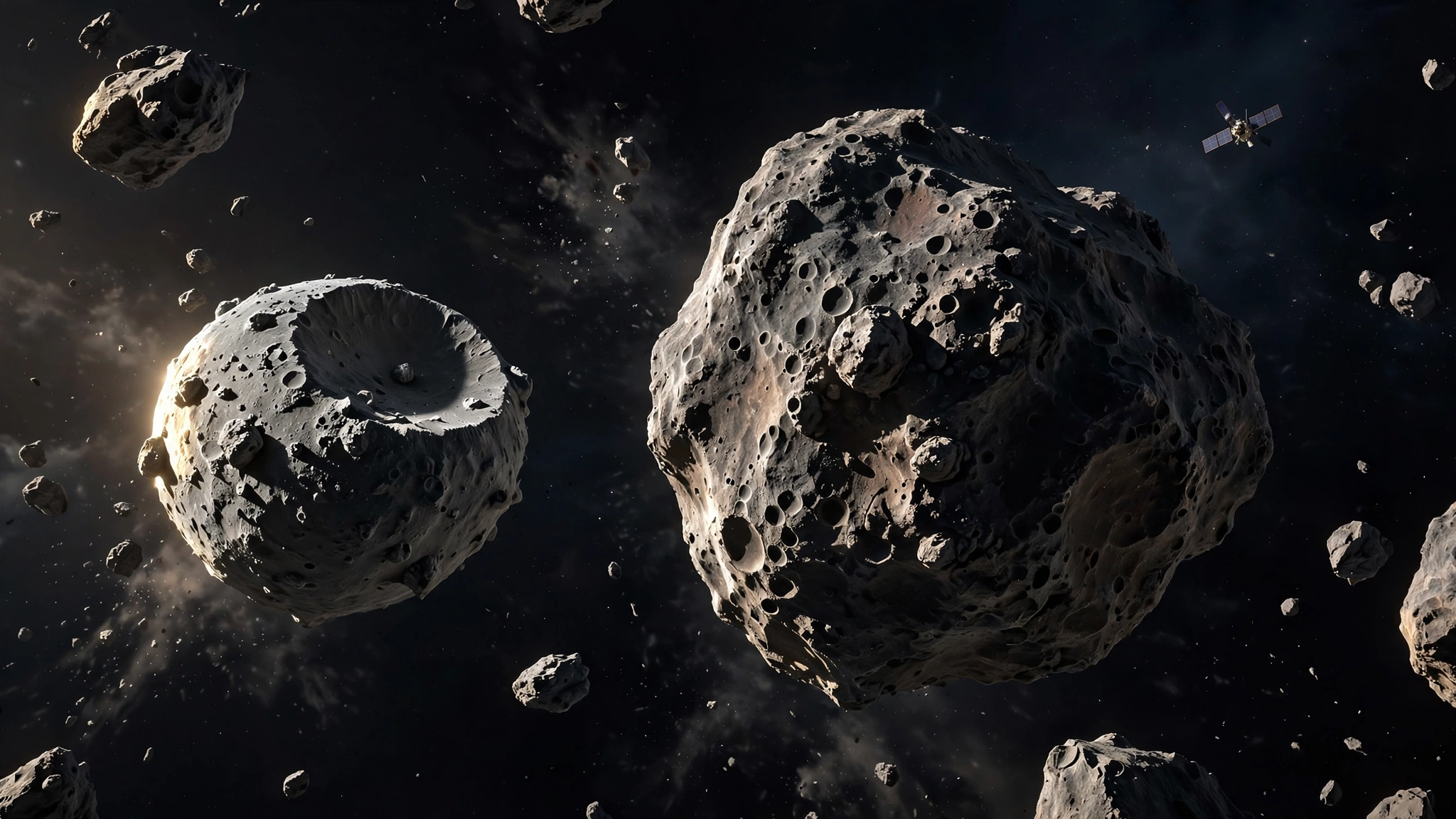
The headline image, taken on November 7 from 29 kilometres away, shows Dimorphos orbiting its larger companion Didymos with the impact crater visible. The strike flattened one side of the 150-metre moonlet, leaving a depression that seems to span the whole face that was hit. Inside the crater, scientists can make out striking structures, including an elongated feature near the centre that the team describes as cigar-shaped.
A comparison image sets a frame from DART's own camera, taken moments before impact, beside a Hera picture from a similar angle: where Dimorphos was once rounded, one side now looks sliced off. "Much to our surprise the answer turns out to be all three at once! The face struck by DART has been flattened into an impact crater the size of a sports stadium, which extends across the asteroid's entire width," said Hera principal investigator Patrick Michel, of France's National Centre for Scientific Research.
DART — NASA's Double Asteroid Redirection Test — slammed into Dimorphos on September 26, 2022, at more than 22,500 kilometres per hour. It tested whether humanity could deflect an asteroid by crashing into it, a technique that could one day protect Earth from a real threat. Dimorphos and the 730-metre Didymos posed no danger themselves, but were similar in size to asteroids that might one day need deflecting.
Hundreds of boulders still drifting
Hera's images also revealed something researchers had not expected: a flotilla of debris still in orbit around the pair. Images from the HyperScout-H camera, taken on November 3 from 32.8 kilometres away, and a composite of 11 long-exposure shots from November 6 show hundreds of boulders, each several metres across, still in motion around the two asteroids — far more debris than anticipated.
Telescopes captured a plume of ejected material stretching like a comet's tail immediately after the 2022 impact, but much of it was expected to have dispersed by now. Instead, Hera is tracking the boulders as they continue to orbit the system, while its instruments map the surface composition of both asteroids in 25 spectral bands.
What happens next
Hera's work is only beginning. The spacecraft, orbiting the pair at around 25 to 30 kilometres, will move closer in December for higher-resolution images. Early next year it will deploy two shoebox-sized CubeSats, Juventas and Milani, to probe Dimorphos's internal structure and mineral composition.
The mission will study both asteroids for six months, building the first complete picture of what a kinetic impact does to an asteroid — how much material it throws off, how the crater forms, and how the moonlet's orbit changed. It is the first mission of ESA's Space Safety Programme, and its findings will shape planetary defence planning if astronomers ever spot a real asteroid on a collision course with Earth.