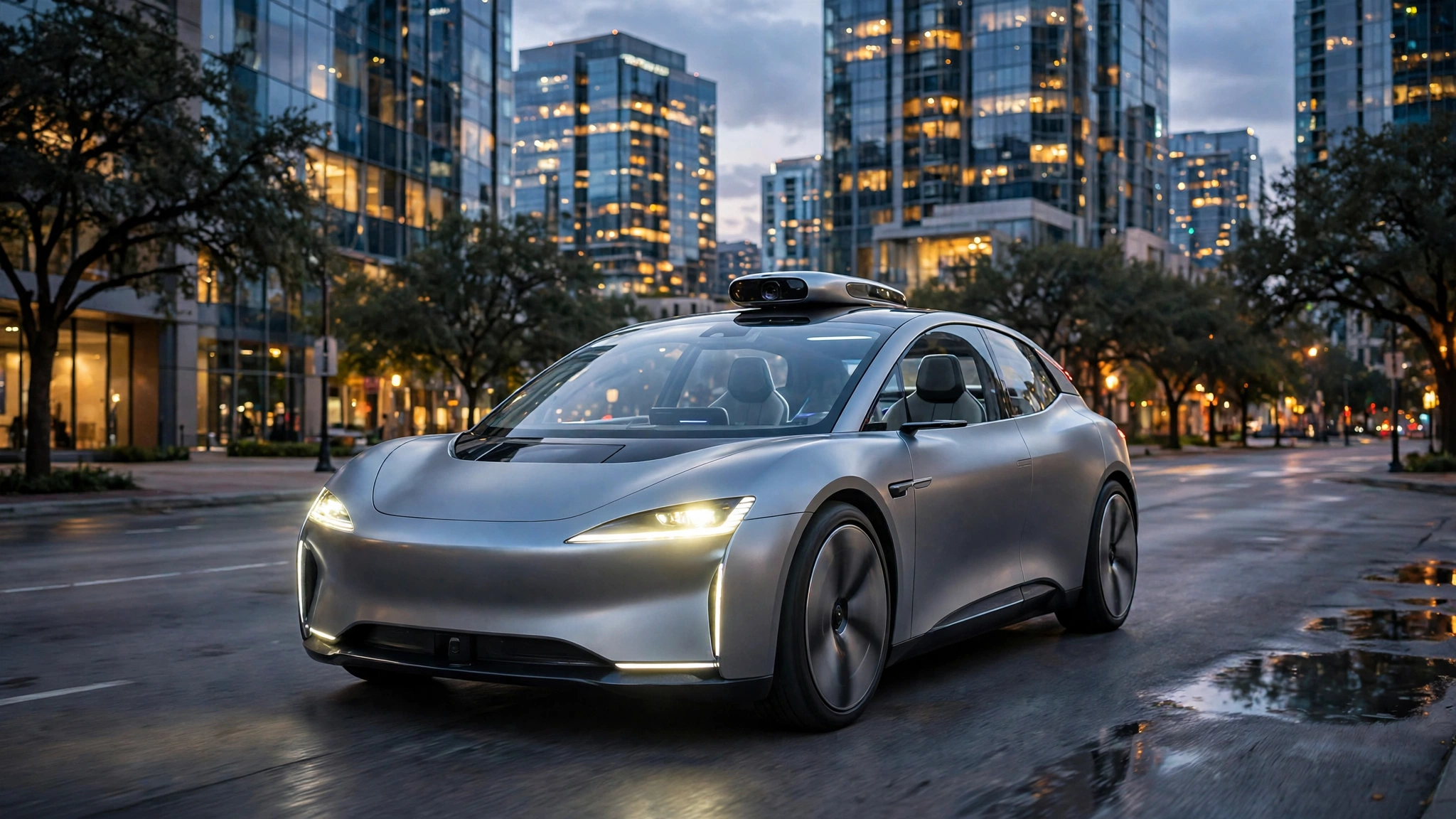
Tesla has started taking orders for its steering-wheel-free Cybercab — but the $29,990 price tag comes with a catch that changes what owning the car actually means. On Friday, November 13, Tesla's Robotaxi account announced on X that select customers are now being invited to purchase the two-seat robotaxi for personal use, with deliveries estimated for December 2026 in Austin, Texas. Elon Musk reposted the announcement.
The order page lists the Cybercab at $29,990 before taxes, with a $1,000 non-refundable deposit to secure one. That makes it the cheapest Tesla ever sold, undercutting the Model 3 by about $7,000 and finally hitting the sub-$30,000 price Musk promised when he unveiled the vehicle in October 2024. But the car will not move without a $299-a-month “Autonomy Subscription” — pre-selected on the order page, with the first month included — and the fine print says the subscription and regular vehicle maintenance are “required to operate” the car.
The subscription is not optional
According to reports from Electrek and Teslarati, which reviewed the order page and the invitation email, the Autonomy Subscription is the key condition of the deal. Without an active paid plan, the Cybercab will not operate at all. The agreements buyers must accept — the Cybercab Order Agreement, the Terms of Use and the Autonomy Subscription Agreement — also limit the car to personal, non-commercial use. Owners cannot put their Cybercab on Tesla's Robotaxi network, rent it out or use it for deliveries without separate written authorisation from the company.
The car is also geographically fenced. It only operates inside Tesla's Robotaxi service areas, which currently cover eight cities: Austin, Dallas, Houston, Fort Worth and San Antonio in Texas, and Miami, Orlando and Tampa in Florida. The invitation email states plainly: “Only available in supported service areas. Subscription required for operation.”
A small first step, not a public launch
There is no public order page. Tesla has not said how it chooses who gets invited, how many invitations it has sent, or when — or whether — orders will open to the general public. The December delivery date is an estimate, not a confirmed day, and Tesla has missed autonomy targets before. On the company's third-quarter earnings call, executives said most Cybercabs would stay in Tesla's own ride-hailing fleet, with some going to customers by the end of the year.
Production of the Cybercab has already begun at Gigafactory Texas, where Tesla plans to wind down Cybertruck production around mid-2027 to make room for it. A US safety review of the vehicle remains open. For now, the first privately owned Cybercabs will be a symbolic milestone: a small group of invited buyers in Austin, paying $29,990 plus $299 a month, for a car with no steering wheel that only drives where Tesla says it can.
What it costs to own one
The arithmetic is straightforward. The purchase price is $29,990 before taxes, the deposit is $1,000 and non-refundable, and the subscription adds $3,588 a year after the included first month. Over three years, that subscription alone costs more than $10,000 — roughly a third of the car's sticker price. Tesla is betting that buyers will accept a car they never fully control in exchange for the cheapest entry point into its lineup. Whether enough invited customers agree will be the first real test of the Cybercab as a product, not just a promise.