LG Electronics is moving to put safety certification at the centre of the humanoid robot race, signing a deal with South Korea's national robot institute to build testing standards for walking, talking machines before its own bipedal robot makes its debut early next year.
The South Korean electronics maker said on Monday that it had signed a memorandum of understanding with the Korea Institute for Robot Industry Advancement, known as KIRIA, to develop safety, reliability and usability assessment systems for humanoid robots. The agreement was signed on November 13 at LG Twin Towers in Seoul's Yeongdeungpo district, with KIRIA president Cho Young-hoon and Kim Chang-min, executive vice president and head of LG's Quality Management Center, in attendance.
A certification centre for humanoids
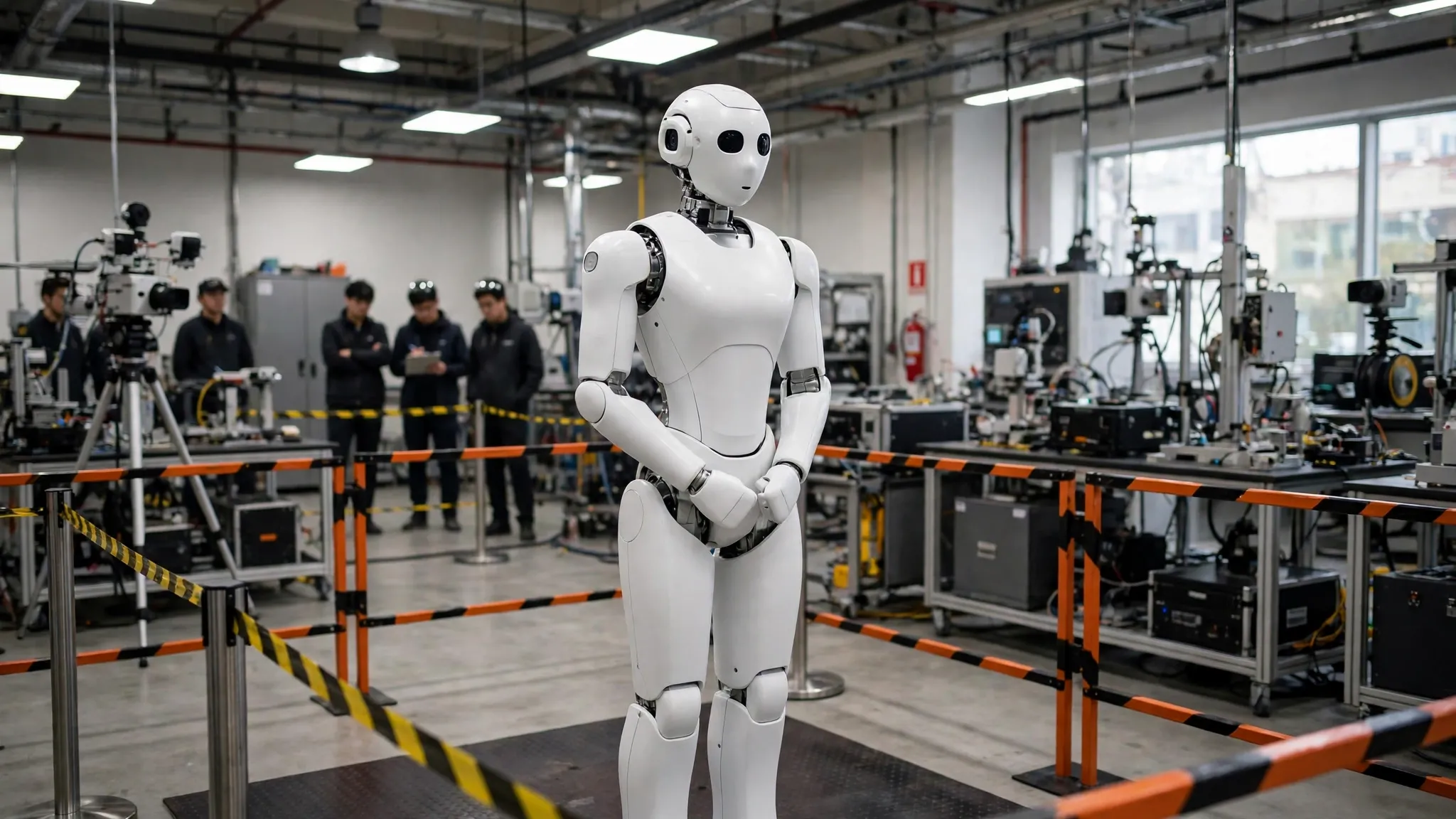
Under the deal, LG will help build the evaluation system for KIRIA's Humanoid Robot Safety Certification Center and take part in developing national and international standards for the technology. The company also plans to seek domestic pilot safety certification for its own humanoid robots, including the LG CLOiD series.
The timing is deliberate. LG is developing a bipedal robot built on Nvidia's robotics reference platform, and it is targeting a public unveiling in the first quarter of 2027. By working on certification now, while the machine is still in development, LG aims to have safety and quality checks baked in from the start rather than bolted on after the design is finished.
Why safety standards matter now
Humanoid robots are moving fast from research labs toward factories, warehouses and eventually homes, but the rules for proving they are safe to work alongside people are still being written. Unlike industrial robot arms, which operate behind fences, humanoids are designed to share space with humans, lift heavy loads and move through unpredictable environments, all of which raise new questions about collisions, falls and software failures.
That gap is becoming a commercial issue as well as a technical one. Buyers in logistics and manufacturing want independent proof that a robot will not hurt workers or damage property before they place large orders, and regulators in several countries are working on their own frameworks. A recognised certification could become a selling point, and eventually a requirement, for any company hoping to deploy humanoids at scale.
LG's wider bet on physical AI
The agreement fits into LG's broader push into physical AI, the branch of artificial intelligence concerned with machines that sense and act in the real world. The company already makes service and logistics robots, and it has been steadily building its robotics business as a future growth engine alongside its home appliances and displays.
LG is not alone in racing to put a humanoid on the market. Rivals including Tesla, Figure AI and Chinese manufacturers are all developing their own bipedal machines, and several have begun limited factory trials. But few have talked publicly about independent safety certification, which could give LG an early edge with cautious industrial buyers.
For now, the KIRIA deal is a framework rather than a finished standard. The evaluation systems still have to be built, the pilot certifications run and the international standards negotiated. But with its robot's debut only months away, LG has signalled that it wants safety to be part of the product story from day one.