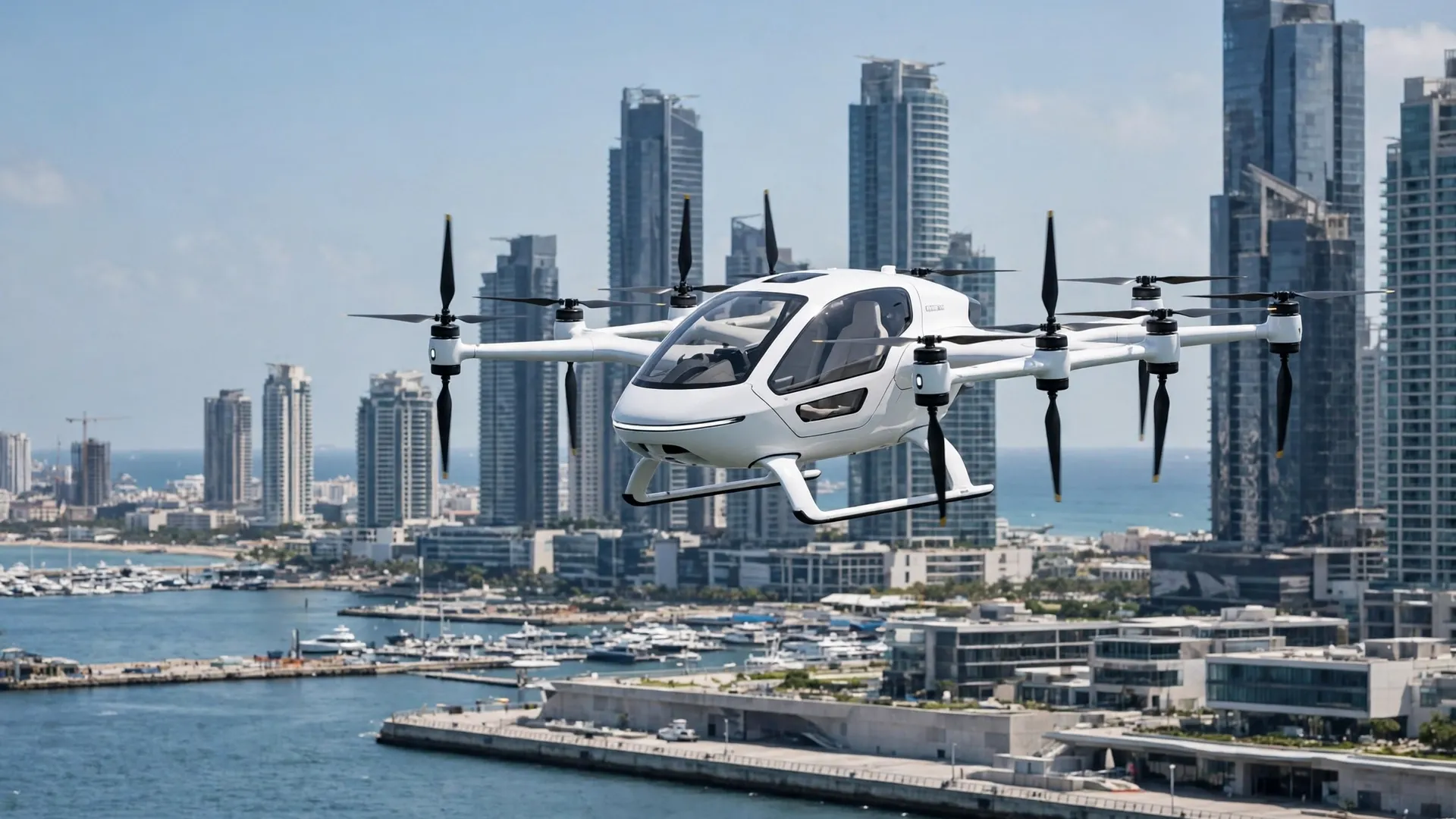
Sri Lanka has carried out its first official demonstration of a pilotless passenger drone, with the country's ports and civil aviation minister riding aboard the aircraft at Colombo Port City — a milestone for a project that could put flying taxis into service within six months.
The flight took place on Wednesday, November 11, at the Port City development in Colombo. Minister of Ports and Civil Aviation Anura Karunathilaka climbed into the two-seat aircraft for the demonstration flight, telling reporters afterwards: "It felt like I was flying."
Deputy Minister Janitha Ruwan Kodithuwakku and several other officials attended the event. Speaking to the media, Kodithuwakku said commercial passenger drone operations are expected to begin within the next six months, following a trial period at Port City.
A minister in the passenger seat
The demonstration was the first time a passenger has flown aboard the aircraft in Sri Lanka. Preliminary test flights at Port City on November 8 used sandbags to simulate passenger weight while engineers assessed the aircraft's performance under controlled conditions. Wednesday's flight put a real person — a government minister, no less — in the seat for the first time.
The project follows discussions held in August between senior Sri Lankan officials and representatives of Chinese manufacturer EHang, which builds the aircraft. It is being run as a trial rather than a commercial service, with testing planned to continue at Port City for about six months before any paying passengers are carried.
The aircraft
The aircraft is EHang's EH216, a two-seat electric vertical take-off and landing (eVTOL) craft that needs no runway. It carries 16 propellers, 12 battery sets, three flight-control systems and an integrated central computer, and is flown remotely from a centralised control station, with safety systems designed to respond automatically to emergencies or a loss of communication.
The EH216 is designed to carry two passengers over a range of around 25 kilometres. It has received type certification from the Civil Aviation Administration of China, and Sri Lanka's Civil Aviation Authority has developed operating standards based on that certification. The first aircraft was imported to Sri Lanka for the trial programme, with a second due to arrive later in November.
What comes next
Tourism is the first intended market, with aerial sightseeing flights over Colombo and the coast, while officials also see uses in passenger transport and emergency services. Reports have discussed a roughly 20-minute hop to Bandaranaike International Airport, though no route, fare or timetable has been confirmed — and officials have stressed that the demonstration is an assessment step, not the launch of a service.
An indicative fare of around US$50 per passenger for a journey of about 25 kilometres has been discussed by aviation officials. Before commercial flights can begin, the project still needs further technical assessments and regulatory arrangements, coordinated across the Civil Aviation Authority, the Defence Ministry, the Sri Lanka Air Force, the Telecommunications Regulatory Commission and the Port City authorities.
For now, the flight is a statement of intent: a small island nation testing whether the sky above its capital can become a new kind of road.