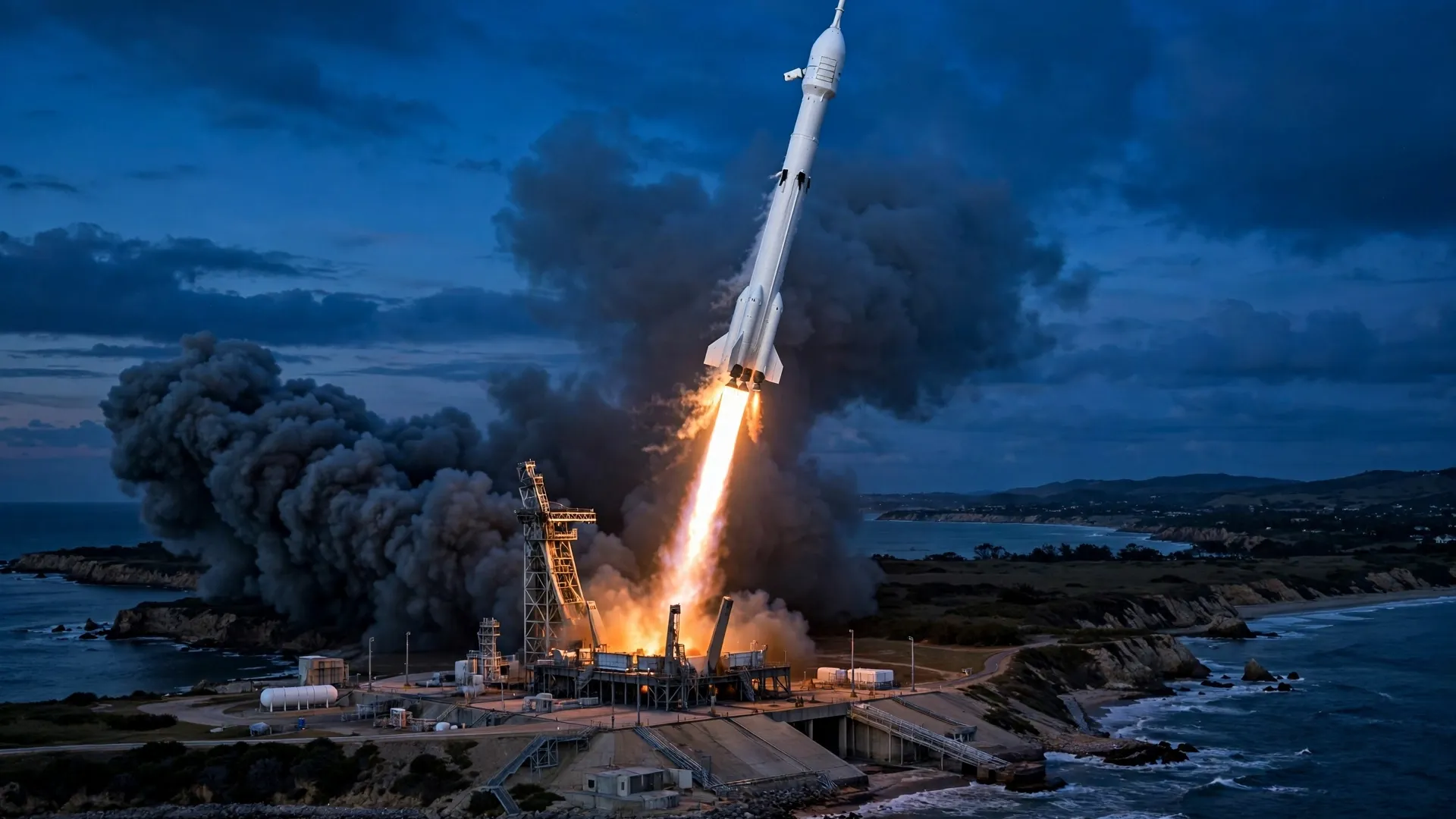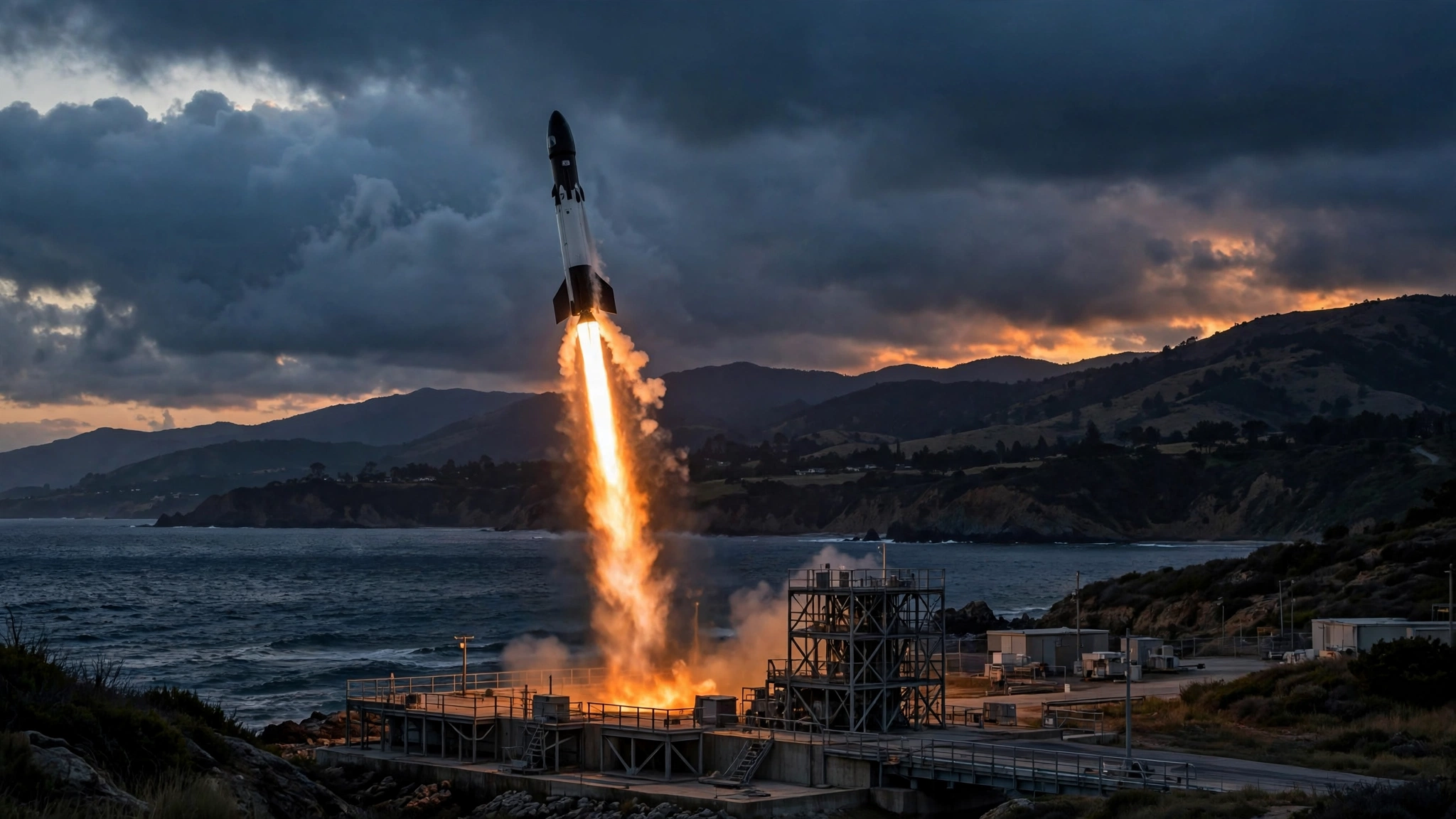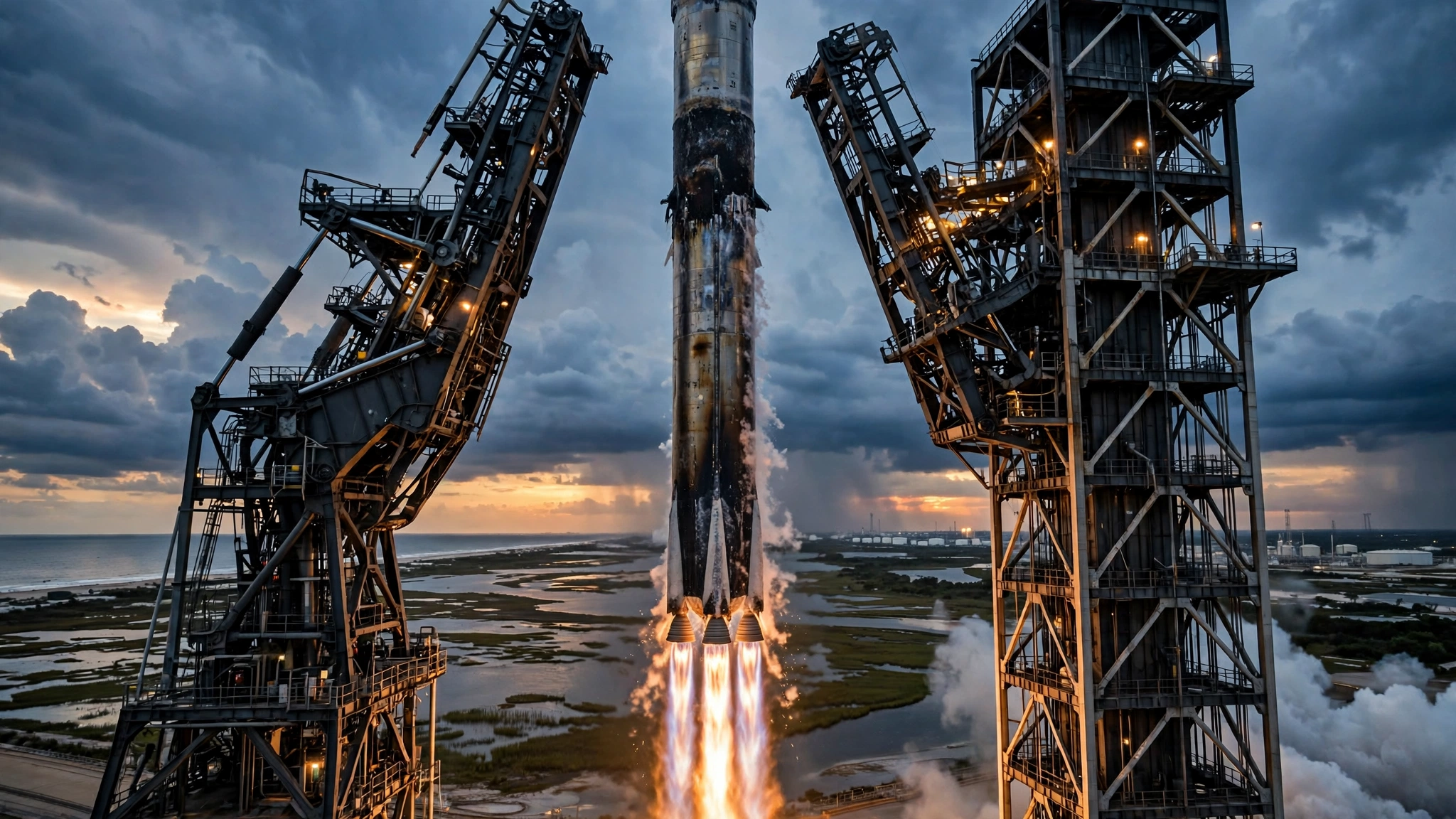
SpaceX has pulled off a first in rocketry. Its giant Mechazilla launch tower caught a Starship spacecraft returning from orbit on Saturday, grabbing the 171-foot-tall Ship 42 out of the sky at the company's Starbase site in Texas after a flight of about 22 and a half hours.
The catch came at about 4:20 p.m. Eastern time on Saturday, November 14 — roughly 2:20 a.m. on Sunday in Pakistan — when Ship 42 dropped out of thick cloud, reignited three engines to flip itself vertical, and settled between the tower's two mechanical "chopstick" arms, its engines still roaring. SpaceX confirmed the moment on X within a minute: "Mechazilla catches Starship! Congratulations to the entire SpaceX team on this incredible achievement!"
A 22-hour flight, 14 orbits and 26 satellites
Flight 15, the fifteenth test flight of the Starship system, lifted off from Starbase on Friday evening with Ship 42 stacked on Super Heavy Booster 22. Once in orbit, the ship deployed all 26 of its next-generation Starlink V3 satellites, then flew about 14 orbits around Earth — a journey of roughly 350,000 miles — making it the longest Starship mission yet.
The return took almost an hour. Ship 42 plunged back through the atmosphere at about 17,500 miles per hour, survived the blazing heat of reentry, and arrived back over Starbase with a sonic boom before lowering itself into the tower's arms. Charred from the heat, the ship shut down its engines and hung still in the chopsticks — the first time any Starship upper stage has been recovered this way.
The booster did not make it
The flight was not a clean sweep. Super Heavy Booster 22 separated successfully after liftoff, but its own planned tower catch was aborted when the onboard guidance system found the booster outside the calculated position for capture. The control system diverted it to a backup area over the Gulf of Mexico, where it exploded about six and a half minutes after launch. SpaceX said it is still investigating why the booster drifted off course.
SpaceX had caught Super Heavy boosters with the same tower arms three times before, but the ship itself — the half of the rocket that goes to orbit and will one day carry crew — had never been caught. That made Saturday the harder half of the recovery problem, and the one that matters most for the vehicle's future.
Why the catch matters
Recovering both stages of the rocket is the core idea behind Starship. Elon Musk sees the vehicle as the future workhorse of SpaceX's Starlink satellite business and, eventually, the ship that will carry people to the Moon and Mars. A rocket that can be caught, checked and flown again is far cheaper than one thrown away after every launch — and catching the ship at the same tower it launched from removes the need for ocean recovery ships or landing pads.
SpaceX president Gwynne Shotwell said last month that a recovered Starship upper stage could fly again early next year. SpaceX has not announced a date for Flight 16, and the company still has to work out what went wrong with Booster 22. SpaceX has yet to recover both stages of Starship in a single mission — but after Saturday, it has now proven that each half of the rocket can be caught on its own.