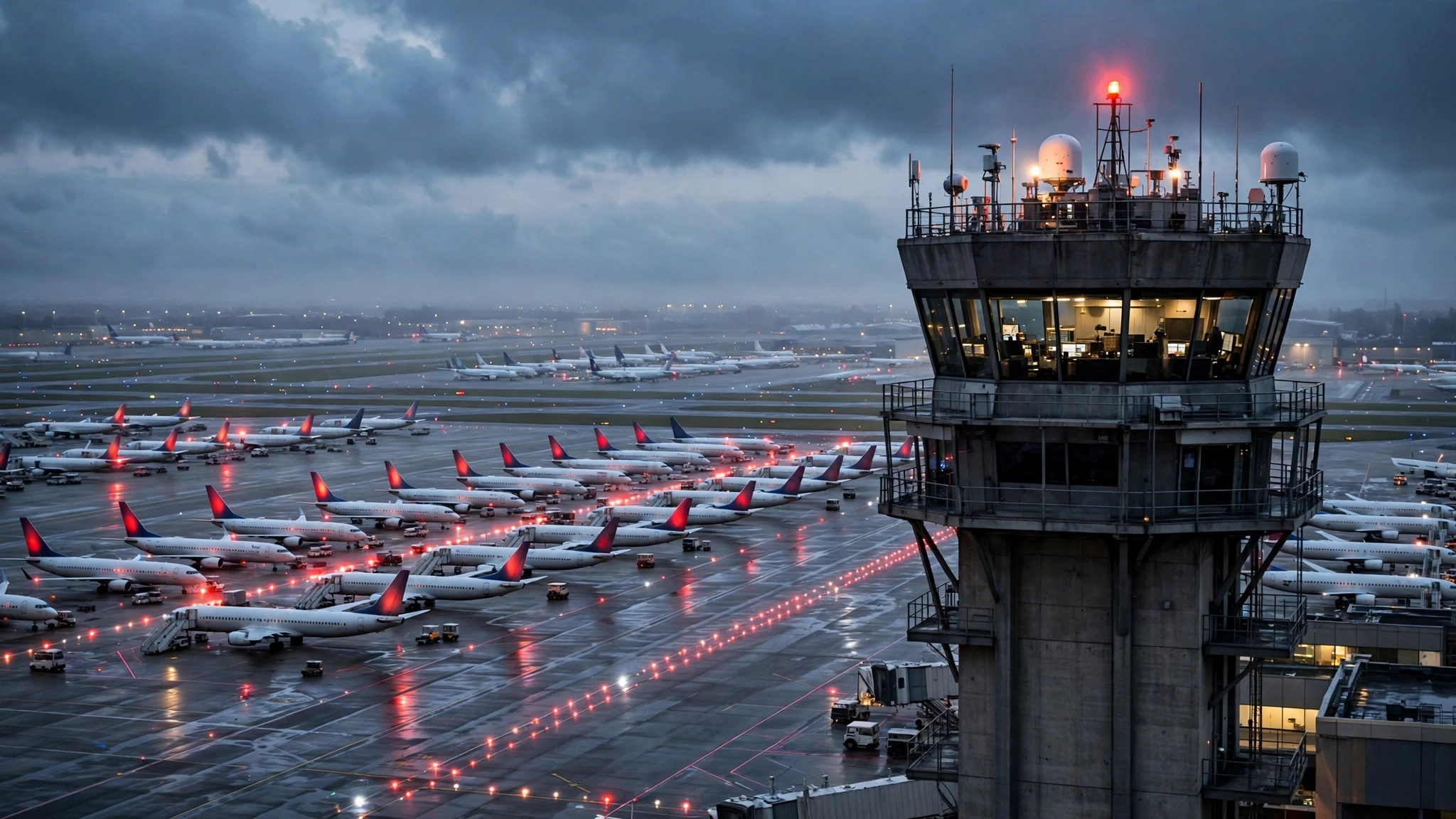
Transportation Secretary Sean Duffy said Saturday that Friday's nationwide ground stop — the first in the United States since January 2023 — was triggered during routine maintenance by the Federal Aviation Administration's longtime telecom contractor, L3Harris Technologies. Something in that work flooded the agency's routers with data, destabilising air traffic control communications and grounding every departing flight in the country for more than four hours.
Investigators have not yet determined exactly what failed. Duffy, speaking at a news conference at Transportation Department headquarters alongside FAA Administrator Bryan Bedford, said officials are working to establish whether the fault was human error, an installation mistake, or a faulty piece of equipment. "We haven't determined what the fault was," he said. "We're going to hold people accountable."
What went wrong at a remote FAA site
According to Duffy, L3Harris crews were doing routine maintenance at a remote FAA facility, replacing old copper telephone lines with fibre-optic service as part of a broader modernisation effort. But this time the switchover went wrong. "As we switched from copper to fiber, it started flooding other routers and our air traffic control system," Duffy said. The flood was intense: more than 1,000 connection attempts every four to five seconds, overwhelming routers that then fed controllers inconsistent data on radar and radio links.
The trouble began at 3:36 p.m. ET on Friday, when air traffic control centres began reporting instability in radar and communications. At 3:54 p.m., the FAA ordered the nationwide ground stop. More than 3,500 aircraft were in the air at the time; all landed safely. The order was lifted at 8:15 p.m. ET, after four hours and 21 minutes.
"Old switches, old routers"
Duffy put much of the blame on the age of the equipment. The routers at the affected facilities were manufactured in 2001, he said, and senior government sources said the problem traced back to Cisco routers built between 2001 and 2006. "Our switches, our routers, actually got overloaded with data," Duffy said. "This was an FAA system that didn't meet the moment."
Officials were emphatic about what did not cause the outage. Duffy said there was no evidence of a cyberattack or malicious activity, and Bedford said there was no evidence of anything nefarious. An AI scheduling tool used by the FAA — built by Boston startup Air Space Intelligence — was also ruled out; Duffy said it was not responsible.
The fallout, and a $50 billion ask
The disruption was one of the worst travel days in US history. Nearly 10,000 flights were cancelled on Friday and more than 7,000 delayed, and cancellations continued into Saturday as the system recovered. The FAA said it expected a full recovery by Sunday.
Duffy used the moment to press for a far bigger modernisation budget, calling for $50 billion to upgrade the air traffic control system, up from the $30 billion he had sought earlier. He also turned his criticism on the contractors. "Many of our contractors, many of our partners, they take our money and they provide really poor service to us," Duffy said, calling L3Harris the FAA's "legacy provider". L3Harris, which has run the FAA's telecommunications network for more than 20 years, did not immediately respond to requests for comment.