By Hamza Faisal
ROKAE Robotics has delivered its 10,000th humanoid force-controlled arm, marking a milestone in the commercial deployment of robotic hardware for embodied AI. The Hong Kong-listed company announced the delivery on Monday, saying the figure covers its humanoid force-controlled arm product line alone.
The milestone unit rolled off the production line at ROKAE's manufacturing base in Shandong Province in September. The count does not include the company's industrial and collaborative robots, which are already deployed across more than 40 countries and regions.
The announcement lands as humanoid robotics shifts from demonstration videos to paying industrial work. ROKAE's arms are now running on real assembly lines, and the company says more than 80 industrial partners have integrated them into production applications.
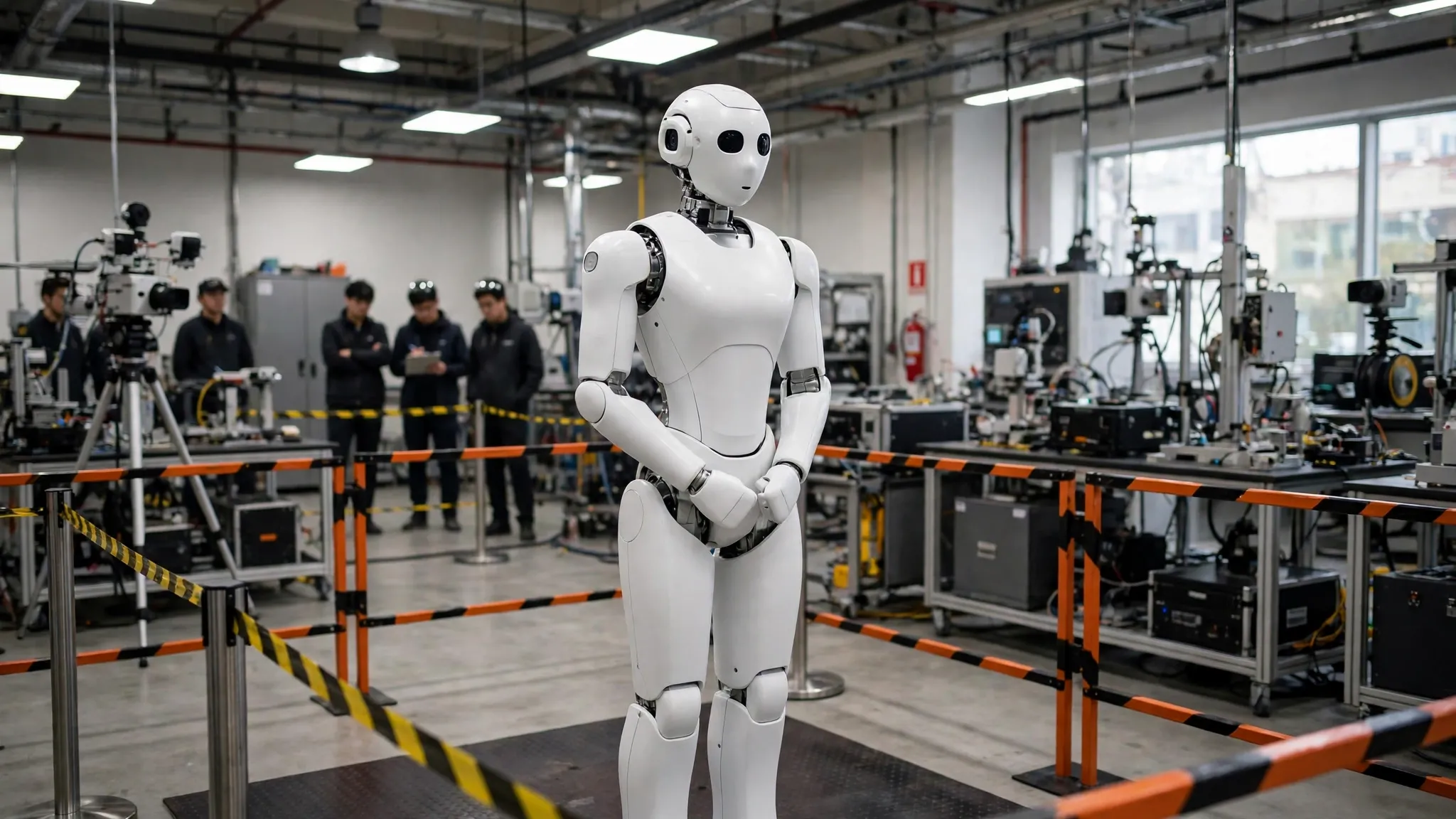
Five Helios robots at work in Schaeffler's Lighthouse Factory
The clearest proof point is at Schaeffler's Lighthouse Factory in Taicang, China, where five ROKAE Helios wheeled humanoid robots equipped with AR Series humanoid force-controlled arms are deployed on an assembly line that builds humanoid robot components.
There, the robots support parts handling, assembly and inspection, demonstrating force-controlled robotic systems in a live production environment rather than a laboratory. The deployment is notable because the robots are building components for other humanoid robots, a small but telling loop in the industry's supply chain.
ROKAE's founder and chief executive, Tuo Hua, played down the round number itself. "The number itself matters less to us than the trust behind it," he said. "There are no shortcuts in force control. Reaching 10,000 units means delivering consistent performance across hardware, control algorithms and manufacturing processes at scale."
Force control at every joint
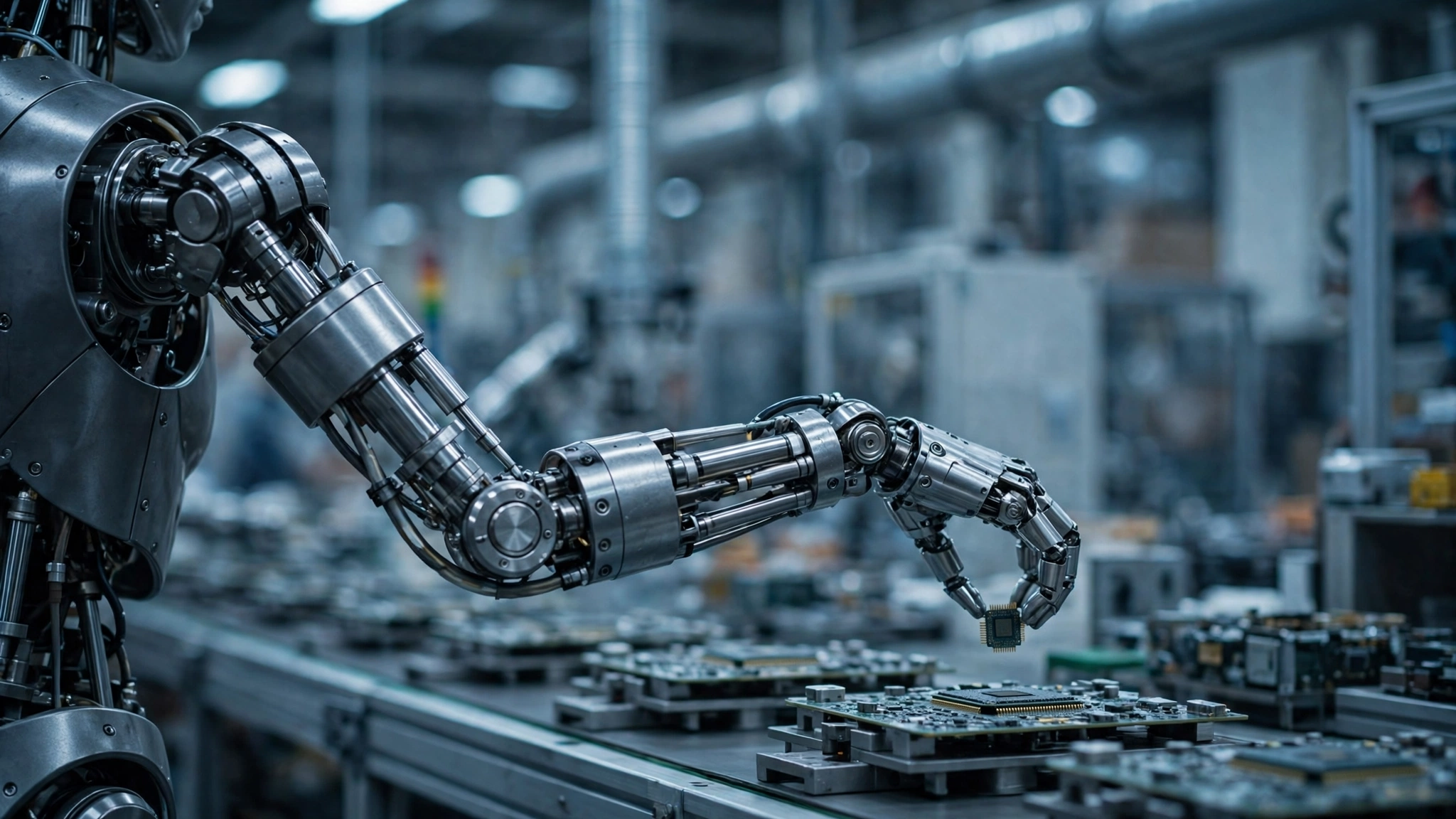
Building on more than a decade of experience in force-control technology, ROKAE's AR Series arms provide force control at every joint, enabling precise and responsive interaction with objects and their surroundings. That sensitivity matters when a robot must handle fragile parts or work alongside people without damaging either.
The system is driven by a compact MAC controller measuring just 213 by 145.5 by 45 millimetres. Depending on the configuration, it can control all seven joints of a single arm, all 14 joints across a pair of arms, or more than 20 joints across a full humanoid robot.
That modularity is central to ROKAE's pitch: the same arm and control stack can serve a single-arm workstation, a dual-arm setup, or a complete humanoid platform, letting industrial customers scale up without re-engineering their automation.
What 10,000 arms says about embodied AI
The milestone arrives as embodied AI, the idea of giving AI models a physical body that can sense and manipulate the world, moves from research labs into factories and warehouses. Investors and manufacturers alike are watching whether humanoid hardware can deliver reliable, repeatable work at scale, and unit counts are one of the few hard metrics available.
ROKAE's 10,000-arm figure does not settle that question on its own, but it does show that at least one supplier has moved past pilot batches into volume production with real industrial buyers. With more than 80 partners already integrating the arms, the company's next test will be whether those deployments expand from single lines to whole factories.
For now, the message from Shandong is simple: the humanoid robot arm is no longer a prototype. It is a product, it is shipping in the thousands, and it is already on the factory floor.
By Hamza Faisal