By Hamza Faisal
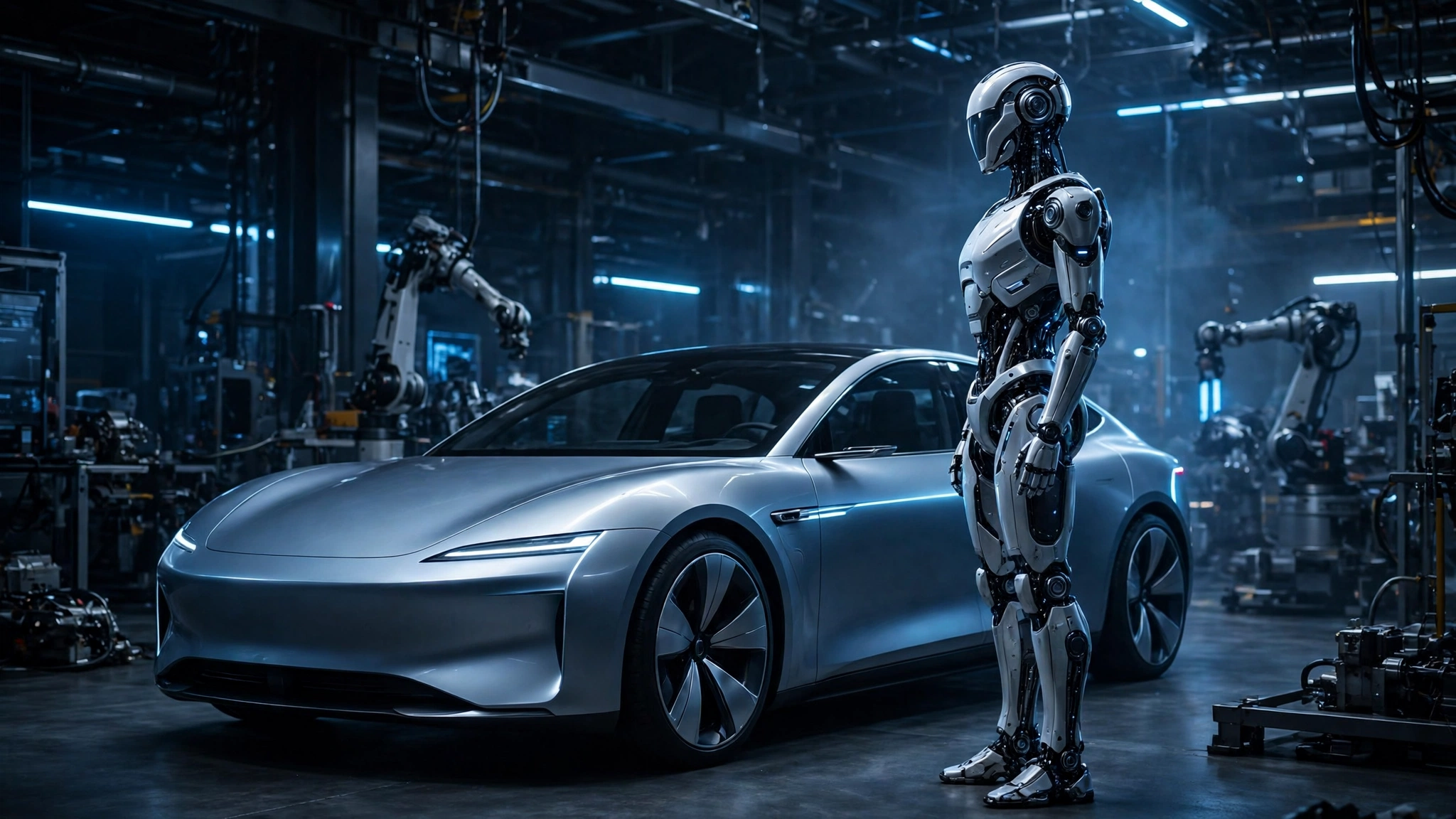
Elon Musk has split Tesla's chip roadmap in two. The company's next-generation AI5 chip is headed for the Optimus humanoid robot, not its cars — while the AI4 computer already in Tesla vehicles stays in charge of driving, Musk said on Sunday.
Asked on X when AI5 would arrive in new cars, Musk replied: "It's going to Optimus. Cars will remain at AI4. That's enough to solve superhuman driving."
The answer settles a question Tesla owners have asked for months: whether to wait for the new chip before buying. Musk's message is blunt — don't wait, because the new chip isn't coming to cars at all.
A 12-times leap — for the robot
AI5 is a major step up on paper. Musk has described it as roughly 12 times more powerful than AI4, and Tesla said during its third-quarter earnings call that a single AI5 chip offers about ten times the computing power of its predecessor. The design was taped out in April 2026, built on a 2-nanometre process, and carries around 96 gigabytes of memory.
Production is expected to come from two suppliers — TSMC in Arizona and Samsung in Texas — with high-volume manufacturing ramping up in 2027. Musk said during the earnings call that Tesla aims to put AI5 into Optimus in about April 2027. The chip is also destined for Tesla's AI training supercomputers. Cars are on neither list.
Why cars are staying put
Musk's reasoning is that AI4 is already good enough. He maintains the current hardware delivers self-driving performance safer than a human driver, so there is no need to upgrade vehicles to the newer chip — a view he first stated in April, when he said AI4 was enough to achieve "much better than human safety" for self-driving.
The timing underlines the point. Tesla began rolling out FSD v15, its newest driver-assistance software, to a first wave of customers on November 21. The update adds a live "Reality View" of the road, generated in real time by an AI model running on the car's AI4 computer — and Tesla claims the new version is 25 times safer than its predecessor, a figure the company has not backed with published data.
Musk also described a smaller hardware revision, AI4.5, as a relatively modest improvement, mostly the result of faster LPDDR5X memory. He did not say whether the "cars will remain at AI4" line covers that upgrade, and Tesla has announced no retrofit plan for existing owners.
What owners should — and shouldn't — wait for
The statement is a reversal of Musk's own framing earlier this year. In January, he wrote that AI5 would "make the cars almost perfect and greatly enhance Optimus." Now the car half of that promise is gone — and with it, any forced upgrade cycle tied to the new chip.
For buyers, the practical message is that the hardware already in new Teslas is the hardware Tesla plans to keep. AI4 is also the computer Tesla considers sufficient for its Cybercab and its Robotaxi fleet, so the company's driverless plans do not hinge on AI5 arriving on schedule.
The dates to watch are now April 2027, when AI5 is due to reach Optimus, and the end of 2027, by when Tesla aims to build the robot at a rate of up to 20,000 units a week. Whether AI4 really can deliver unsupervised driving in privately owned cars — and when owners might be allowed to use it — remains unconfirmed.