By Hamza Faisal
An Indian developer, fed up with the ads on his parents' Xiaomi TV, asked an AI coding agent to fix it. Ninety minutes later the ads were gone, the menu was simpler, and the PlayStation input was within easy reach. What started as a weekend experiment has now turned into a full-blown trend — and hardware makers are starting to push back.
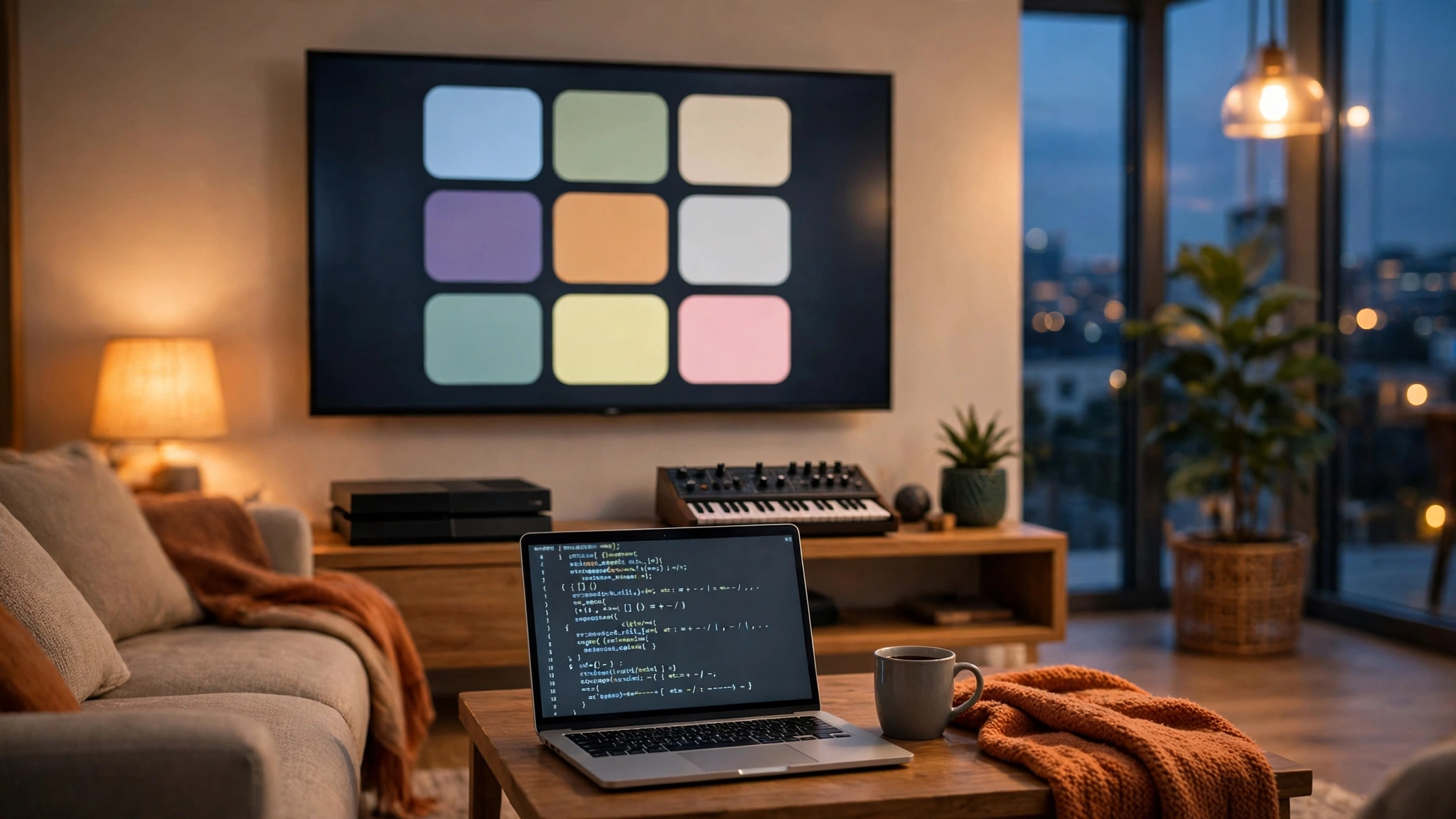
Gathin T., a developer in India, posted on X in October: his parents' TV showed a sponsored ad before anyone could reach Netflix. He gave Anthropic's Claude Code the TV's model number. The agent found the set on his home Wi-Fi, switched off 25 Xiaomi packages and wrote a new home screen. "Looks like an Apple TV now lol," he wrote.
He packaged the prompt as CleanYourTV, an open-source project with tested setups for 107 TV models from 37 brands. A few thousand people cleaned their own sets within two days; the project has since passed 10,700 stars on GitHub.
How the TV cleanup works
The trick relies on the Android Debug Bridge, or ADB, built into Android TVs. Once developer mode is unlocked by tapping "Build" seven times, a computer on the same Wi-Fi can list and control every app on the set.
Claude Code flags the packages serving ads or telemetry, disables them instead of deleting them, and builds a lightweight replacement launcher. Nothing is uninstalled, so one restore script undoes every change. No root access is needed; it works on Android TV and Google TV sets from Sony, TCL, Hisense, Philips and Xiaomi.
It is not risk-free. One person bricked their TV after the agent disabled a package the set needed, and network debugging runs unencrypted, so any device on the same Wi-Fi can take control of the TV — switch debugging off when done.
The trend spreads to cameras, synths and consoles
The idea has now escaped the living room. Photographers are using AI agents to add recording modes, resolutions and colour profiles to cameras, building on firmware projects like Magic Lantern, once the preserve of dedicated enthusiasts. In music, the cheap M-Vave FM-1 synthesizer is a favourite target, and its maker has leaned in, releasing open firmware and accommodating hackers while other companies try to keep them out.
Gamers are decompiling games and adding features to consoles; one enthusiast found a way to run PlayStation 2 discs on a PlayStation 5. The Verge, which dubbed the movement "vibe hacking", reports the industry is resisting. Luke Dicken, a former head of AI at Take-Two, expects "more intrusive DRM", platform-level protection and a shift toward streaming — "you can't decompile what never reaches your hands."
The risks are real — and so is the pushback
Flashing a camera with bot-written firmware almost always voids the warranty, and if something breaks, the manufacturer will not help. Fuji X Weekly blogger Richie Resch writes that the question is not whether someone's camera will turn into a "brick", but when — and how many.
Gathin has tightened up CleanYourTV: the bot now backs up the TV's software first, logs every change, and launches agents to test whether anything has broken. His advice: do not give a bot access to anything you cannot afford to lose, and test everything on a separate computer first.
For the tempted, the safer on-ramp is hardware built for tinkerers: cheap ESP32 boards now anchor home-built gadgets, and Meta's Muse Gadgets program makes assembling custom AI devices easier. The race between manufacturers and vibe hackers is only accelerating — and the next round of locks is already being built.