By Hamza Faisal
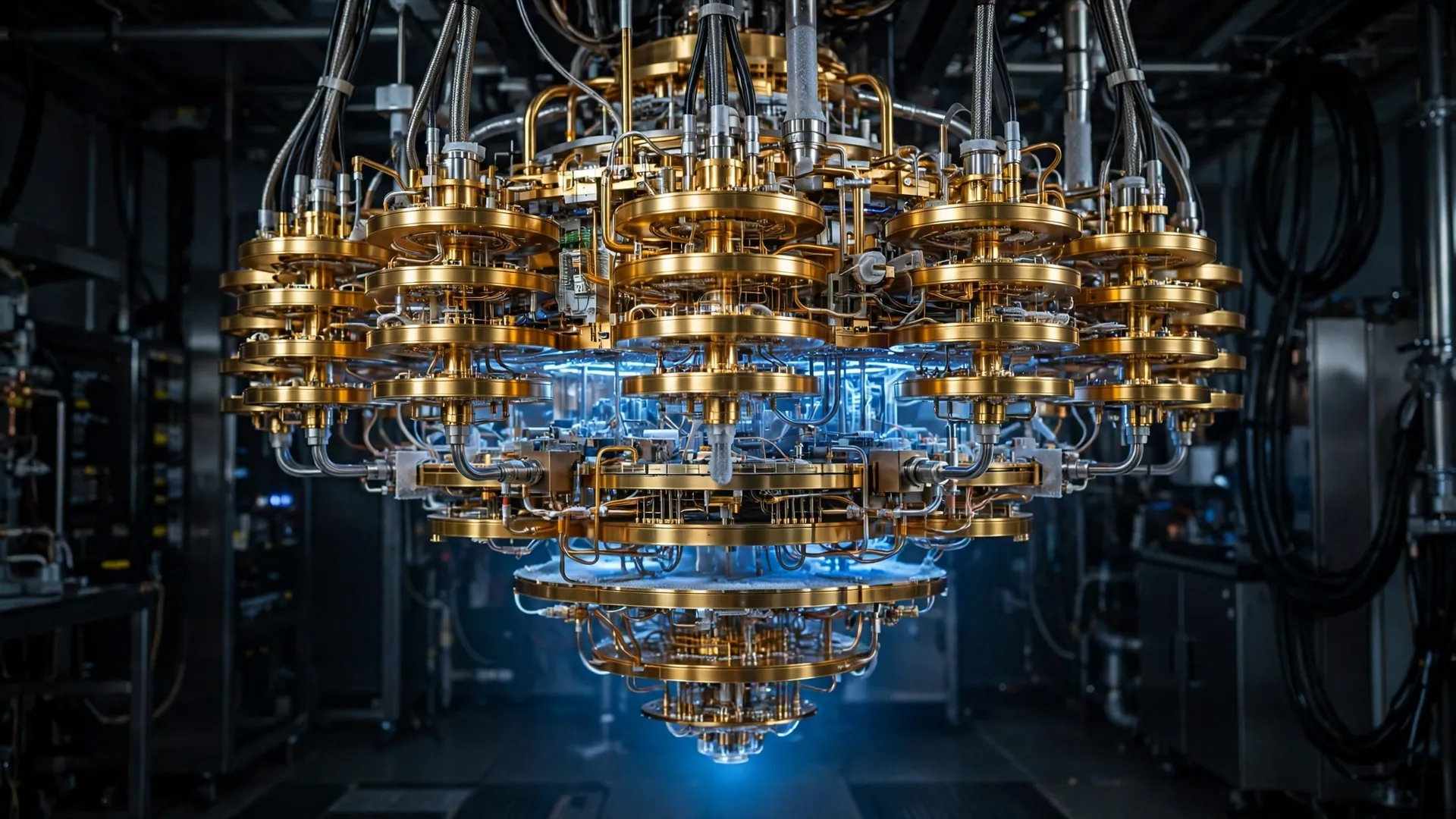
IBM has unveiled its next quantum processor, Nighthawk r3, a chip designed to run 10,000 quantum operations across 520 programmable qubits — more than four times the programmable qubits of the chip it replaces. The company also plans to link two r3 processors into a single 1,040-qubit system in 2027, the largest machine on its quantum roadmap so far.
The announcement, made on November 11, comes just two months after IBM introduced Nighthawk r2 in September. That chip, with 120 programmable qubits, already powers IBM's most powerful quantum computer in Chicago and supports more than 7,500 quantum operations at up to 100,000 samples per second. The r3 extends the same high-speed architecture to a much larger scale, with 2,034 physical qubits on the chip in total.
A bigger chip, built for bigger circuits
Quantum processors are judged not just on how many qubits they hold, but on how many operations they can run before errors pile up. IBM says the r3 is designed to execute 10,000 operations accurately, up from more than 7,500 on the r2, while keeping the speed that made its predecessor notable.
Much of that speed comes from a fast qubit-reset design introduced with the r2. After a quantum circuit runs and its result is measured, qubits must return to their ground state before the next program can start — a wait that normally takes around 200 milliseconds. IBM's reset architecture cuts that to roughly 25 nanoseconds without disturbing neighbouring qubits, so the chip spends far less time sitting idle between runs.
"Useful quantum computing hinges on whether results can be delivered with accuracy and speed, both are fundamental," said Jay Gambetta, director of IBM Research. "IBM Nighthawk is already showing us what that looks like today."
Two chips, one machine
The bigger leap is how IBM plans to scale beyond a single chip. In 2027, it intends to connect two Nighthawk r3 processors into one 1,040-qubit system using ten chip-to-chip links called l-couplers. The company has already shown the approach works at smaller scale: this year it connected two Nighthawk r1 processors with four l-couplers at 99.4% transfer fidelity, against a target of 99.9%, and linked cryogenic modules into a single system.
The modular approach matters because building one ever-larger chip runs into manufacturing and cooling limits. Linking smaller processors lets IBM grow qubit counts without waiting for a single giant chip — and the same technique underpins its longer-term goal, the fault-tolerant Starling system targeted for 2029.
Quantum and classical, on one platform
Alongside the chip, IBM announced that its cloud-based IBM Quantum Platform will now bring high-performance classical and quantum computing together in a single managed environment. Users can run quantum workflows directly alongside classical computing resources, from a laptop to some of the world's most powerful supercomputers.
The company says early users are already seeing results: Cleveland Clinic used the platform to process 2.6 million samples up to three times faster while modelling biological structures. The platform is also launching pulse-level access, giving researchers precise control over how they detect, understand and correct errors — work that sits at the heart of quantum error correction.
One caveat: the r3 is an announced design, not a machine researchers can run jobs on yet. IBM has disclosed no error rate for the chip and no date for when outside users will get access. The 520-qubit figure, the 10,000 operations and the 1,040-qubit system are targets the company says it will build to — the next fixed marker is the two-chip system in 2027.