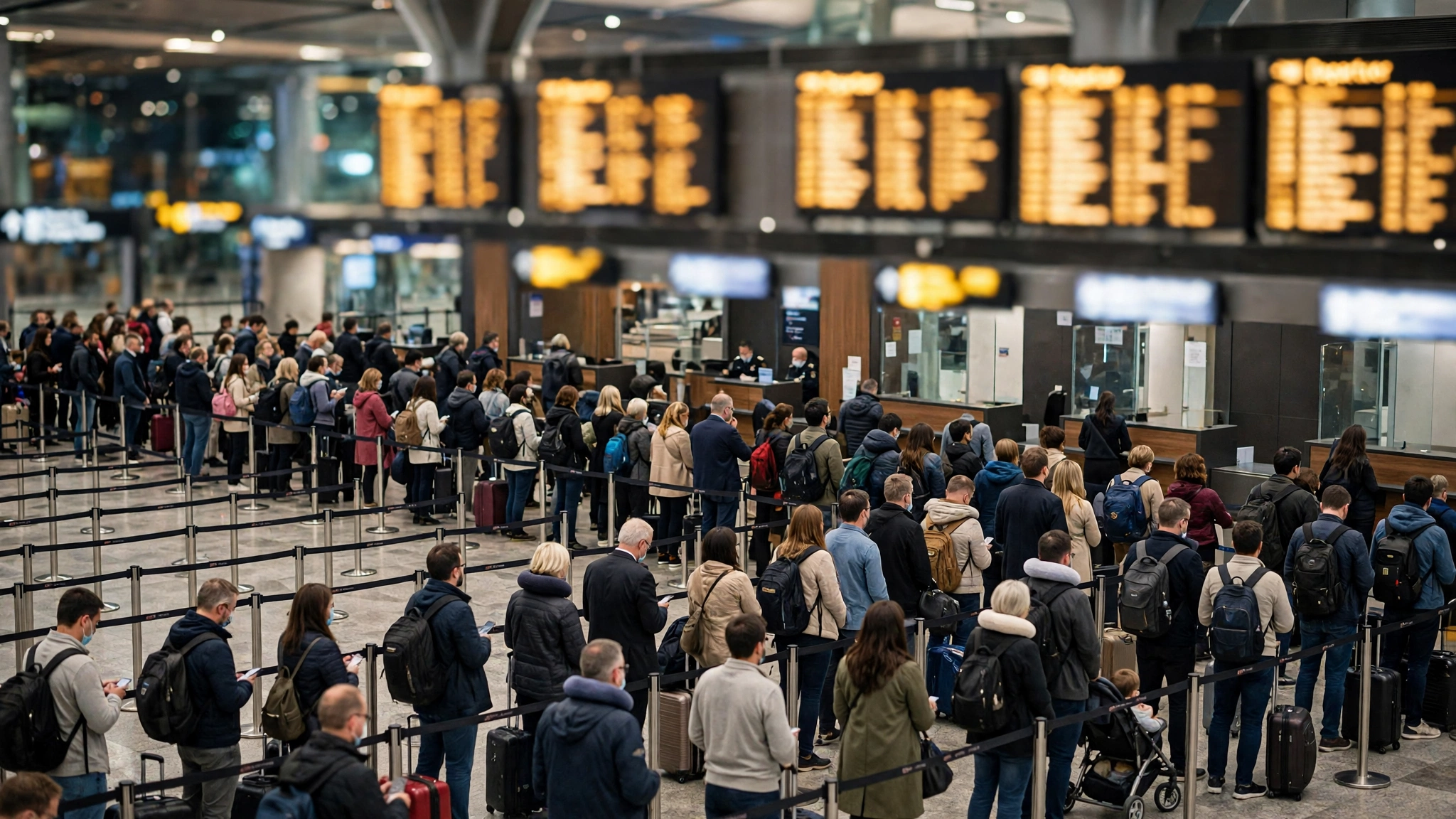
Pakistan's airport immigration system went down across the country on Tuesday, October 27, suspending passenger clearance at every airport and leaving travellers standing in long queues at Federal Investigation Agency (FIA) counters. The system was gradually restored after remaining suspended for about an hour, airport officials said.
The failure struck simultaneously at airports nationwide, including Jinnah International Airport in Karachi, and temporarily halted immigration processing for both departing and arriving passengers. The disruption also affected the departure of international flights as passengers could not complete the required formalities before boarding.
What happened
With the FIA system offline, counters were unable to process passengers, and queues grew steadily in immigration areas. Airport officials said the suspension hit all airports in the country at the same time, rather than being limited to a single terminal or city.
After about an hour, the system began coming back online gradually, and immigration operations resumed. Airport authorities confirmed the restoration, but FIA officials did not disclose the reason behind the nationwide failure despite being contacted.
Not the first failure
Sources said a similar disruption had occurred at Karachi's Jinnah International Airport about two weeks earlier, when the FIA immigration system also went down. The recurrence has drawn attention to the reliability of the system that underpins border control at Pakistan's airports.
Immigration clearance depends on the FIA's digital systems to verify travellers and process them through border control. When that system fails everywhere at once, there is no unaffected airport to absorb the pressure, and the impact lands immediately on passengers and flight schedules.
The FIA is the agency responsible for immigration control at Pakistan's airports, checking travel documents before passengers depart and after they arrive. A nationwide outage therefore stops the entire clearance chain at once: airlines cannot board passengers who have not cleared immigration, and arrivals cannot be formally processed. Airport staff can manage queues, but they cannot substitute for the system itself.
Why it matters for travellers
For passengers, an hour-long halt can mean missed connections, delayed departures and long waits with little information about when processing will resume. The October 27 outage affected international departures directly, since travellers could not clear immigration in time to board.
Further details about the cause of the outage and any steps planned to prevent a repeat were not immediately available. Until the FIA explains what went wrong, the back-to-back failures will keep raising questions about the resilience of a system that millions of travellers depend on every year.