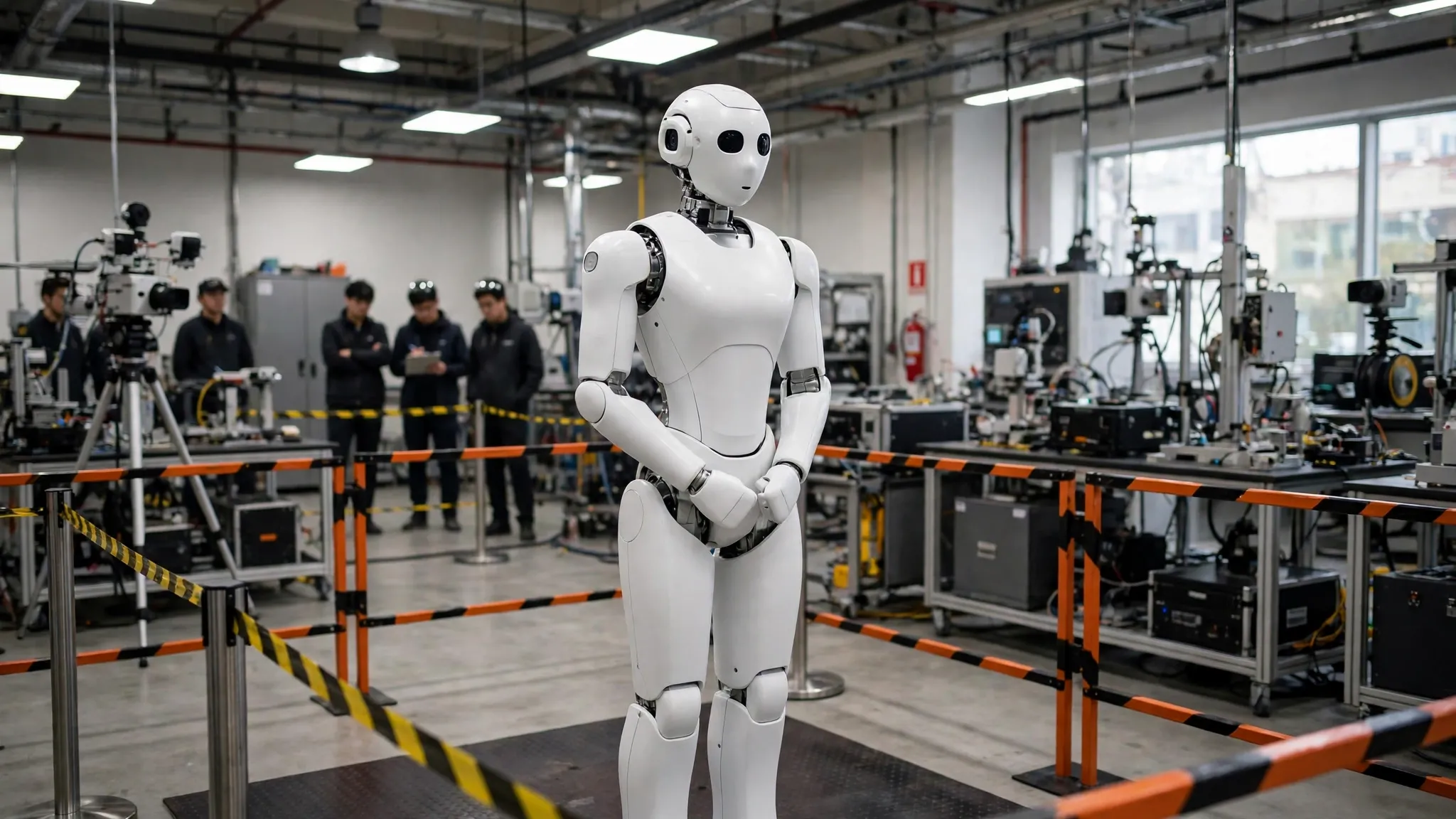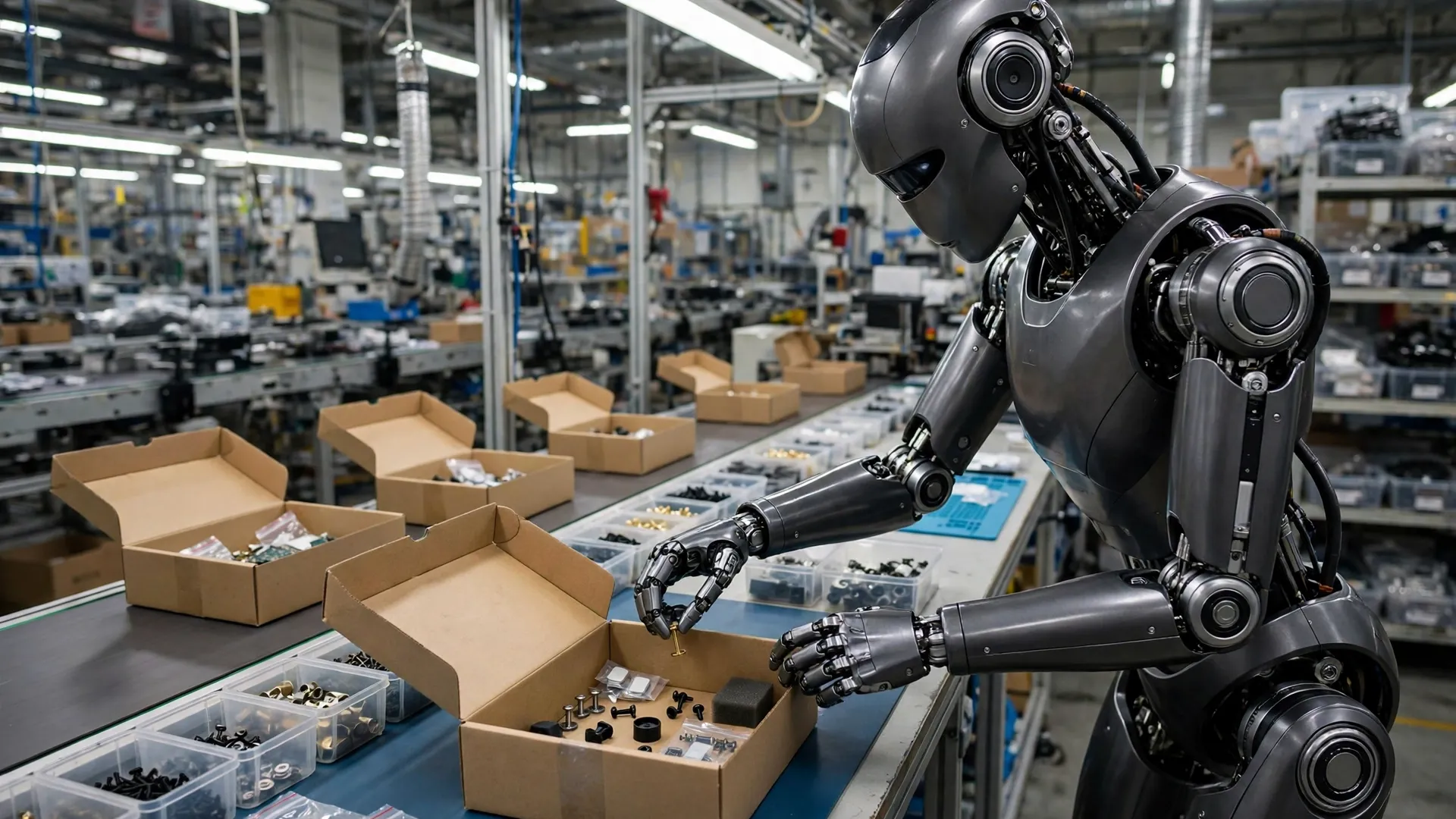
ASUS has built its first humanoid robot, and it has not given it a stage demo to learn. The company unveiled Gallop on November 13 and put it straight to work at a real packing station in one of its own electronics factories, where it is learning to pack the accessories that ship with every motherboard. The robot's target is blunt: 99.5% success within 20 seconds per board — the same standard ASUS holds a human worker to.
Gallop was introduced by ASUS co-CEO S.Y. Hsu on CNBC and detailed the same day in a company pressroom post. It comes from the Humanoid Robotics unit of the company's Physical AI Solutions business group, a program that only started in early 2026. That makes Gallop a less-than-a-year-old project that has already reached a live production line — a fast move for a company better known for laptops and motherboards than for robots.
A deliberately hard first job
The station ASUS picked is not an easy one. Every motherboard box gets 15 small parts: screws, cables and little accessories, many of them sealed in thin, clear plastic bags that are slippery, floppy and hard for cameras to see. A person does one board in about 20 seconds, and ASUS says it chose the station precisely because a simple gripper cannot handle it.
The 99.5% figure is a target, not a result the company has reported. ASUS has not disclosed how often Gallop succeeds today, and the number should be read as the bar the robot must clear, not a claim it already has. The company has also set itself a second rule: the robot has to take responsibility for most of the job, rather than working with a person standing beside it throughout.
Gallop learns the way a new hire would. It watches skilled workers through head cameras, practises in simulation with variations of the task, trains with VR-guided sessions, and keeps learning from feedback on the line. All of it runs on a single Nvidia Jetson AGX Thor computer inside the robot. The machine is currently a two-armed unit on a fixed base rather than a walking humanoid, and ASUS designs the body and its touch-sensing hand in house.
Why a humanoid, and what comes next
ASUS's argument for the humanoid form is practical rather than futuristic. Arms and dexterous hands can use the workstations, tools and trays that were designed for people, so a factory does not have to be rebuilt around the robot. The company's own electronics manufacturing services plants give it a test environment most robotics startups have to rent — real stations, real parts and real quality rules.
The roadmap from here is measured. ASUS plans to fit Gallop with its own hand and put it on wheels over the next year, show it to customers at Computex 2027, run customer pilots during 2027, and target commercial availability in the second half of 2028. No price, unit cost or production volume has been disclosed.
That puts ASUS in a crowded race — humanoid robots are being tested on factory floors by several companies at once — but with a different starting point. Most rivals are selling a robot to factories; ASUS is testing one in its own. If Gallop can hit the human standard at the packing station, the company will have proved the idea where it matters most: on a line that has to ship product, not on a stage.