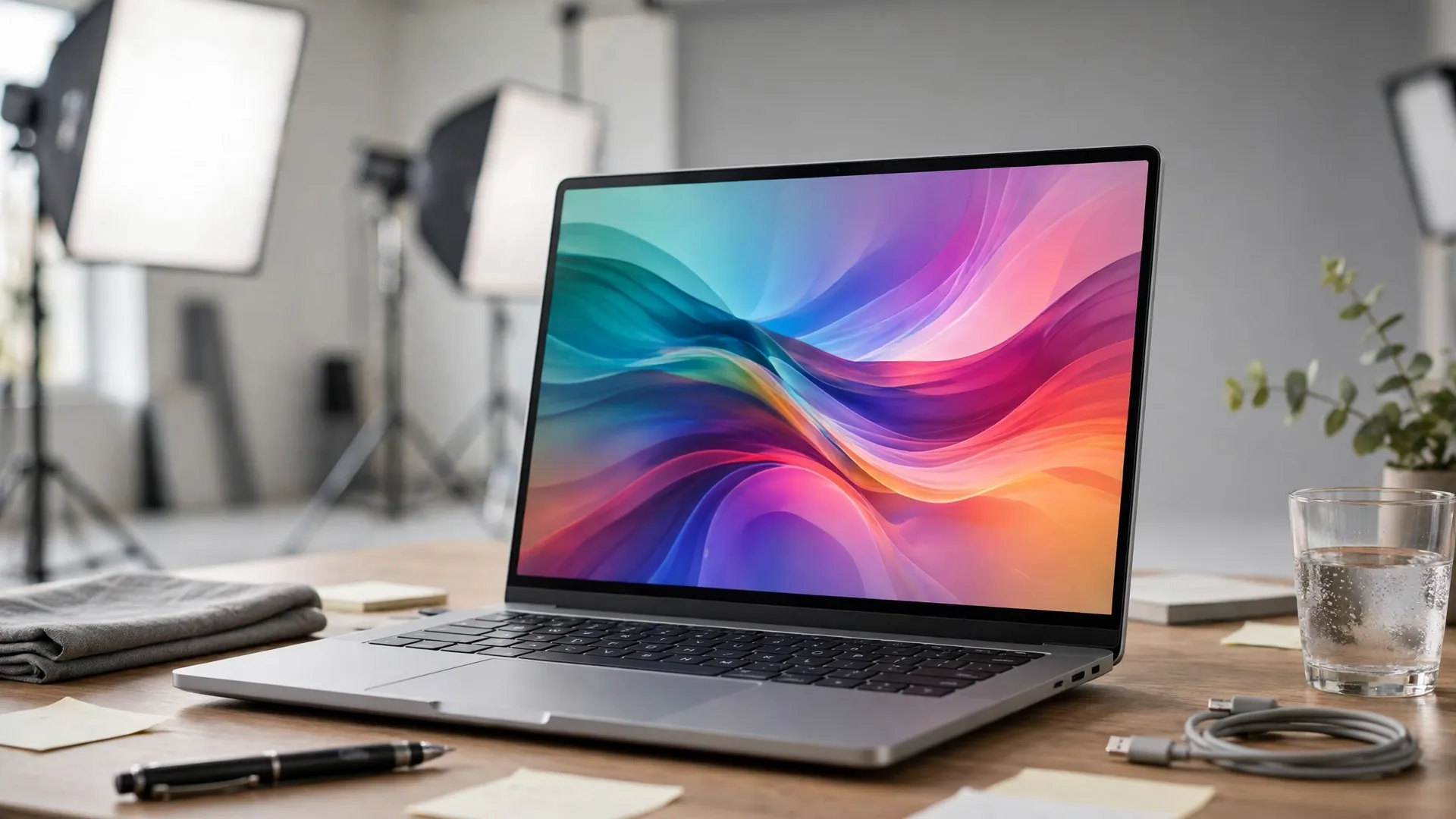
Apple has unveiled its first touchscreen MacBook Pro, ending one of the company's longest-held design positions. Announced on October 28 at Apple's "Pro and Tell" event in Los Angeles, the new laptop comes in 14-inch and 16-inch sizes, runs on Apple's M5 Pro and M5 Max chips, and is available to pre-order now ahead of a November 6 launch. Prices start at $2,899 for the 14-inch model and $3,399 for the 16-inch model.
For years, Apple argued that touchscreens belonged on the iPad, not the Mac. The new MacBook Pro reverses that stance: touch is built into the display itself, pitched as a new way to work with content alongside the keyboard and trackpad.
A display built for touch
The headline hardware is the new PROLED XDR display, a tandem OLED panel that Apple calls the best laptop display it has ever made. It delivers up to 2,000 nits of peak brightness for both HDR and SDR content, a 10,000,000:1 contrast ratio, and a 120Hz variable refresh rate through ProMotion. The colour gamut covers both P3 and Adobe RGB, and a nano-texture option cuts glare further.
Touch itself is handled by a sensor built directly into the display panel rather than layered on top of it, which Apple says reduces latency so users feel as though they are touching the content itself. Everyday gestures work as expected: swipe to scroll, pinch to zoom, drag slides between presentations, or double-tap to fill the screen. Designers can use the whole display as a canvas and musicians can play software instruments onscreen. Apple says its own apps are optimised for touch, macOS translates touches into clicks for existing apps, and tools including Adobe Lightroom, DaVinci Resolve and Blender will take advantage of it.
Dynamic Island comes to the Mac
The camera notch is gone, replaced by a Dynamic Island borrowed from the iPhone. It serves as the home for Spotlight search, Live Activities and Siri AI. A redesigned hinge keeps the screen stable while it is being touched, and video stabilisation smooths the camera feed automatically during video calls made while using touch.
The machines are also thinner and lighter than before. The 14-inch model now weighs 3 pounds, half a pound less than its predecessor, while the 16-inch model weighs 4 pounds, 0.7 pounds lighter. Slimmer borders grow the screens to 16.3 and 14.2 inches, and a redesigned thermal system keeps performance steady in the lighter chassis.
M5 Pro and M5 Max power, up to 24 hours of battery
The new models use the same M5 Pro and M5 Max chips as the MacBook Pro models announced in March, with up to 128GB of unified memory and up to 16TB of storage. Apple promises up to 24 hours of battery life, and the machines ship with Thunderbolt 5, a 12MP Center Stage camera, an enhanced six-speaker sound system with 50 percent deeper bass, and macOS 27 with Apple Intelligence and Siri AI.
The launch caps a busy week for the Mac lineup, following the OLED iPad mini and the M6 14-inch MacBook Pro earlier in the week. The touchscreen models are sold alongside the existing mini-LED models and the new M6 machine. After more than a decade of Windows laptops offering touch as standard, the Mac has finally joined them.