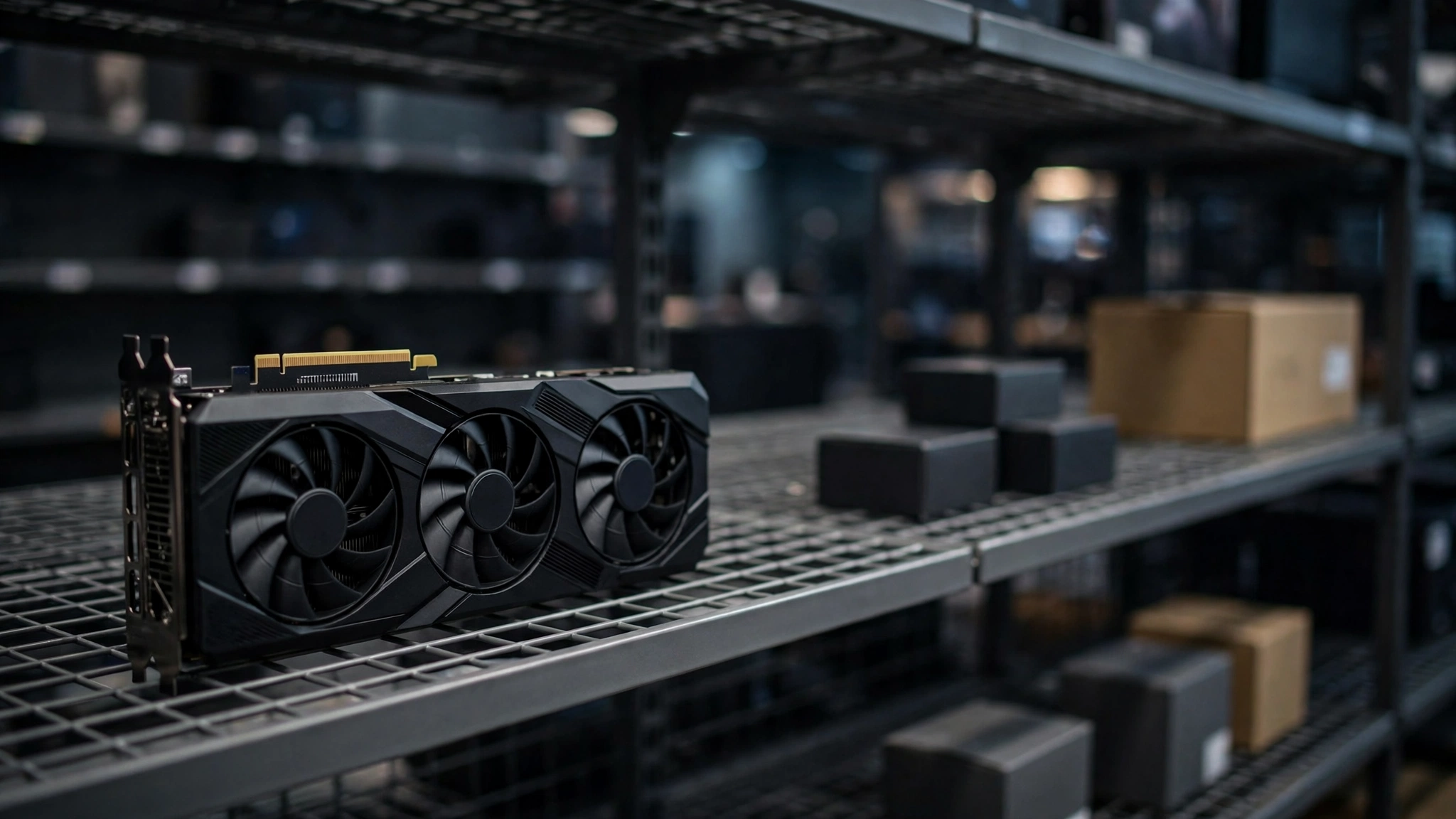
AMD has sharply cut the supply of Radeon gaming graphics cards to its partners in China, with allocations reportedly down by as much as half — and the squeeze could last into early next year, according to a supply-chain report that has ricocheted across the hardware press this week.
The report, first published by ChannelGate — the WeChat channel linked to China's Board Channels hardware community — and picked up by IT Home on November 12, says AMD has reduced shipments of gaming GPUs to Chinese add-in-board partners by 20 to 50 percent since October, the start of the fourth quarter of 2026. Monthly allocations to board makers are still falling, the report adds, and supply is expected to stay extremely tight until at least January 2027.
AMD has not commented on the report, and the figures have not been independently verified. But the claim has been carried by TweakTown, VideoCardz, Guru3D and TalkEsport, and it lands at a moment when gamers in China are already paying more for graphics cards.
Memory costs and AI demand are squeezing gaming from both sides
ChannelGate points to two forces behind the cuts. The first is memory: AMD sells its board partners bundles that pair the GPU chip with GDDR6 memory, and memory prices have surged as AI data centres soak up supply. The second is capacity itself — production lines that once served gaming are increasingly diverted to AI computing, leaving fewer chips for consumer cards.
The report says the Radeon shortage in China is now no less severe than the one affecting Nvidia's GeForce cards, which have faced their own supply crunch through the year. The cuts are said to span the RDNA 4 Radeon range rather than a single model, hitting partners including Sapphire, XFX, PowerColor, ASRock and Asus, which turn AMD's chips into the cards shoppers actually buy.
China only — for now
Importantly, the report covers China only. No equivalent reports of Radeon allocation cuts have surfaced for Europe, North America or India, and the figures should be treated as an estimate from a single supply-chain source rather than a measured market-wide number. Board Channels has a decent track record on channel news, but the underlying shipment data has not been published.
Still, the direction of travel fits a broader pattern. Memory prices have climbed steeply through 2026, and AMD chief executive Lisa Su recently predicted a double-digit percentage decline in PC shipments for the coming year. Hardware leaker Kepler L2 has also suggested AMD is unlikely to introduce its next-generation RDNA 5 graphics architecture before Computex 2027 — meaning today's Radeon cards may have to carry the market for longer than gamers would like.
What it means for buyers
For shoppers in China, the immediate effect is likely to be higher prices and thinner shelves through the winter, with the tightest supply expected to persist into January. Whether the squeeze spreads beyond China will depend on how memory prices and AI demand evolve in the months ahead — and on whether AMD chooses to say anything about its allocation plans at all.