By Hamza Faisal
Chinese robotics company AGIBOT has proposed a new way to judge humanoid robots: At AGIBOT Innovation Day 2026 in Shanghai on Thursday, co-founder, president and chief technology officer Peng Zhihui introduced Worken, a framework that measures the productive work robots perform in real environments rather than simply counting how many machines have been built or shipped.
Worken, a blend of "work" and "token", is described by the company as "Effective Intelligent Work Hours". It multiplies three factors: the number of robots actively performing tasks, the hours they spend working autonomously, and an output efficiency ratio that compares completed work against a reference benchmark for a defined task, such as what a human worker produces under established operating standards.
The announcement headlined a deployment-focused event at which AGIBOT also unveiled its AHA3 humanoid hardware platform, debuted the GO-3 Preview embodied AI foundation model and the WITA-Omni interaction model, formally launched the G2 Max industrial robot, and released Link-U OS 1.0, an operating system built for embodied intelligence.
Worken: measuring output, not units
Peng argued that robotics has made rapid progress in hardware, AI models and large-scale manufacturing, but now faces a more practical question as robots move into factories, warehouses and service settings: how much useful work are they actually delivering? Two deployments with similar robot counts can deliver very different productivity, he said, depending on how independently the machines operate, how often humans must intervene, and how much acceptable work they complete.
Worken therefore excludes powered-on time and inventory: only active robots, autonomous hours and task-specific output count. AGIBOT also framed the measure as an economic tool: hardware depreciates, but software and AI improvements may let the same machine do more useful work over its operating life, so output measured against lifecycle cost gives buyers a clearer picture of long-term value.
AHA3, GO-3 and WITA-Omni: the brains and body
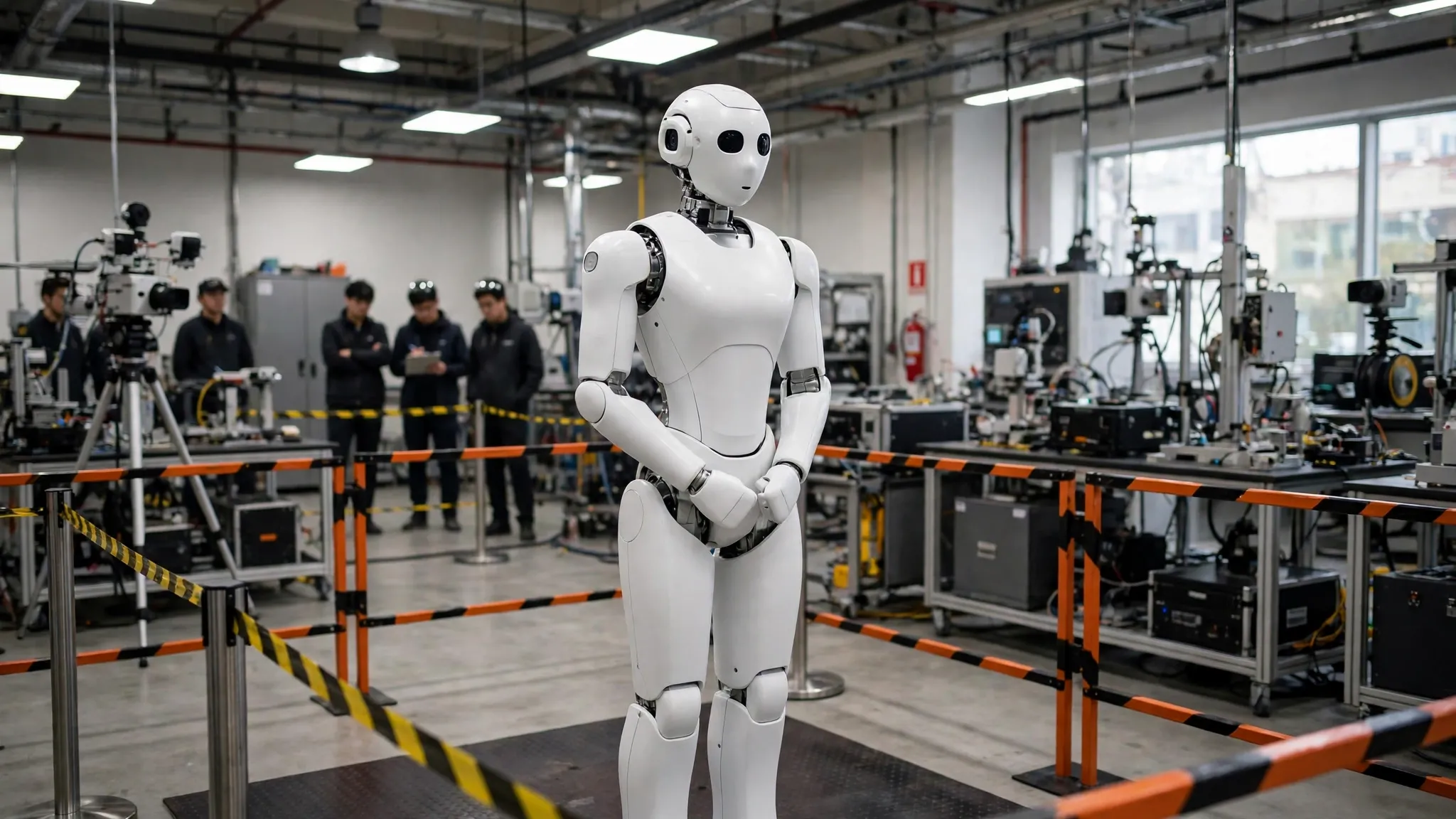
The hardware centrepiece is AHA3, short for AGIBOT Humanoid Architecture, the company's third-generation humanoid platform and its first commercial "Three Intelligences in One" architecture, combining the hardware foundations for locomotion, interaction and task execution. It uses advances in motor-drive technology, integrated computing and Wi-Fi 6 and 5G connectivity, plus a joint liquid-cooling system, IP67-rated joints and a new dexterous-hand family.
On the software side, GO-3 Preview is a next-generation embodied foundation model built around WRAM, a unified framework for reasoning, prediction and action, designed to help robots anticipate the consequences of their actions and generalise beyond learned task sequences. AGIBOT said it topped benchmarks including RoboDojo, RoboTwin and RoboColiseum. WITA-Omni folds visual perception, speech, real-time dialogue, facial expressions and physical actions into one continuous interaction system with full-duplex conversation and on-device deployment.
G2 Max and Link-U OS head to the factory floor
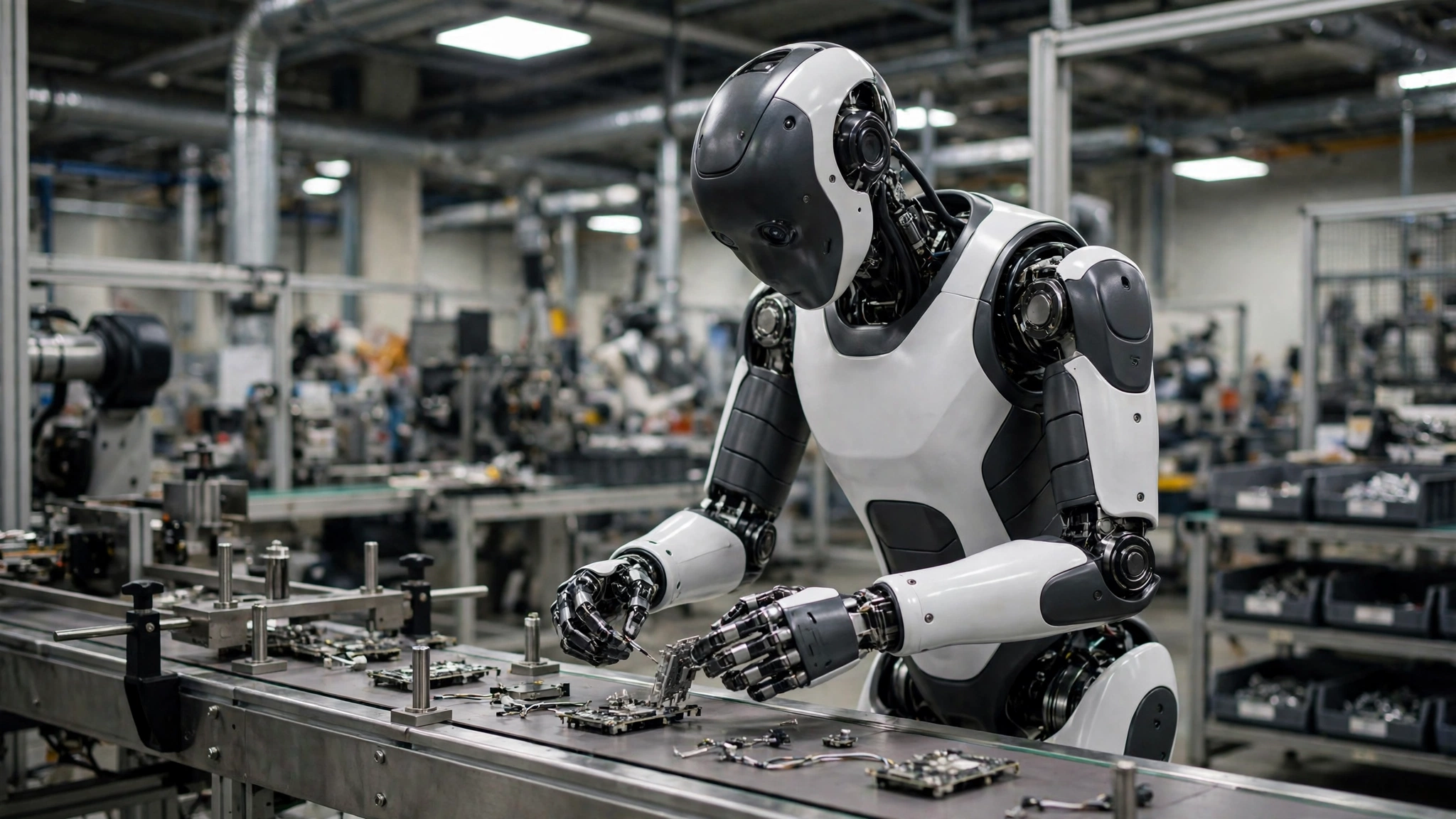
The most immediately tangible product is G2 Max, a heavy-duty industrial robot for manufacturing and logistics with 21 degrees of freedom, dual-arm handling capacity of up to 40 kilograms and an adjustable working height from 0.1 to 2.5 metres. AGIBOT pointed to G2-family deployments in tablet production at Longcheer, semiconductor packaging and testing, CNC machine tending and logistics, plus visitor-service work at Guangzhou Metro and Chimelong.
Underpinning all of it is Link-U OS 1.0, which AGIBOT calls the industry's first operating system purpose-built for embodied intelligence. Already validated on mass-produced robots, it is being trialled by selected partners and is planned to go fully open source by the end of 2026.
Together, the announcements point the humanoid race away from exhibition stunts and unit counts, toward robots measured, like workers, on the work they finish.