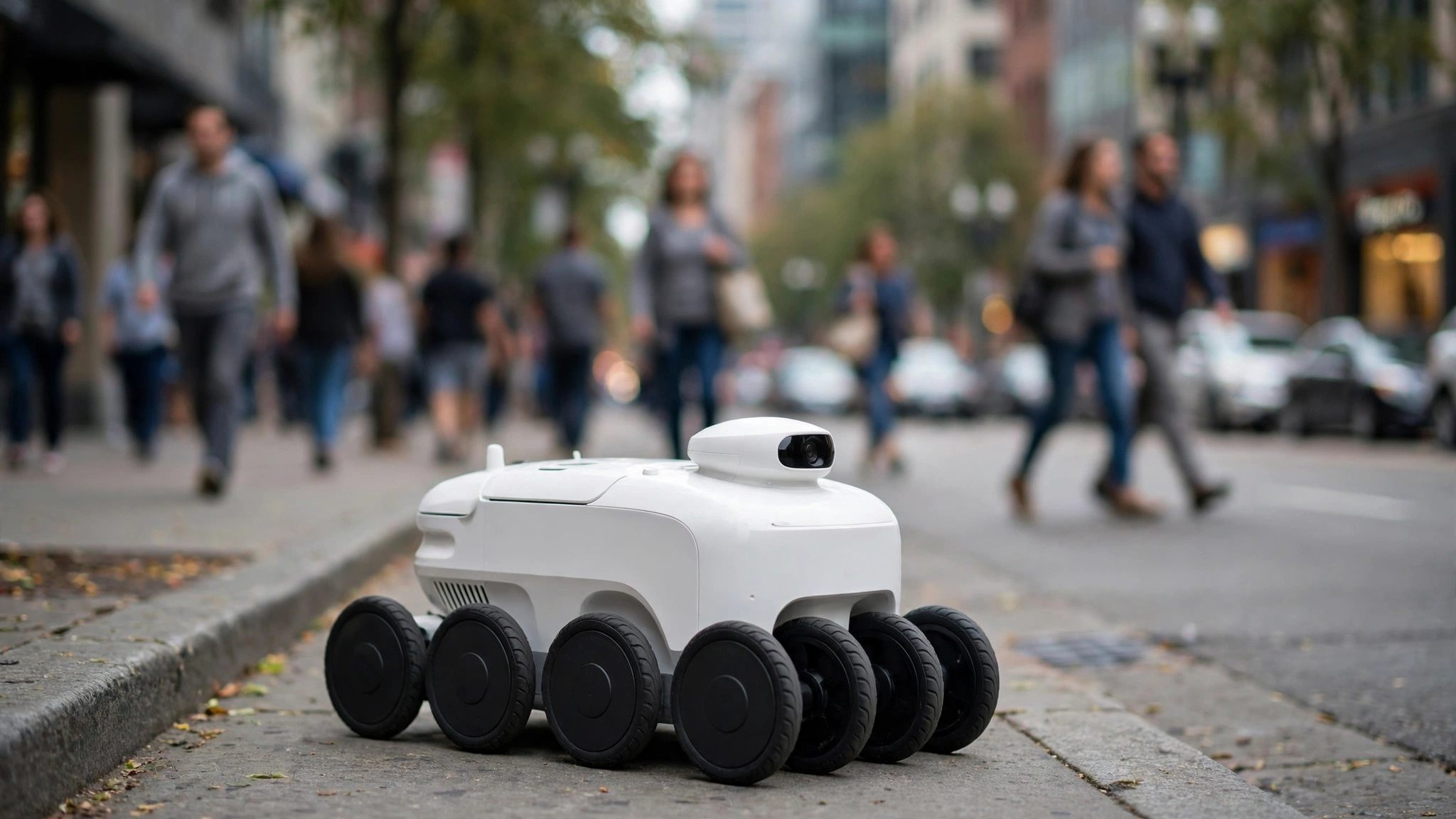
A 78-year-old retired professor was arrested in Philadelphia this month after repeatedly stepping in front of a self-driving food delivery robot — and she says she plans to keep doing it. Carolyn Marvin, a retired communications professor at the University of Pennsylvania, was cited for disorderly conduct on October 14 after refusing police orders to let an Uber Eats delivery robot pass.
The arrest, first reported by CNN on October 31, has turned a sidewalk standoff into a wider debate about who owns public space — and whether a machine on wheels deserves the same legal standing as the people walking beside it.
A habit that ended in handcuffs
Marvin told CNN that blocking the robots had become a habit since the small, wheeled machines began rolling through parts of Philadelphia. She would stand in front of one for a few minutes as it carried its lunchtime cargo along the sidewalk, then step aside.
October 14 was different. On her way home from a flu shot — a jar of enchilada sauce in one hand, chicken biryani takeout in the other — she stopped in front of a robot in a busy part of Center City, near the 1200 block of Filbert Street. A larger-than-normal crowd gathered. Some onlookers were supportive; others were critical. Marvin believes someone in the crowd called the police.
Officers said they had responded to a report of "criminal mischief involving a delivery robot." When they arrived, they found Marvin refusing to let the robot pass, and after multiple commands to move, they handcuffed her, placed her in a squad car, and issued a citation for disorderly conduct.
"I wasn't impeding any persons. I was impeding a machine."
Marvin, a scholar of communication and constitutional law, says her actions are protected speech — a protest against the creeping privatization of public sidewalks and the erosion of human delivery work. "I was under the impression that I had more rights than the robot did," she told CNN. She plans to fight the citation on First Amendment grounds, and says she will keep stepping in front of the robots when she has time, though she acknowledged she will be more cautious about police presence.
The legal picture is messier than the standoff suggests. In 2020, Pennsylvania's legislature passed a law classifying autonomous delivery robots — officially "personal delivery devices" — as pedestrians under the state's Vehicle Code, giving them many of the same sidewalk rights as human walkers. But the same rules require the devices to yield the right-of-way to people and navigate safely around them — a tension at the heart of Marvin's case.
The robots are only getting more common
Uber Eats launched its robot delivery fleet in Philadelphia in March 2026 with robotics firm Avride, making the city the fourth where meals arrive by robot. The machines travel at up to 5 mph and carry up to 55 pounds.
Marvin's arrest is part of a wider friction as robots move into everyday spaces: delivery bots have been tagged with graffiti in Los Angeles, one botched "botnapping" was reported, and in Southern California, robotaxis have drawn complaints for hogging EV chargers. Her case may now test, in court, a question cities have so far avoided answering: when a pedestrian and a robot both claim the sidewalk, whose rights win?