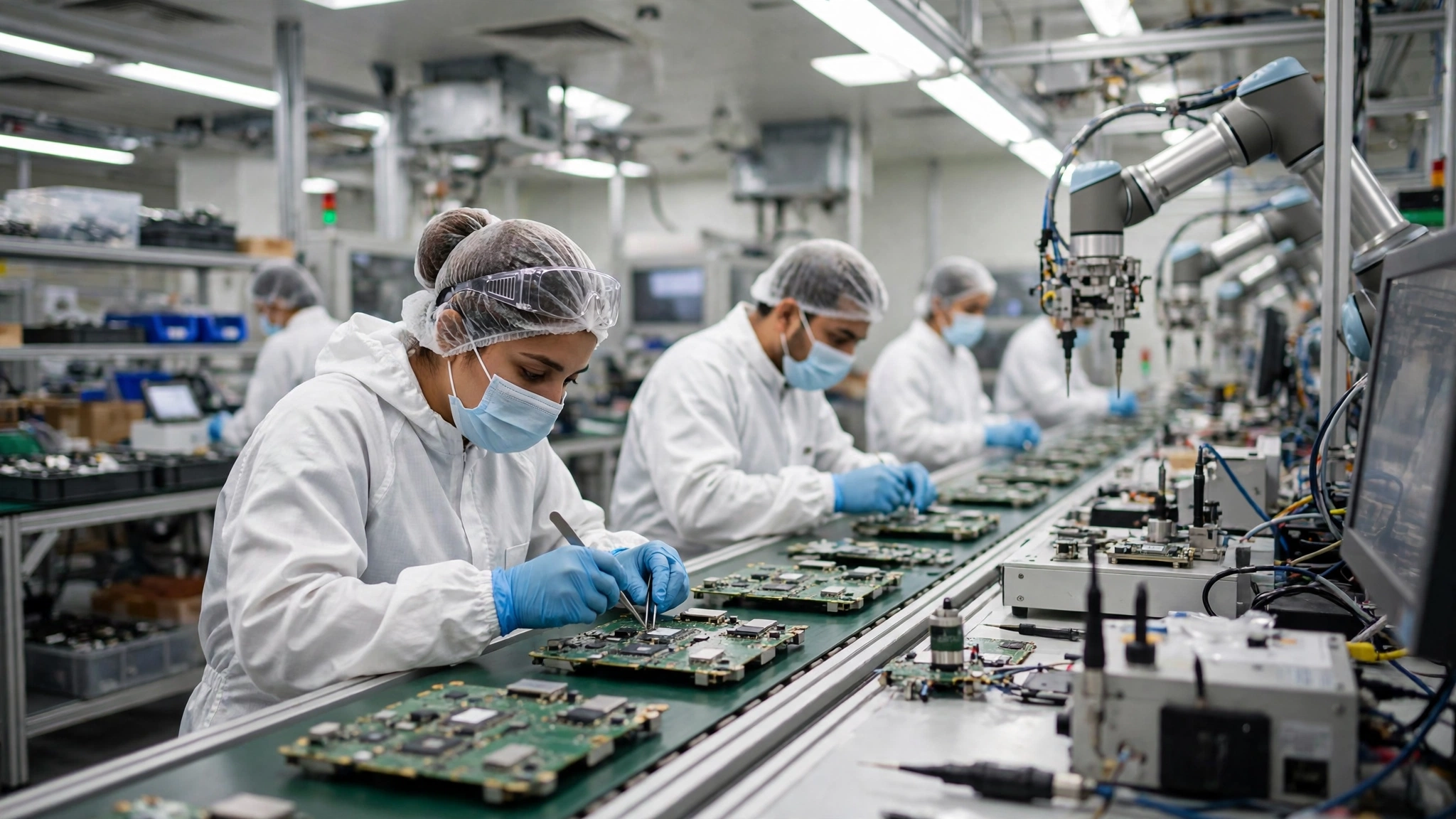
Transsion Holdings, the Chinese company behind the Tecno, Infinix and itel phone brands, has told Pakistan it wants to move beyond assembling handsets in the country and start making phone components locally, as Islamabad drafts a new electronics manufacturing policy.
The plan came up in a meeting in Islamabad on Friday between Transsion founder and chairman George Zhu and Finance Minister Muhammad Aurangzeb, according to The Express Tribune and Radio Pakistan. Transsion briefed the minister on its smartphone, electric bike and energy storage operations in Pakistan, along with its plans for future investment and business growth.
The discussions focused on strengthening local manufacturing, building supporting industries and supply chains, and using Pakistan's manufacturing capacity to serve international markets. Aurangzeb said macroeconomic stability gave investors a foundation for business planning and reaffirmed the government's commitment to reforms and export-oriented growth.
A new policy for 2026–33
Adviser to the Prime Minister for Industries and Production Haroon Akhtar Khan said the government is working on a Mobile and Electronics Device Manufacturing Policy for 2026–33, aimed at promoting domestic manufacturing, attracting investment and strengthening the industry, with a priority on moving beyond assembly towards comprehensive manufacturing of mobile phones and devices.
The new policy would follow the 2020 Mobile Device Manufacturing Policy, which drew more than 35 global handset makers to set up plants in Pakistan and created about 40,000 jobs, according to the Pakistan Telecommunication Authority. But the industry never deepened: value addition has remained stuck at 10 to 15 percent, with plants largely assembling imported kits rather than making parts at home.
The localisation problem
Industry sources have blamed a reverse tariff structure for the shallow localisation. Components such as chargers, batteries, cables and motherboards imported as part of a completely knocked-down kit attract zero percent customs duty, while the raw materials and intermediate inputs needed to make those same components locally attract duties of 20 to 30 percent — making it cheaper to import a finished part than to manufacture it in Pakistan.
Transsion's interest matters because of its scale in the country. Its Transsion Tecno Electronics joint venture runs two plants in Karachi and describes itself as Pakistan's largest mobile phone manufacturer, producing Infinix, Tecno and itel handsets. The company's local unit already employs around 5,000 people, according to a statement from 2024, and its brands are among the best-selling phones in the Pakistani market.
What happens next
No timeline or investment figure was disclosed for the component manufacturing plans, and Transsion's interest is not yet a commitment to build new plants. The real test will be whether the 2026–33 policy fixes the tariff inversion that has kept local parts production uncompetitive — and whether other manufacturers follow Transsion's lead.
For Pakistan's phone industry, the difference between assembling imported kits and making parts at home is the difference between a low-margin assembly line and a supply chain that keeps more value, and more jobs, inside the country. If the new policy delivers, the next generation of Tecno and Infinix phones sold in Pakistan could be built from parts made in Pakistan too.