By Hamza Faisal
Plans to build what a developer calls the world's biggest data centre on a former nuclear site in Scotland have run into a wall of local opposition, with campaigners claiming more than 10,000 objections have been sent to planning chiefs ahead of an October 29 deadline.
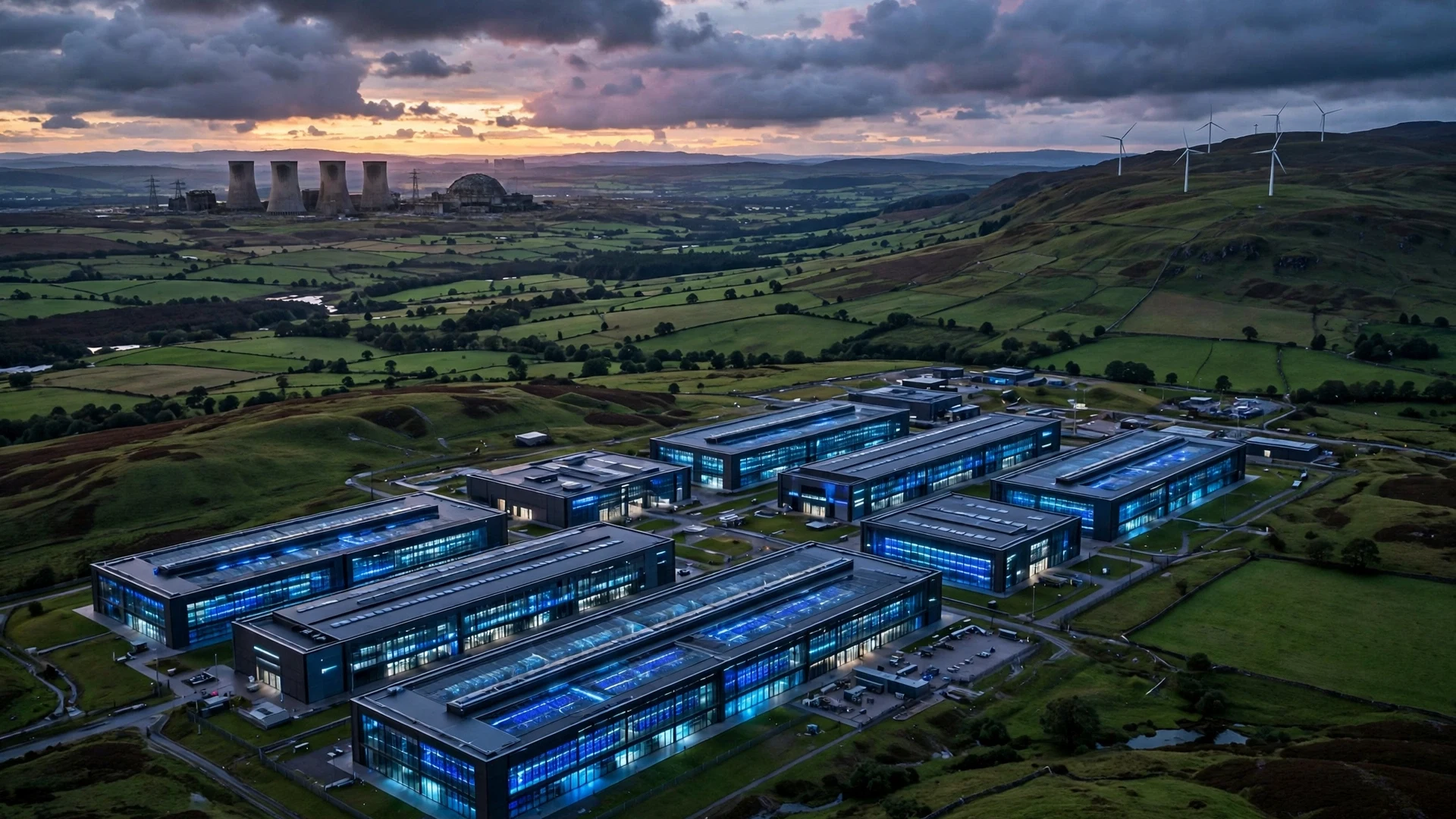
CX Tech Ltd has lodged a Planning Permission in Principle application with Dumfries and Galloway Council for an eight-building data centre campus on the Chapelcross site near Annan. The proposal carries a £16.5 billion price tag, covers 162,000 square metres, and targets about 1 gigawatt of combined capacity — roughly 120 megawatts per building — which the developer says would make it one of the largest data centre facilities on the planet.
The company says the campus would support about 750 jobs during construction and more than 500 permanent roles once operational, pitching the scheme as a way to return "a nationally significant site" to productive economic use with "critical digital infrastructure".
What the developer is promising
CX Tech chief executive Graeme Anderson has called Chapelcross a "once-in-a-generation opportunity", arguing the site combines renewable energy resources, digital infrastructure and high-value jobs. The developer claims the campus would run as a net-zero operation, drawing power through direct and private-wire connections to wind, solar and biomass generation near the site, and using a closed-loop, non-evaporative cooling design.
If approval comes through this year, construction would be phased from 2027 to 2035, with the full campus taking about eight years to complete. The Chapelcross plant itself has a long history: it opened in 1959, generated electricity for 45 years before closing in 2004, and had its cooling towers demolished in 2007. Defuelling finished in 2013, and the remaining buildings are not due for demolition until at least 2040.
Why campaigners say no
The backlash has been fierce. Sam Gibson of the group Say No to Chapelcross Data Centre questioned why the council is pushing ahead before the Scottish Government publishes national guidance on data centres, and described the number of diesel generators proposed for the site as "absolutely frightening" — warning that routine testing would keep multiple generators running and put the community at risk of serious air pollution.
Critics say the campus would consume around 7 million megawatt-hours of electricity a year, equivalent to the power used by more than two million homes, and could strain Scotland's grid while household bills keep rising. Scottish Green MSP Laura Moodie has called the proposal "reckless", arguing it endangers energy supply and the natural environment.
Decision not expected before next year
Whatever the council receives by October 29, no quick decision is on the cards. The Scottish Government has signalled that no hyperscale data centre applications will be decided before national planning guidance is in place, with decisions not expected before 2027. A non-binding Holyrood motion on the issue was passed in September, and a new Environmental Impact Assessment direction took effect on September 17.
Campaigners also note that parts of the proposed development would sit on agricultural land beside the decommissioned nuclear site rather than the brownfield footprint itself, raising concerns about farmland, woodland and views across the countryside.
By Hamza Faisal


