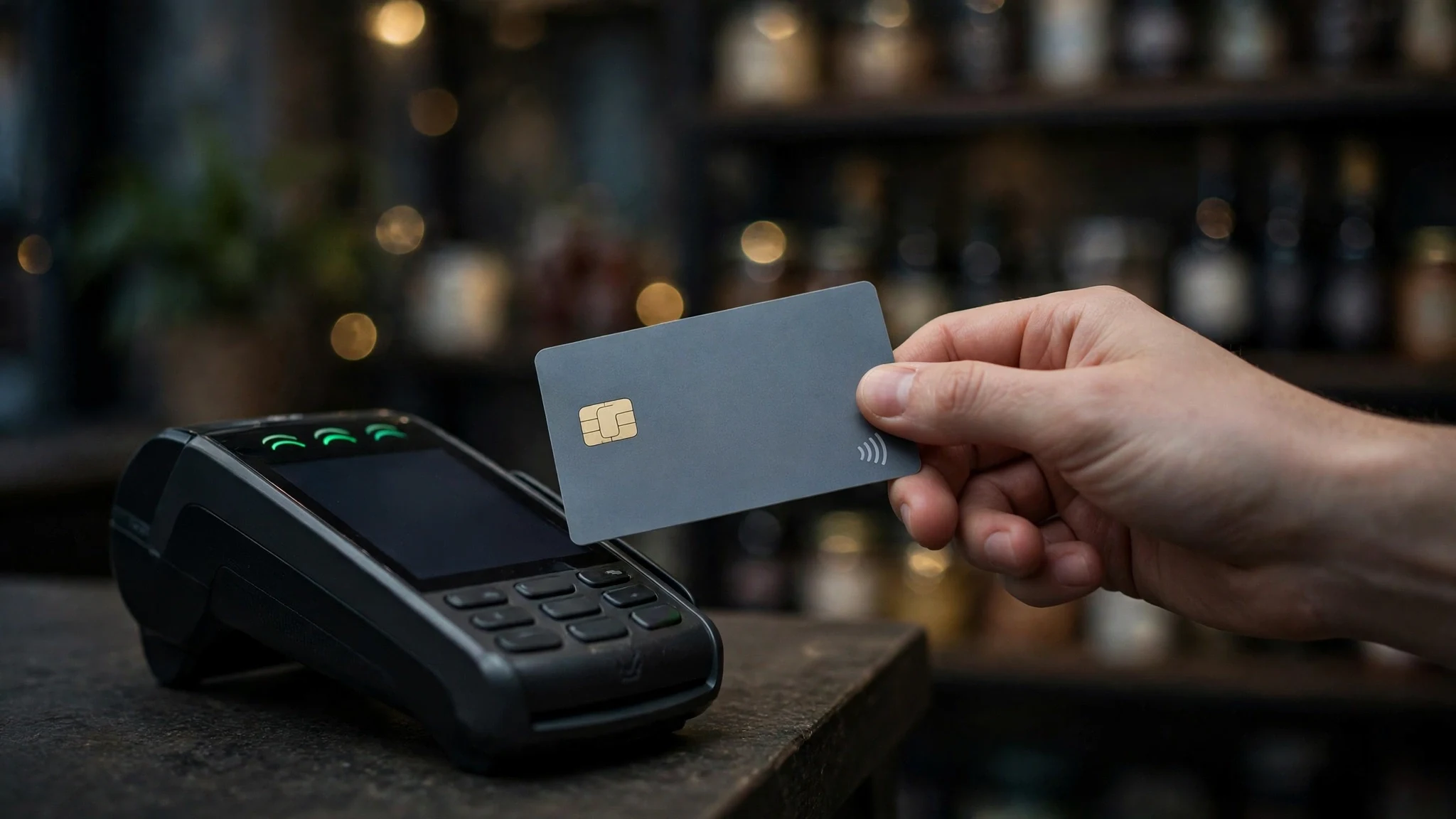
Visa and Mastercard asked a federal judge in Brooklyn on Monday to give final approval to a $38 billion settlement over the fees merchants pay every time a customer swipes a card — a deal that would rewrite the rules of card acceptance in the United States. The judge did not rule.
U.S. District Judge Brian Cogan heard arguments at a fairness hearing in the Eastern District of New York, then left the question open, with no ruling date announced. He did warn that rejecting the settlement could send the 21-year-old antitrust case to a protracted process if it goes to trial.
The settlement resolves claims that the two card networks charged merchants excessive interchange fees — the swipe fees built into nearly every card transaction. It covers more than 12 million merchants, though opponents say more than 20 million businesses could be affected.
What the deal would change
The most consequential change is not the headline dollar figure. For the first time, merchants would be allowed to accept standard cards while refusing premium or commercial cards — ending the networks' long-standing Honor All Cards rule, which required a store that took one Visa or Mastercard to take them all.
On fees, Visa and Mastercard would cut credit interchange by at least 0.1 percentage point for five years and cap fees on standard consumer cards at 1.25% for eight years. The settlement contains no admission of wrongdoing by either company.
American Express and Capital One's Discover are not part of the settlement, so the rule changes would apply only to Visa and Mastercard transactions.
The $38 billion number, explained
The $38 billion figure is not a check the card networks will write. It is an estimate from economists hired by the plaintiffs — Nobel laureate Joseph Stiglitz and economist Keith Leffler — of what merchants could save by 2031 under the new terms. The same experts put the total benefit, including savings that reach consumers, at $224 billion.
Class members receive no money payments under the deal. The scale of the fees at issue helps explain why the case has run for two decades: swipe fees for Visa and Mastercard in the United States totaled $118.8 billion in 2025, up from $111.2 billion in 2024 and $25.6 billion in 2009, according to the Merchants Payments Coalition.
Why some merchants still object
The court received slightly more than 1,000 objections to the settlement, including from Walmart and the National Retail Federation, the world's largest retail trade group. Opponents argue the fee relief is modest next to the scale of the charges — and that the deal still leaves the networks with substantial pricing power.
Judge Cogan granted preliminary approval in June, calling the revised terms fair, reasonable and adequate. A different judge rejected an earlier $30 billion settlement in June 2024 as too small, which is why this version carries the larger savings estimate and the new card-refusal right.
Even if Cogan approves the deal, the fight is unlikely to end quickly. Appeals are expected, and analysts cited by American Banker say the settlement may not be fully finalized until 2029 while related cases continue. For now, the $38 billion settlement remains contingent on the judge's final decision — and merchants will keep paying today's fees until he makes it.