Washington's screening system for advanced AI chips let through buyers that barely exist on paper. A New York Times investigation published on Saturday found the US Commerce Department cleared roughly two dozen Chinese companies to buy or handle Nvidia's H200 processors — including firms with empty listed offices and owners tied to blacklisted companies.
The H200 is the most powerful AI chip Washington currently allows Nvidia to sell to China: a Hopper-generation accelerator for training and running large AI models. Sales were only allowed after President Donald Trump announced in December 2025 that Nvidia could sell to approved Chinese customers, with the US taking 25 percent of the revenue.
The Commerce Department's Bureau of Industry and Security, which runs US export controls, was required to vet each buyer for national security risk. The Times found the checks passed companies that reporters could not find at their own addresses.
An empty office in Beijing
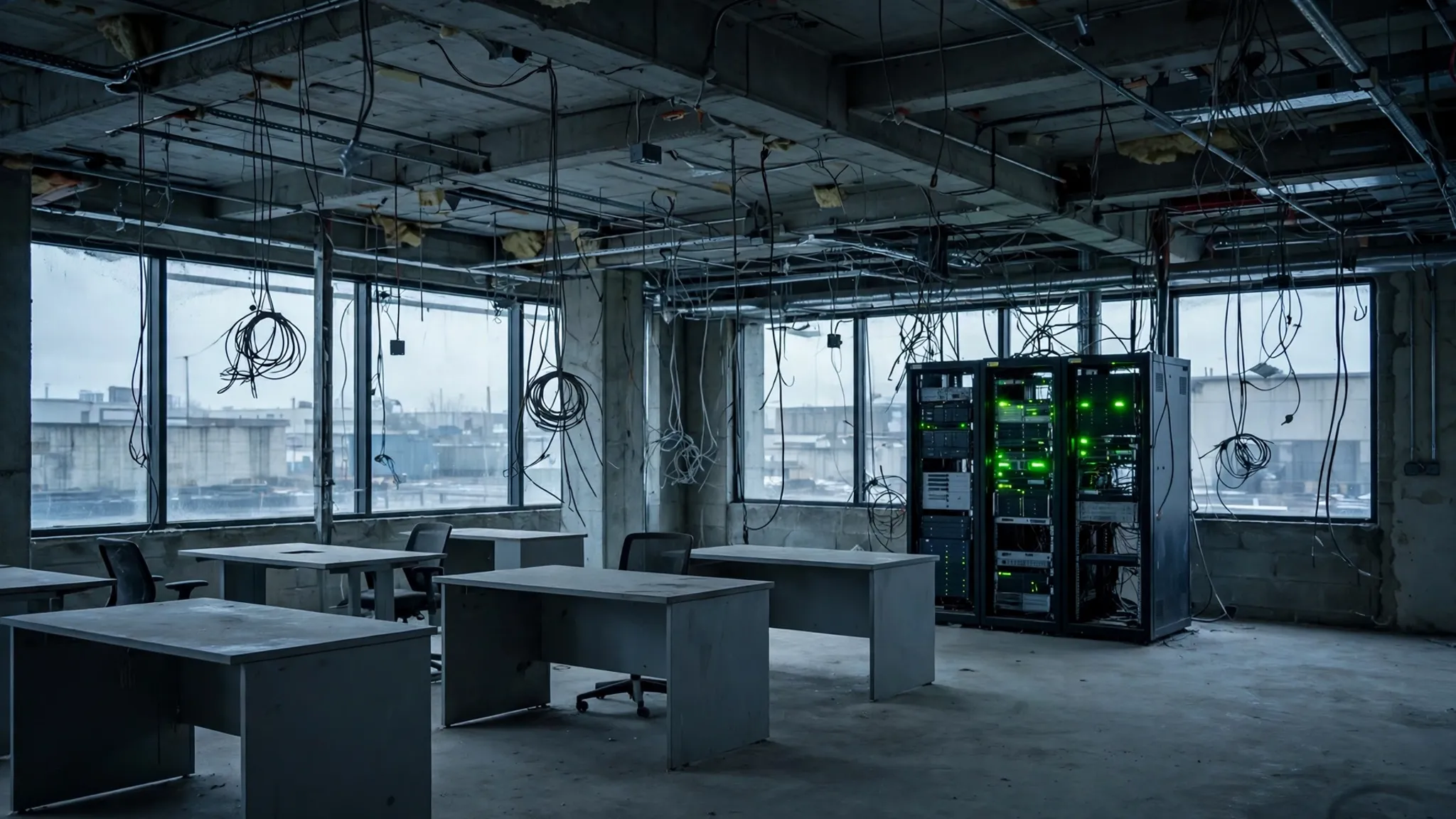
The starkest case is New Matrix, created just 17 months ago and approved to assemble H200 chips into AI servers for other customers. Its listed address sits in a new industrial park on the north-western edge of Beijing. Reporters found a hollow grey shell: wires dangling where lights should be, no listing in the building directory, and no record with the park's management.
Chinese corporate records tie two of New Matrix's main owners to companies connected with Wise Road Capital, a Beijing private equity fund blacklisted by the US in 2024 for allegedly helping China acquire sensitive chip companies. Two analysts who reviewed the records told the Times the firm may be a front for companies linked to that fund. New Matrix has not commented publicly.
Maginfra, another newly created firm licensed to assemble H200s, fared little better. When reporters visited its listed office in September, they found a small locked room with a few empty chairs and desks. The Times reports Maginfra shares staff and patents with Inspur, the Chinese server giant the US placed on its Entity List for working with the Chinese military.
A pattern, not a one-off
The investigation presents the cases as a pattern rather than isolated lapses. Two other licensees, Zhejiang Yindun Cloud Technology and Shanghai Jiatang, are tied via their owners to firms serving the Chinese military, the Times reports. None of the three firms responded to the paper's requests for comment, and the Commerce Department and Nvidia have not commented publicly on the findings.
Alongside the little-known firms, the approvals also cover major Chinese corporations, including Baidu, BYD and Tesla's Shanghai operation. No published report shows an H200 chip reaching a restricted end user through New Matrix or any firm named. The concern is the screening itself — licences meant to keep America's best AI chips away from its military rivals were granted to companies whose premises and ownership raise obvious questions.
Why the licences matter now
The findings land as Washington's chip policy faces scrutiny on two fronts. House Republicans have summoned Nvidia chief executive Jensen Huang for a closed-door briefing, and Congress is seeking Nvidia's answers on the licensing programme by November 18. Meanwhile about 600,000 H200 chips sit in Hong Kong because Beijing has withheld approval for large-scale imports.
Export controls have been the centrepiece of US efforts to slow China's military modernisation since 2022, on the grounds that advanced AI chips can power weapons, surveillance and cyber operations. The Times investigation suggests the gatekeeping meant to enforce that policy is weaker than the rules imply — and that the chips at the heart of the AI race are moving through a licensing system that approved an empty office.


