By Hamza Faisal
Uber reported third-quarter results on November 4 that beat Wall Street expectations, and used the occasion to put a firm number on its driverless ambitions: roughly 700 fully driverless vehicles on its platform by the end of 2026, rising to more than 2,000 by the end of 2027. Yet the most talked-about figure from the company's earnings call was a far smaller one. In a quarter in which Uber completed 4.1 billion trips, third-party AI agents arranged a grand total of four rides.
Gross bookings, the total value of rides and deliveries ordered through Uber, rose 20 percent from a year earlier to $59.82 billion. Revenue grew 10 percent to $14.77 billion, just ahead of the $14.66 billion analysts had expected. Adjusted earnings per share reached $0.88, up 35 percent, while adjusted EBITDA climbed 31 percent to $2.96 billion. Monthly active platform consumers reached 215 million, up 14 percent, and trailing twelve-month free cash flow hit a record $10.4 billion. It was the fifth consecutive quarter of gross bookings growth above 20 percent.
The headline profit figure told a different story. Earnings per share on a generally accepted accounting basis came in at $0.25, below consensus, after Uber excluded $484 million in legal, tax and regulatory reserve changes and settlements from its non-GAAP results. The company said those adjustments mostly relate to worker classification cases and disputed tax positions. For the fourth quarter, Uber guided to gross bookings of $63.25 billion to $65.25 billion and adjusted earnings per share of $0.95 to $0.99.
From testing to commercial driverless service
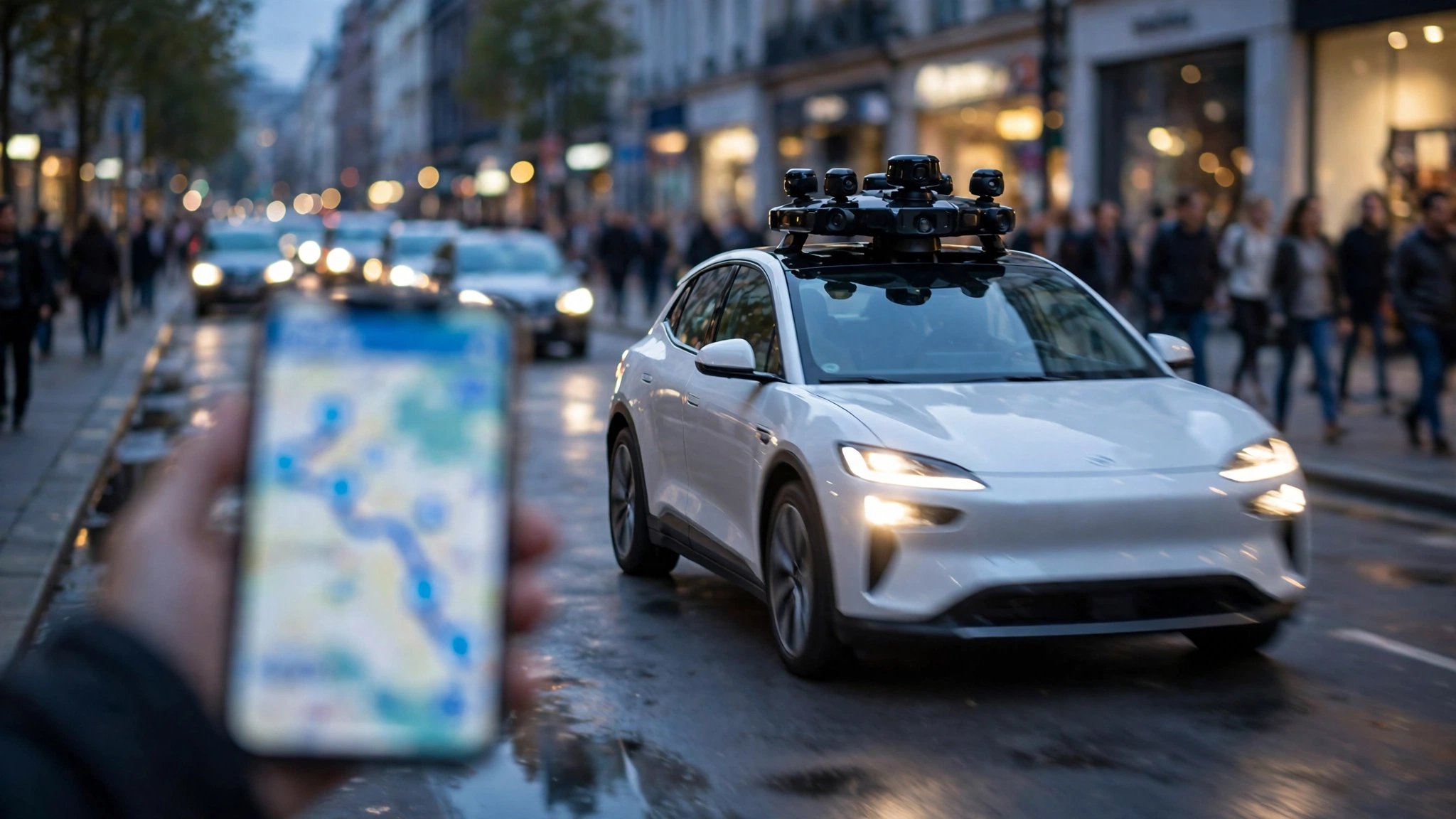
Chief executive Dara Khosrowshahi said Uber's autonomous-vehicle focus is shifting from partnerships and testing to commercial service. Zoox vehicles are due to launch on Uber in Las Vegas later in November, with Motional moving to fully driverless operations soon after. Next year the company expects to add Nuro vehicles in California and Houston, and Avride in Texas around the middle of the year.
Uber is not building the vehicles itself. Its strategy leans on partners including Waymo, Nuro, Lucid and Rivian, and the company has committed about $10 billion to autonomous-vehicle partnerships. It is also building its own robotaxi networks with Lucid and Rivian. Khosrowshahi acknowledged that driverless rides are currently less profitable than human-driven ones, saying he expects profitability to eventually match human-driven rides on the platform, but that it will take time.
Four rides from AI agents
The earnings call also offered a reality check on one of the tech industry's favourite predictions: that AI agents will soon book travel, food and rides on people's behalf. Asked about agent-driven demand, Uber executives disclosed that AI agents accounted for around 500 Uber Eats orders in the quarter, and four rides. Uber completed around 320 million trips in its busiest week of the quarter, around Halloween.
The numbers suggest that agentic commerce, at least for ride-hailing, remains more promise than practice. Uber said it is selectively exploring new distribution channels that could bring incremental demand, but its direct relationships with consumers remain central to its approach to AI, with the technology used mainly to simplify transactions and personalise discovery for now.
What to watch next
The next test comes quickly. The Las Vegas Zoox launch later this month will show whether Uber can turn its driverless targets into a service riders actually use, and the ramp toward 2,000 vehicles in 2027 will test whether regulators, partners and unit economics cooperate. If the fleet scales as planned, driverless cars will still be a rounding error next to billions of human-driven trips, but they will no longer be an experiment.


