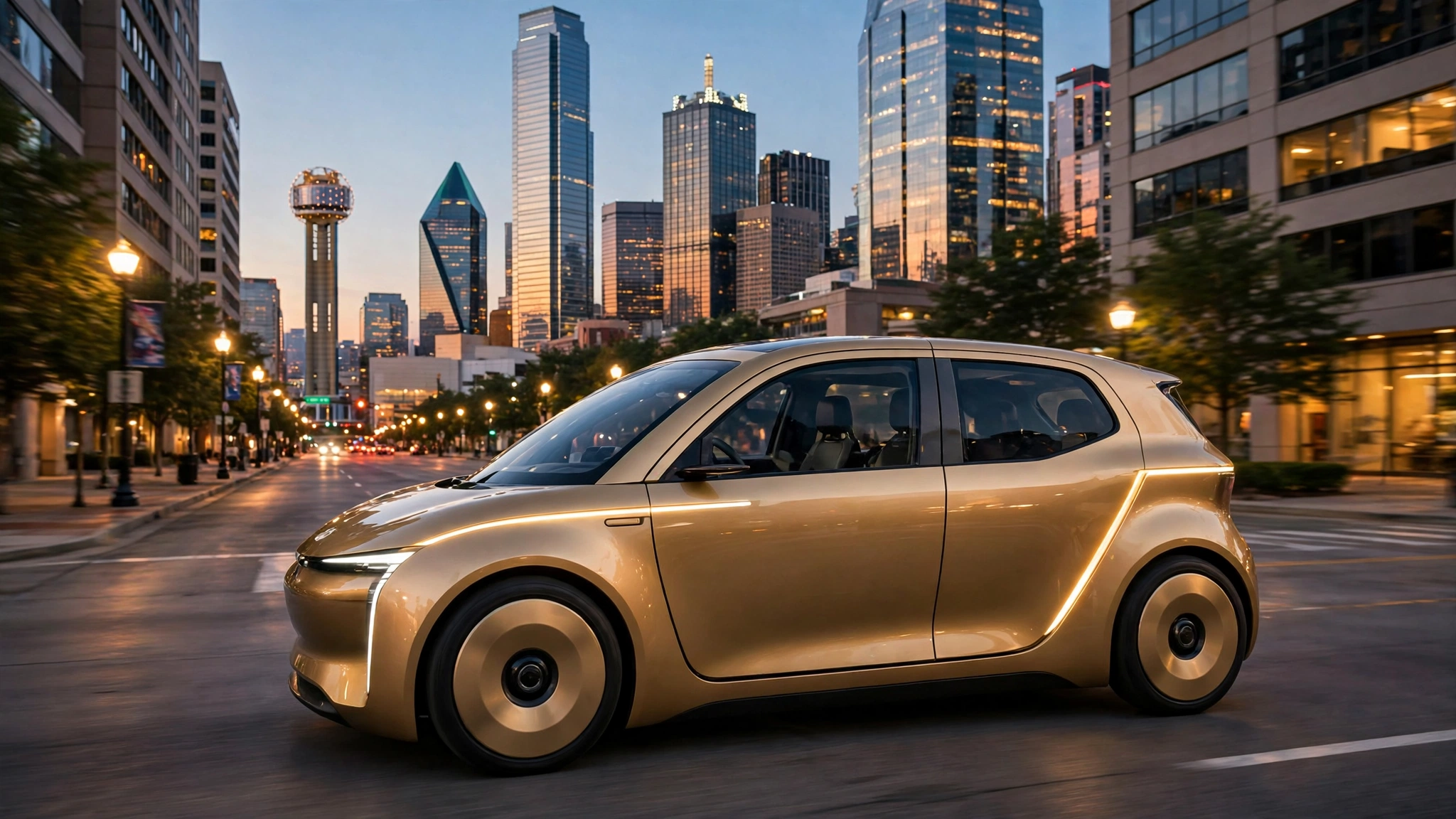
Tesla's steering-wheel-free robotaxi has a second home. The company opened public Cybercab rides in Dallas on Thursday, November 19, making the Texas city the second in the United States where riders can hail the purpose-built two-seater through the Tesla Robotaxi app.
The launch was announced with a short video from Tesla's official Robotaxi account on X: "Howdy Dallas. Cybercab has arrived in your city." App notifications and emails went out to riders in and around the Dallas service area the same day, inviting them to be among the first to take a ride.
Dallas is a natural next step. Tesla has run unsupervised Model Y robotaxis in the city since April, and the service area grew from about 31 square miles to roughly 81 square miles in late August. Since November 11, the Robotaxi network has run around the clock in every city where it operates without a driver.
Dallas gets the upgraded V1.5 Cybercab
The Cybercabs now carrying passengers in Dallas are not quite the same vehicles that launched in Austin in early September. Tesla chief engineer Eric Earley has called them "Cybercab V1.5," and riders have already spotted new hardware, including a Starlink dish built into the rear of the roof and a camera in the trunk lid.
The core design is unchanged: a two-seat car built at Gigafactory Texas, with butterfly doors, no steering wheel and no pedals, running entirely on Tesla's unsupervised Full Self-Driving software. The Austin fleet grew roughly tenfold in its first weeks as hours expanded toward round-the-clock service.
Tesla registered 200 more Cybercabs with the Texas Department of Motor Vehicles on November 17, just two days before the Dallas launch, bringing the state's registered total to 773.
Buying one is now possible — with a catch
Alongside the Dallas launch, Tesla has begun inviting select customers to buy a Cybercab for personal use. The price is $29,990 before taxes, plus a required $299-per-month Autonomy Subscription and a $1,000 non-refundable deposit, with first deliveries targeted for December and focused on Austin.
Most Cybercabs will stay in Tesla's own fleet, though. The company has said it plans to bring the vehicle to more cities before the end of 2026, after promising on its October 21 earnings call — when AI software chief Ashok Elluswamy named Dallas as the next stop — that the expansion would not stop at Austin.
The regulator is still watching
The rollout is not without scrutiny. The US National Highway Traffic Safety Administration opened an audit in early September into how a car with no steering wheel or pedals complies with federal safety standards, and that inquiry remains open. The agency has announced no findings, ordered no recall and halted no service, and rides in Austin and now Dallas continue.
For Tesla, Dallas is the test of whether the Cybercab can scale beyond its home turf. Austin proved the car could carry paying passengers; Dallas — a bigger service area, a second city and a newer version of the car — will show whether the robotaxi business can repeat the trick.