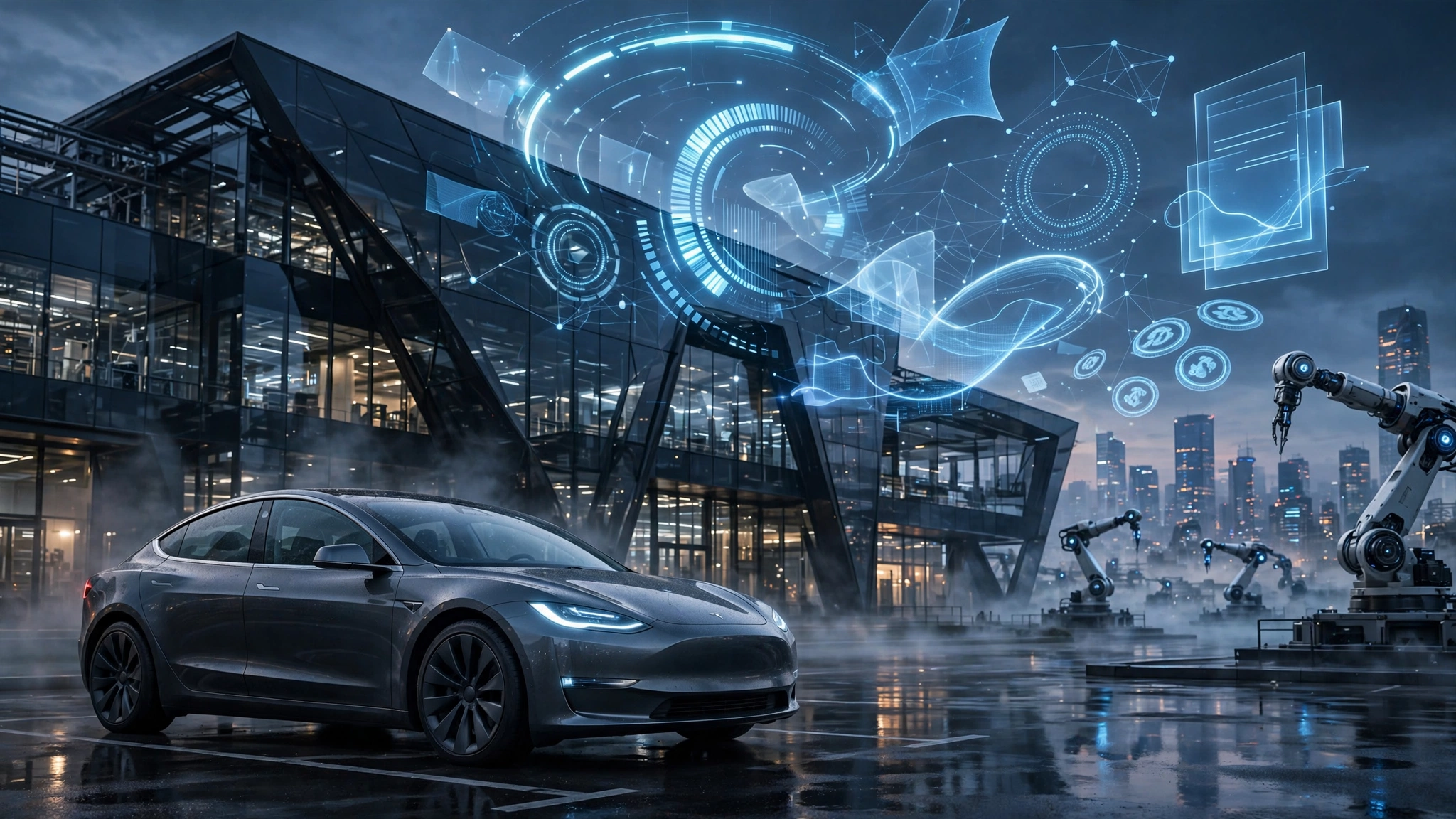
Tesla has lined up US$30 billion in new credit facilities to back Elon Musk's push to transform the electric vehicle maker into a leader in artificial intelligence and humanoid robotics.
In a regulatory filing on Tuesday, September 29, the company said it had entered three credit agreements: a US$20 billion delayed-draw term loan, a US$8 billion five-year revolving credit facility and a US$2 billion 364-day revolving credit facility.
The package replaces a previous US$5 billion line of credit that was due in January 2028 and had no outstanding borrowings when it was terminated. Citigroup is acting as administrative agent for the term loan, while Wells Fargo is administrative agent for the revolving lines.
Tesla can also increase the revolving commitments by up to US$4 billion more if needed.
Dry Powder for a Massive Spending Year
The borrowing capacity arrives just as Tesla's capital expenditure is set to hit record levels. The company has forecast 2026 capex of more than US$25 billion, up from US$8.53 billion in 2025, to fund AI computing infrastructure, factory expansion and its growing fleet of autonomous Cybercab robotaxis.
"We should be spending on capex as fast as we can - spend as fast as we can without it being too wasteful," Musk said on the company's July earnings call.
Tesla ended the second quarter with more than US$43.5 billion in cash and investments, and reported US$28.2 billion in second-quarter revenue, up 26% year over year, with vehicle deliveries hitting a record 480,126 units.
Still, analysts expect the spending surge to push free cash flow to negative US$9.78 billion for the year, according to data compiled by LSEG.
AI, Solar and a Texas Chip Plant
The money will feed Musk's biggest bets beyond cars: AI compute infrastructure, solar cell manufacturing capacity and a semiconductor fabrication project built with SpaceX. The two companies are developing Terafab, a large chip-making plant in Grimes County, Texas, with an initial investment of US$16.8 billion.
"SpaceX is aiming together with Tesla to do 200 gigawatts of solar production per year," Musk said at an event in Washington on Tuesday.
Each of the new products needs dedicated production. For the Optimus humanoid robot and the Tesla Semi, the company is building entirely new factories, while the Cybercab robotaxi sits at the centre of Tesla's pivot from automaker to autonomous ride-hailing business.
A Safety Net, Not a Bailout
Tesla stressed that the facilities are a safety net rather than emergency funding. The company said it had no borrowings outstanding under the new facilities as of September 29 and does not currently plan to draw on them in 2026.
The agreements permit borrowing in different currencies and require Tesla to maintain at least US$5 billion in liquidity.
For investors, the message is that Musk intends to keep spending aggressively over the next two to three years as Tesla expands both its vehicle production and its AI ambitions. Whether that spending delivers the returns he promises - he called 2026 a "massive capex year" - will be the number Wall Street watches.