By Hamza Faisal
SpaceX is building artificial intelligence data centres at a pace the rest of the industry has not matched. Research firm SemiAnalysis said on November 14 that the company's campus on the Memphis–Mississippi border will grow from 0.4 gigawatts of IT capacity in January to 2.4 gigawatts by the end of 2026 — six times its size at the start of the year, and a 2.0-gigawatt addition in twelve months.
The firm, which tracks the buildout through satellite imagery and local filings, said SpaceX is on track for roughly 13 gigawatts of AI compute capacity by 2027, with more than 9 gigawatts already identified across specific sites and 3.6 gigawatts under construction — enough, it estimates, to match in about 18 months the data-centre footprint Google spent close to three decades assembling.
Five sites, built in months not years
The growth runs across five sites the firm names as Macrohard, MiniHard, Macroharder, Project SPAM and Gun Range. The headline number is the build time. While most data-centre builders are fighting for eight-to-twelve-month schedules, SemiAnalysis wrote, SpaceX has cut them in half: MiniHard, an expansion inside the Colossus 2 complex, finished construction in about five months, and the new Gun Range plot just south of the state line in Southaven, Mississippi — a former police training site — will take about four.
The earlier builds show the same pattern: the first retrofit at Colossus 1 took 122 days for 150 megawatts; Colossus 2 took 91 days for 210 megawatts. Project SPAM, a building in the middle of the Colossus 2 site, started construction on October 5 and is targeting its first computing systems in December, which would beat the 91-day record. Elon Musk has said Colossus 2 will hold 1.2 million of Nvidia's Blackwell chips by year-end.
The power problem underneath the speed
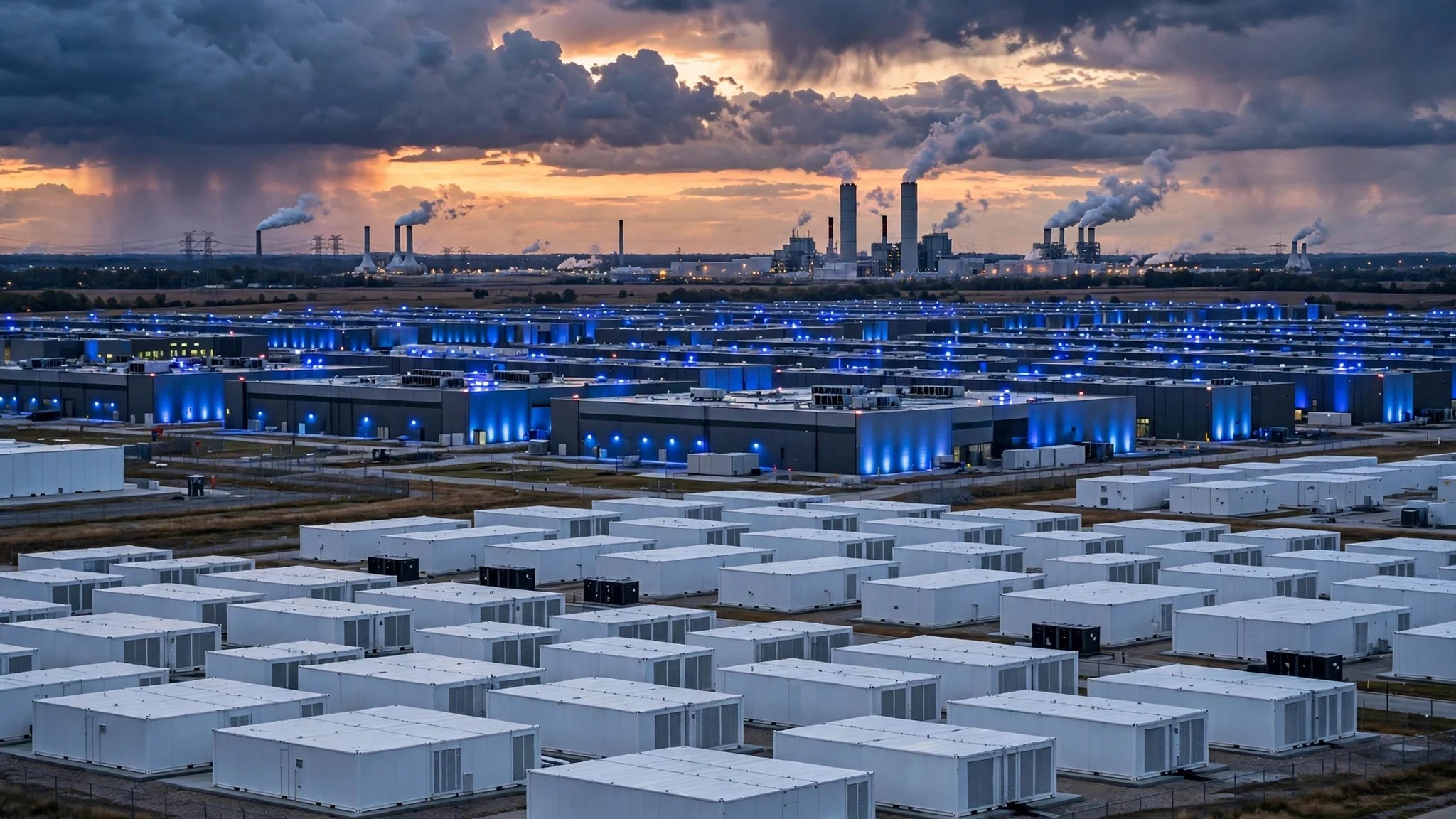
The open question is whether the power grid can keep up. SemiAnalysis estimates the campus could face a power shortfall of more than 300 megawatts. The region's utility, the Tennessee Valley Authority, lists service requests for Macrohard at 700 megawatts and MiniHard at 450 megawatts, or 1,150 megawatts together, while the firm assumes a grid connection of about 1.2 gigawatts covers both.
The gas turbines at Southaven add a deadline of their own: the site can legally operate 2.7 gigawatts of turbine capacity now, but only 1.24 gigawatts by July 2027. The turbines are also the subject of a lawsuit from the NAACP that a judge has allowed to proceed. SemiAnalysis's answer is storage — it counts 1,377 Megapacks across Colossus 2, nearly six gigawatt-hours of batteries, calling it the largest battery field in the United States — though it stresses the figures are estimates, since SpaceX has not published site-level capacity.
What Memphis is getting out of it
The local money is already visible. On November 13, the City of Memphis said its council had approved $3,259,282 from the Community Benefits Fund for the current fiscal year. The fund takes a portion of the property tax paid on SpaceX AI's Colossus I facility and must spend it within a five-mile zone around the site in South Memphis. The largest item is $2 million for the Memphis HOPE home-repair programme, at up to $25,000 per eligible household.
Mayor Paul Young has said SpaceX AI generated $54 million between the city and county this year, while Southaven's mayor has put Musk's data centres at $63 million a year for his city. The fastest data centres ever built at scale are arriving in communities now counting both the tax revenue and the power bill.
By Hamza Faisal