SoftBank Group and Grab have signed joint development agreements with Petroleum Sarawak Berhad (PETROS) to build large-scale artificial intelligence infrastructure across Malaysia, backed by $1.85 billion in initial combined seed capital. The deal, announced on November 9, is one of the biggest AI infrastructure commitments Southeast Asia has seen, and it puts Malaysia firmly on the map as a regional hub for AI compute.
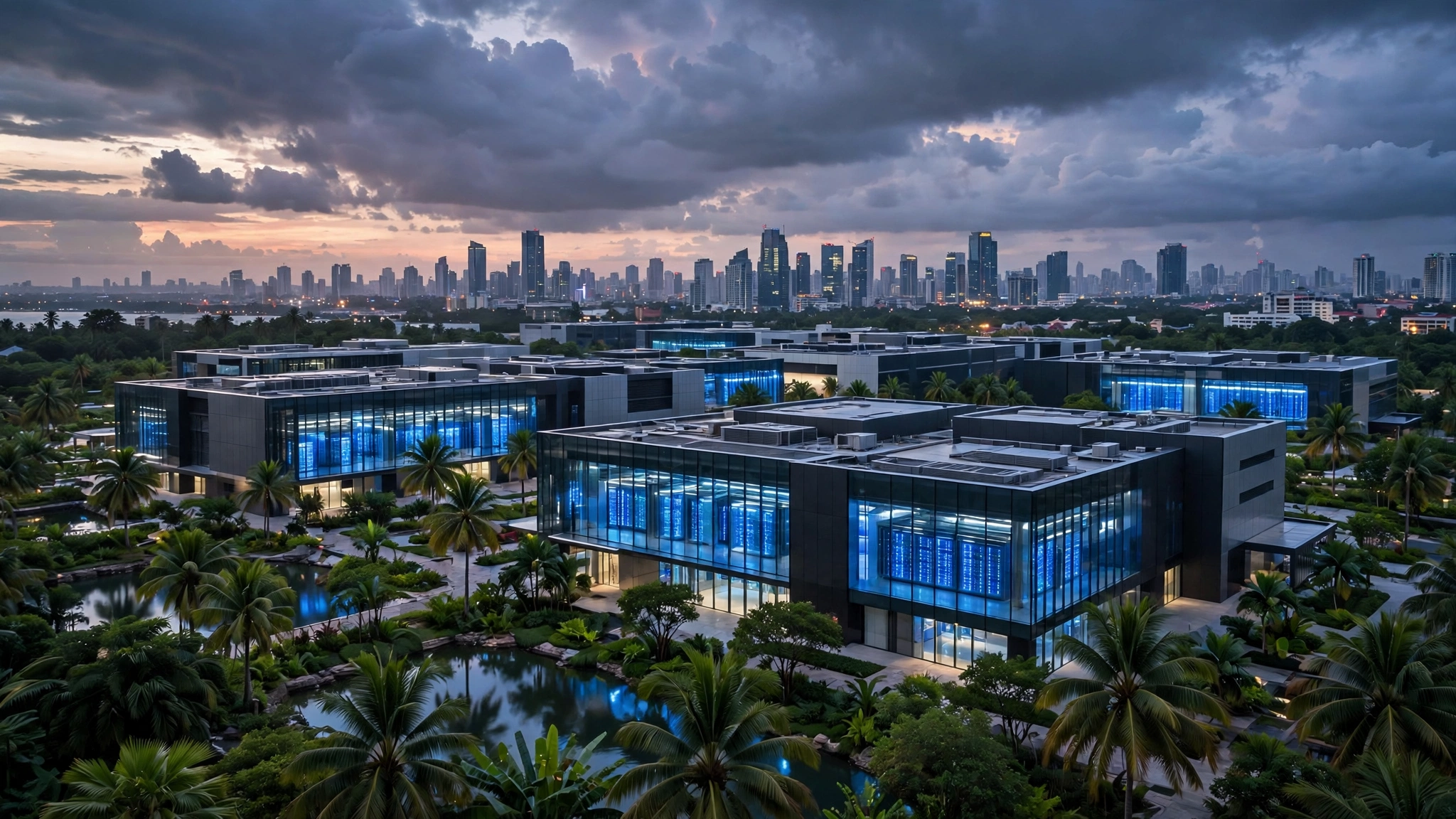
The three partners plan to develop AI data centres in Sarawak and Peninsular Malaysia, with a long-term target of five gigawatts or more of AI compute capacity. Once fully built out, the facilities are expected to rank among the largest AI infrastructure projects of their kind in Asia.
How the $1.85 billion breaks down
The seed capital is split between the three partners: SoftBank is contributing $1 billion, Grab $750 million and PETROS $100 million. The money will not arrive in a single lump sum. It will be released in stages, tied to development milestones, customer contracts and closing conditions, with the partners also planning to bring in global investors and hyperscaler customers to fund further expansion.
The investment is divided across two projects. The Sarawak project carries a proposed $1 billion, with SoftBank putting in $800 million and Grab and PETROS $100 million each. SoftBank will be the majority shareholder there, though Grab holds an option to increase its stake over time. The Peninsular Malaysia project carries $850 million, led by Grab as founding shareholder with a $650 million contribution alongside $200 million from SoftBank.
Grab co-founder and chief executive Anthony Tan will oversee both projects and appoint dedicated management teams while continuing to lead Grab. SoftBank has also agreed in principle to a five-year lock-up on the Grab shares held by a SoftBank Group entity.
From framework to signed deal
The agreements build on a framework deal the three companies signed in Kuching on October 8, turning an exploratory partnership into binding development and funding commitments.
The projects are being developed in close collaboration with Malaysia's federal government and the Sarawak state government, and they align with the country's National AI Action Plan 2026-2030, known as AI Nation 2030. Prime Minister Anwar Ibrahim welcomed the deal as a landmark for Malaysia's digital ambitions, saying it strengthens the country's push to become an AI powerhouse in the region.
Why Malaysia, and why now
The partners are betting on Southeast Asia's fast-growing demand for computing power. A recent e-Conomy SEA report by Google, Temasek and Bain & Company estimates that per-capita AI usage across the region's six largest economies is still only around one-tenth of the level in the United States, leaving plenty of room to grow.
Malaysia has already attracted a wave of AI infrastructure money this year. Google committed $15 billion in early November to expand its Malaysian data centres over two years, and SoftBank founder Masayoshi Son has spoken publicly of a far larger, $50 billion AI and data centre bet on the country. The new $1.85 billion deal is the first concrete, signed piece of that ambition, and it gives Malaysia two flagship AI campuses to show for it.
For Grab, the deal marks a striking expansion beyond ride-hailing and deliveries into the infrastructure layer of the AI economy. For SoftBank, it is another large cheque written in the name of AI. And for Malaysia, it is a vote of confidence from two of Asia's best-known tech names.


