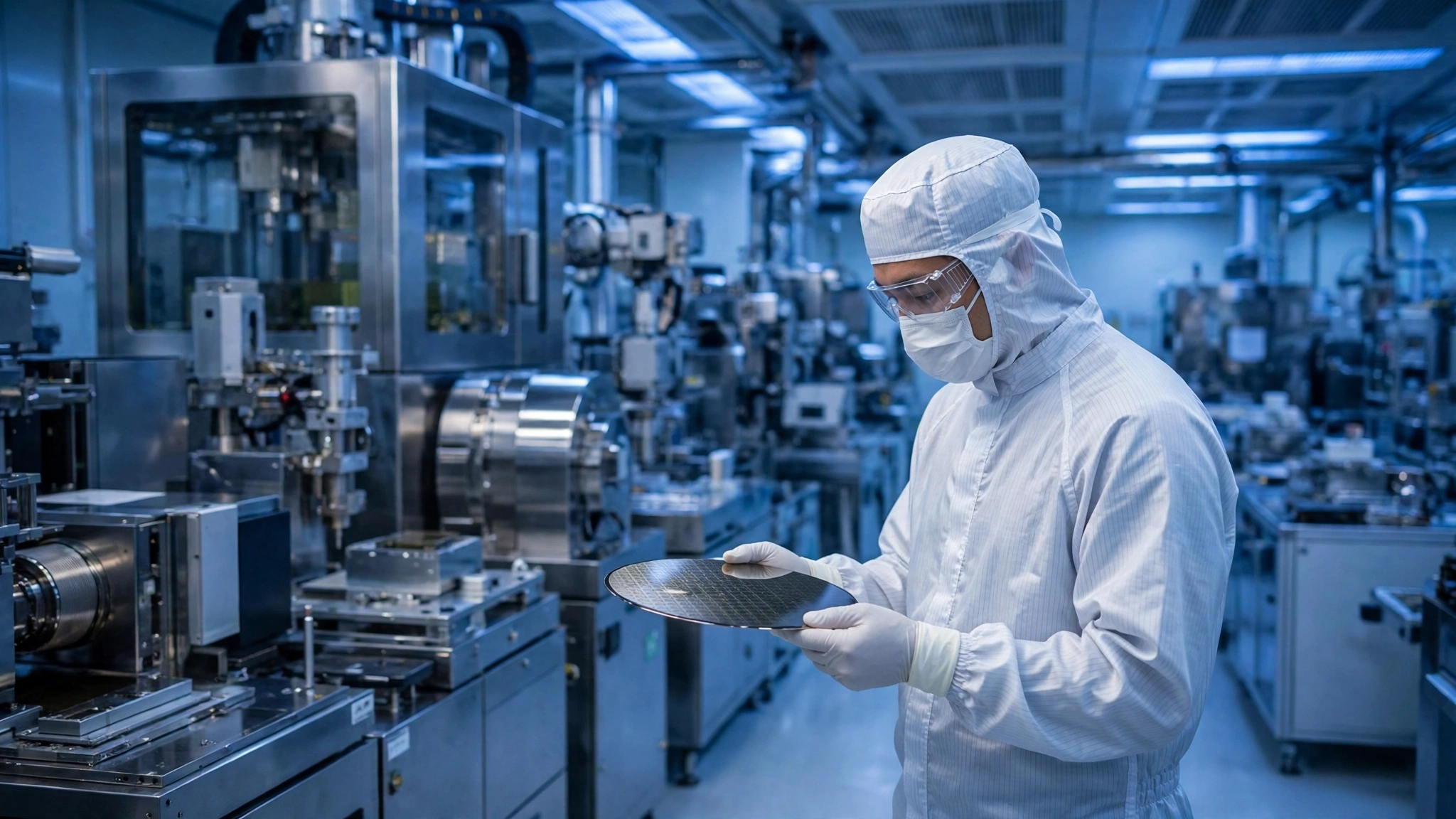
Semiconductor Manufacturing International Corp (SMIC), China's largest contract chipmaker, reported a 123.4% jump in third-quarter profit on Thursday, as demand linked to artificial intelligence pushed revenue to a record high and beat analyst expectations.
Net profit reached $428.4 million in the three months to September 30, up from $191.8 million a year earlier and above the $418.4 million analysts had expected, according to LSEG data cited by Reuters. Revenue rose 33.9% to $3.19 billion, also ahead of the $3.09 billion forecast.
Record revenue beats forecasts
Gross profit climbed 82.3% year on year to $953.2 million, while total profit for the period rose 106.3% to $650.9 million, according to the company's Hong Kong stock exchange filing. The gross margin reached 29.9%, up from 25.3% in the second quarter.
SMIC shipped 3.03 million equivalent wafers in the quarter, up 5.7% from the previous three months, and monthly production capacity rose 1.8% quarter on quarter to 1.1 million standard eight-inch equivalent wafers.
China remained by far the company's biggest market, accounting for 90.8% of revenue, up slightly from the second quarter. The United States contributed 7.8%, down slightly from 8.2%.
AI demand keeps supply tight
On the company's earnings call, co-chief executive Zhao Haijun said AI-related semiconductor supply chains will remain tight through 2027 as demand from data centres and private-cloud operators continues, according to Reuters. SMIC said it is adding capacity in response to customer demand, though it did not break out revenue from AI-specific products or disclose customer-level orders.
The results underline how China's domestic chip supply chain is benefiting from the global AI buildout, even as US export controls limit SMIC's access to the most advanced chipmaking equipment. Demand for mature-node chips used in cars, consumer electronics and industrial equipment has also stayed firm, supporting the company's high factory utilisation.
What comes next
For the fourth quarter, SMIC expects revenue to grow between 4% and 6% sequentially, with a gross margin of between 26% and 28%. Third-quarter capital expenditure fell to $1.09 billion from $1.84 billion in the second quarter.
The guidance lands as the AI infrastructure boom continues to strain chip supply worldwide, with foundries from Taiwan to China reporting full order books. For SMIC, the question now is whether it can keep expanding capacity fast enough to meet demand while navigating the export restrictions that cap how far up the technology ladder it can climb.
By Hamza Faisal


