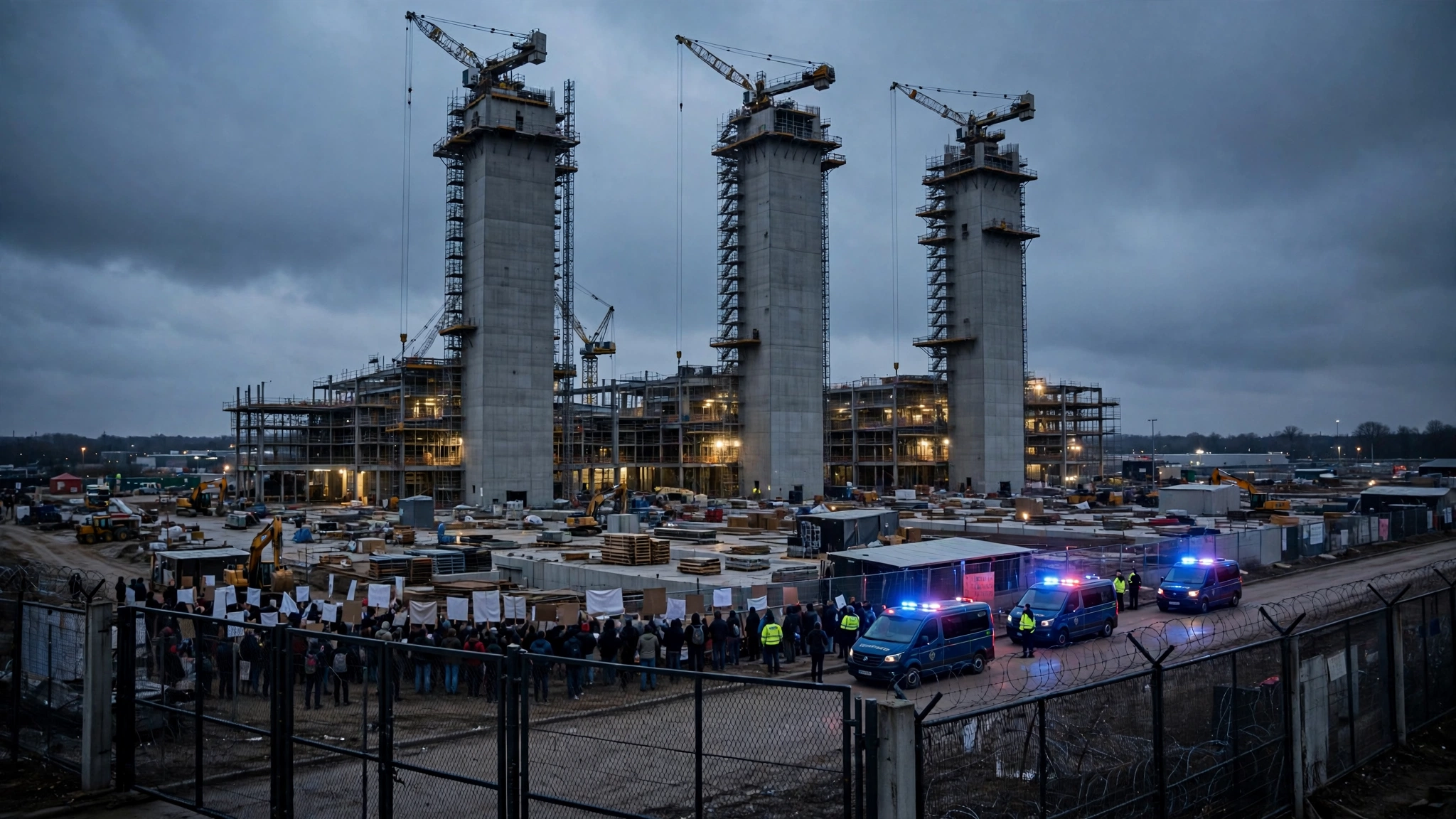
Around 100 protesters broke into the construction site of Microsoft's data centre complex on the outskirts of Amsterdam on Friday, forcing riot police to intervene and make multiple arrests, according to a Reuters witness at the scene.
The demonstration, organised by climate campaign group Geef Tegengas, targeted the three-building complex near Sloterdijk, in Amsterdam's western port area. The group says the completed facility would consume as much electricity as every household in Amsterdam combined, and warns that the power it draws could derail the construction of 30,000 planned homes in the city.
A site targeted once before
Friday's breach is the second time the same site has been targeted in a matter of months. In July, members of Extinction Rebellion threw balloons filled with paint and an acidic mixture over the perimeter fences of the construction site.
Dutch news agency ANP reported that police had blocked the demonstration march earlier on Friday morning, before protesters reached the site. Geef Tegengas told local broadcaster AT5 that around 500 demonstrators entered the grounds, with hundreds more remaining outside — a far higher figure than the roughly 100 counted by the Reuters witness on the ground.
Part of a wider European protest wave
The Amsterdam action was organised as part of a coordinated two-day wave of protest actions across several European countries on November 6 and 7, aimed at large-scale technology infrastructure. The three towers under construction, each 85 metres tall, are being built for Microsoft and will be leased entirely to the company.
Why data centres have become a flashpoint
The protest reflects a growing backlash across Europe against the power demands of the data centres built to run artificial intelligence services. In the Netherlands, where grid capacity is already tight, campaigners argue that the electricity consumed by a single large facility comes at the direct expense of new housing and other development.
Geef Tegengas, which campaigns against fossil fuels, is demanding an immediate and permanent halt to the Amsterdam development. The group says the completed data centre's appetite for power would make it harder to connect the 30,000 homes the city plans to build.
The confrontation also underlines how the debate over AI infrastructure has moved from boardrooms and planning hearings onto construction sites themselves. As technology companies race to build ever larger facilities, the projects are increasingly colliding with local concerns about energy, land and housing — and the protests are becoming more direct.