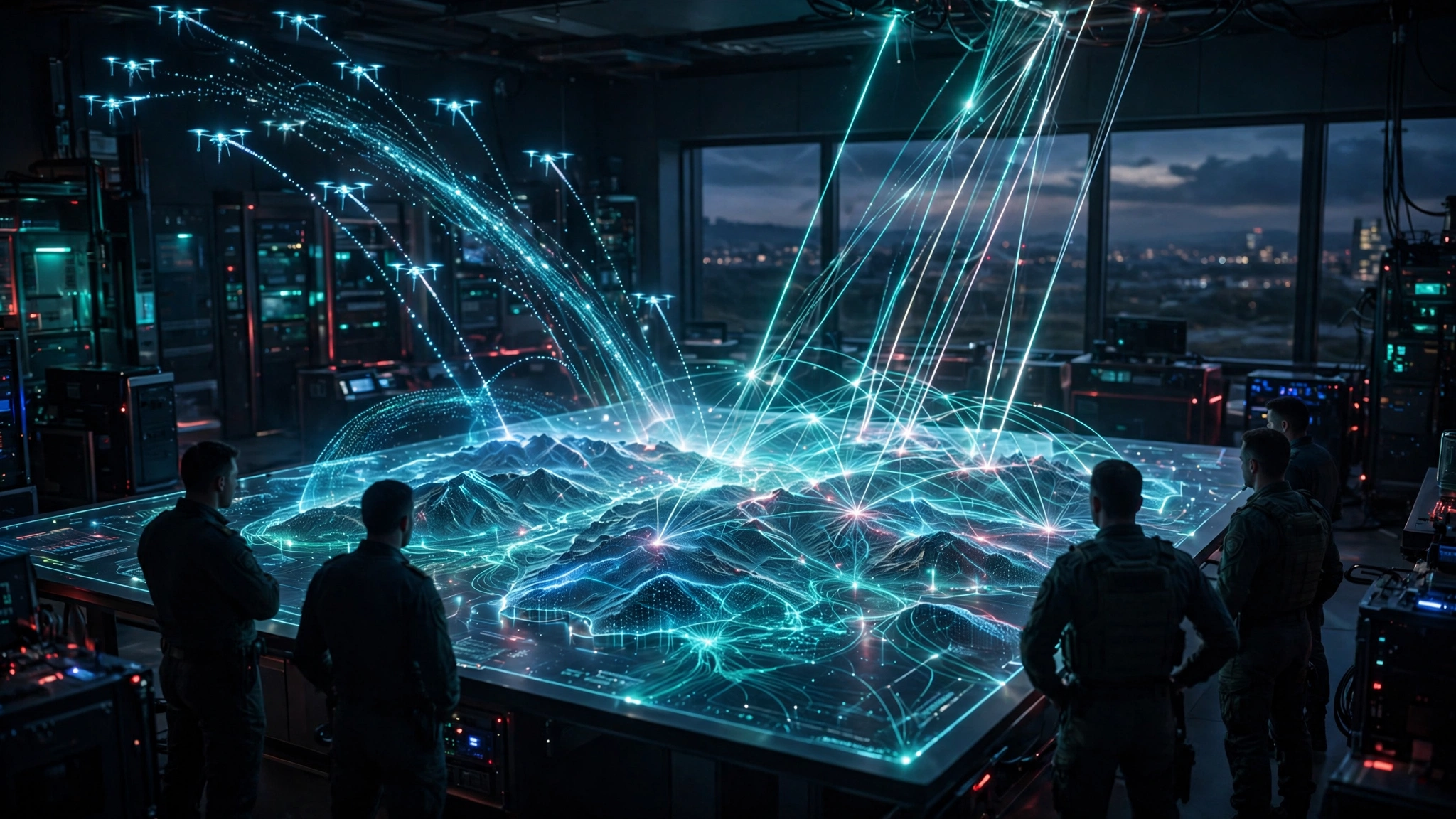
Poland has signed a deal worth around $300 million with Palantir Technologies to bring artificial intelligence into the heart of its military command, the country's defence minister said on Friday. The five-year agreement will put Palantir's Maven Smart System — known in Poland under the codename Saturn — in the hands of army commanders, fusing data from drones, satellites and radars into a single live picture of the battlefield.
The contract was signed in Warsaw by the Cyber Defence Forces Component Command, the unit of the Ministry of National Defence that has led Poland's formal cooperation with Palantir since December 2024. Defence Minister Władysław Kosiniak-Kamysz called the signing "a watershed moment for the operational capabilities of the Armed Forces of the Republic of Poland."
It is the first binding procurement contract between the two sides, moving the relationship beyond the memorandum of understanding signed in 2025 and a letter of intent the minister signed with Palantir chief executive Alex Karp in Warsaw in October 2025.
What Saturn will do
Maven is Palantir's flagship military AI platform, built around data fusion: it pulls together feeds from drones, satellites, radars and reconnaissance systems and turns them into a common operating picture. The software analyses the incoming information, detects and classifies objects, and helps commanders assess a situation and weigh possible responses based on the troops and equipment available.
Under the Polish programme, the system will run on both classified and unclassified networks. Its targeting-support functions have drawn the most attention: Maven can assist with identifying and prioritising targets, but the ministry stressed that the final decision will always remain with the human commander.
Poland keeps the keys
Data sovereignty was the centrepiece of the announcement. "All keys, servers, and information are — and will remain — the exclusive property of the Polish Armed Forces," Kosiniak-Kamysz said after the signing. The ministry said Palantir will receive no encryption keys, no remote access and no permission to view Polish military data, with every operation logged and monitored by the ministry's own cyber incident response team.
The assurances matter because Maven's origins are sensitive: the system grew out of a US Department of Defense programme, and its use by a foreign military has long raised questions about who controls the data flowing through it. Warsaw's answer is to keep the entire stack — hardware, keys and data — under Polish control.
Why it matters beyond Poland
The deal lands as NATO's eastern flank races to wire AI into its defences. Poland, which shares a border with Ukraine and the Russian exclave of Kaliningrad, is already spending heavily on its armed forces, and the Palantir purchase complements a separate $5.5 billion national programme covering AI, cyber and electronic warfare.
For Palantir, the contract is a milestone of a different kind: a European NATO ally buying its battlefield AI as a core command system, not a pilot project. And for the wider defence industry, it is a signal that the market for military AI has moved from experiments and trials to signed, multi-year procurement — with data sovereignty, not just capability, as the deciding factor.