By Hamza Faisal
The Pentagon is putting up to $500 million behind a new generation of cheap, long-range strike drones — and it is judging them by a ruthless new metric: how much each successful strike actually costs.
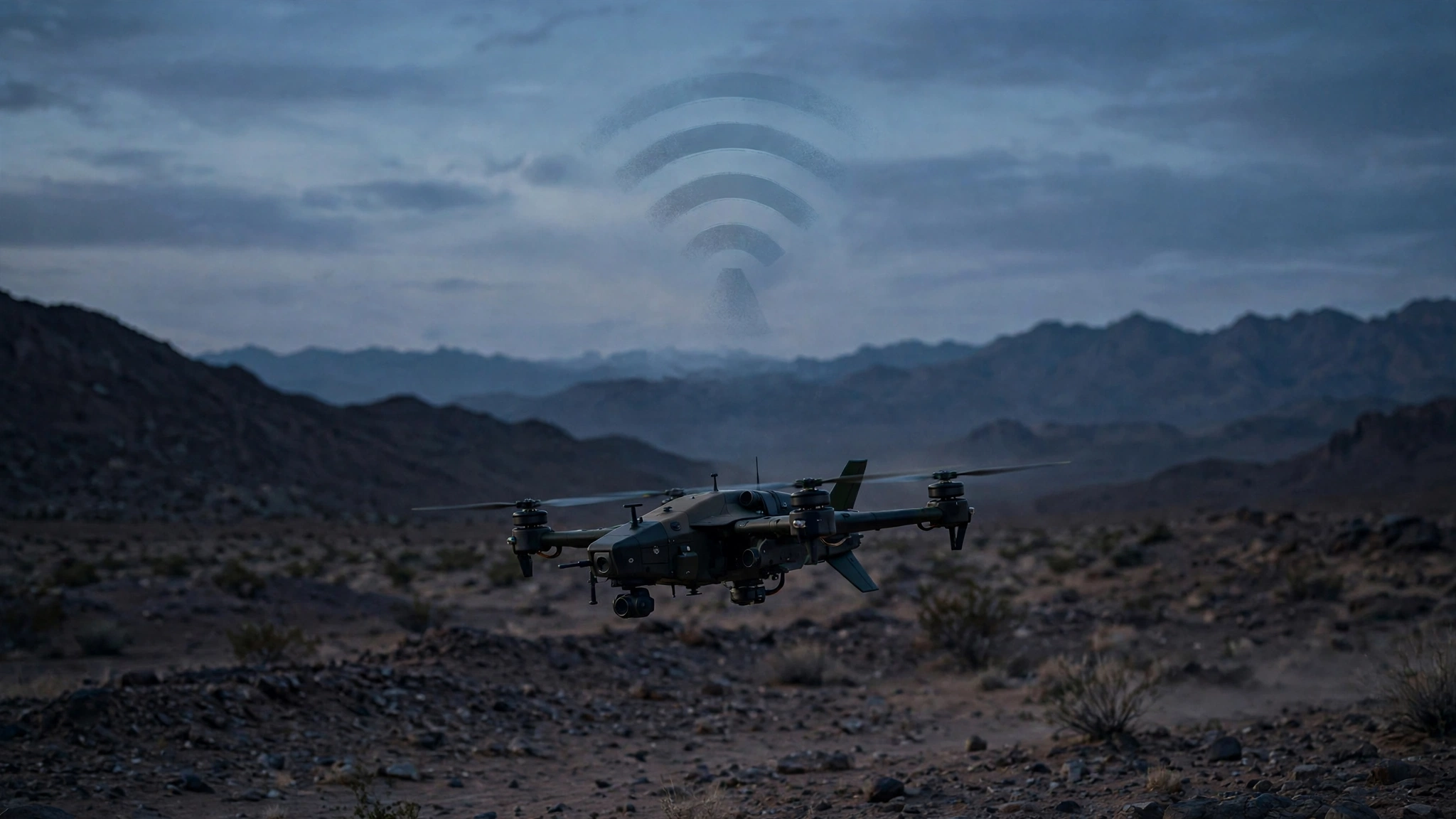
The Defense Innovation Unit (DIU) has opened Drone Dominance: Extended Range Strike — Gauntlet II, a prize challenge for surface-launched one-way attack drones. The solicitation, published this week, wants complete systems that keep flying and hitting targets even when GPS and communications are jammed.
The challenge splits into two tiers. Long-range entries must fly 600 nautical miles or more — roughly 690 miles — for under $250,000 per aircraft at scale. A new medium-range class covers 20 to 600 nautical miles for under $130,000 each. Both figures are flyaway costs, covering the aircraft itself at production volumes.
Priced by cost per strike, not cost per drone
The most consequential line in the solicitation is a formula. DIU will rank entries by cost per effect: the fully burdened unit cost — launcher, ground station and software included — divided by the mission success rate. Long-range entries must come in under $500,000 per effect, and medium-range entries under $300,000 per effect.
A cheap drone that misses half the time is worse value than a pricier one that hits, so the Pentagon is telling builders to optimise for reliability, not just a low sticker price.
The performance bars are specific. Long-range drones need a minimum payload of 25 pounds, with more than 100 pounds strongly preferred. Medium-range entries need at least 7 pounds. Both must offer autonomous transit and terminal guidance, onboard target recognition, and resilient navigation in GPS-contested environments, with both human-in-the-loop and human-on-the-loop control modes.
A fast track from demo to production
Submissions close on December 7, 2026. Selected companies will bring three inert systems and no more than eight people to a government test range in mid-March 2027, where every company that attempts all of the test cards collects $500,000. The best performers will be offered prototype agreements, with production orders to follow.
The production timeline is aggressive. DIU wants 20 to 30 systems delivered by June 2027, more than 100 within six to eight months of the solicitation, and a credible path to building 100 or more systems a month within six months. A third round, Gauntlet III, is planned for mid-August 2027, with its solicitation expected in April.
The challenge is open to US and international companies, though foreign firms need a NATO commercial and government entity code, and only complete systems will be evaluated — components and subsystems are excluded. Gauntlet I, formerly the Ground-Based Affordable Mass challenge, ended in mid-November, and its prototype agreement holders advance straight into Gauntlet II without submitting a new proposal.
Lessons from Ukraine, priced for mass
Gauntlet II extends the Pentagon's Drone Dominance initiative beyond the small first-person-view drones it has already bought by the tens of thousands. In that earlier programme, manufacturer Neros said its second-round order was for 14,000 drones valued at over $100 million — a little over $7,000 per aircraft.
The new challenge chases targets hundreds of nautical miles away at unit prices in the tens to hundreds of thousands of dollars — still a fraction of a conventional cruise missile, which can cost well over $1 million each.
The $500 million is budgeted, not spent. What it buys will be decided by demonstrated performance, in public, on a test range — starting with how many companies can field three working systems on schedule in March.