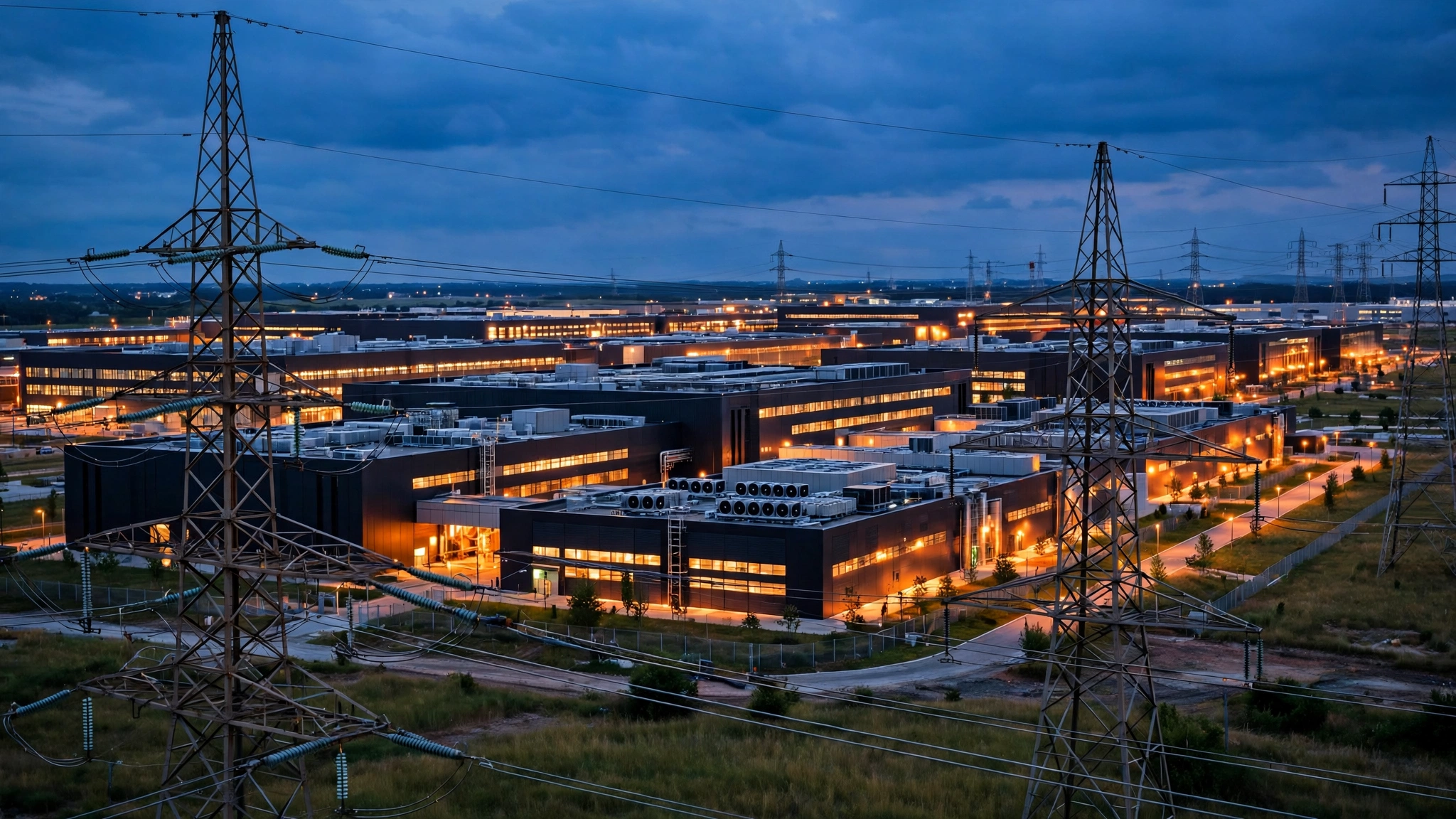
OpenAI has launched a new program that lets power grids tap the brakes on its artificial intelligence campuses when electricity runs short. Announced on November 2, the Grid Protectors Program commits every compute campus the company directly develops in the United States to cut its power use during grid emergencies, a bid to answer complaints that ordinary customers end up paying for the power stations and wires data centers need.
The idea is demand flexibility. Instead of drawing the same enormous load around the clock, a campus built under the program is designed to throttle back when the grid is under strain and use more power when there is room to spare. OpenAI says it will negotiate the details utility by utility, setting how much demand can be cut, how quickly and for how long, and it will publish further commitments as they are finalized.
Georgia first: 1,000 megawatts on call
The pilot is Project Camellia, a planned campus in Effingham County, Georgia, developed under a 25-year power agreement with Georgia Power. The site is expected to need about 3,200 megawatts at full build-out, delivered in phases between 2028 and 2032, and the utility can reduce the power it delivers there by up to 1,000 megawatts during periods of high demand. That flexible slice is just under a third of the campus's expected peak load, and OpenAI says it is equivalent to the average electricity demand of roughly 700,000 US households.
Georgia Power has said the arrangement lets it build fewer new generation resources, and it projected about $950 million a year in customer savings from 2029 across its large-load agreements, including Project Camellia. For a typical home using 1,000 kilowatt-hours a month, the utility puts the benefit at no less than $15 a month. OpenAI has also committed to pay the full infrastructure and electric-service costs required to serve the site, a point meant to answer the charge that other customers subsidize data-center connections.
What the pledge does not do
OpenAI is careful about the program's limits. The company says campus flexibility cannot replace investment in new energy supply and transmission, and the pledge trims peaks rather than taking a campus off the grid: even during a full 1,000-megawatt cut, the Georgia site could still draw about 2,200 megawatts. Outside Georgia, the program is still a promise, with no other state, utility or figure named, and the company has set no public limit on how often or for how long a utility may call a cut.
The arrangements will also differ by location, and future campuses could contribute on-site generation and storage during grid events as well as curtailment. The program covers campuses OpenAI develops itself, not capacity it rents from partners.
A response to the power-bill backlash
The timing is political as much as technical. AI data centers are among the fastest-growing sources of US power demand, and OpenAI cites projections that US data-center capacity could exceed 100 gigawatts by 2030. Regulators, utilities and voters are increasingly asking who pays for the grid upgrades that growth requires, and rival approaches are emerging: Google said in October it was paying for a one-gigawatt pool of homes and businesses that cut their use on request across the eastern PJM grid.
For OpenAI, Grid Protectors is an attempt to reframe its campuses from a burden on the grid into a resource the grid can call on. Whether that framing holds will depend on the deals that follow Georgia, and on how often utilities actually reach for the switch.


