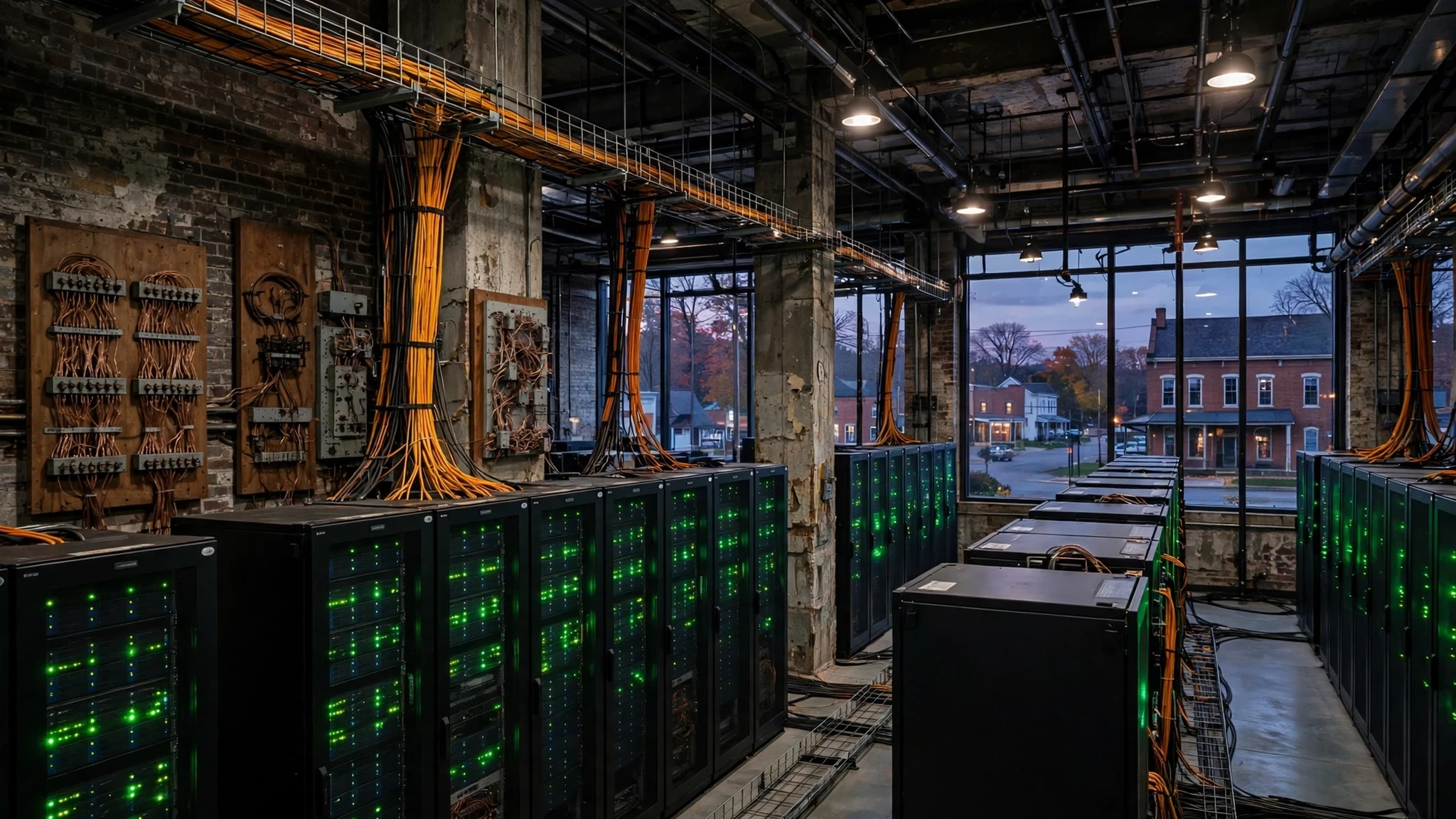
Nvidia is looking for a faster way to get its chips switched on — and its latest idea starts in the buildings that once connected America's phone calls.
The chipmaker has approached private equity giant Apollo Global Management about turning more than 130 telecom buildings owned by Brightspeed, an Apollo-backed broadband provider, into a network of small AI data centres, The Information reported on Thursday. The network could span as many as 20 US states, and Nvidia estimates the sites hold roughly one gigawatt of available power — potentially enough, the outlet said, to run tens of billions of dollars' worth of its Vera Rubin chip systems.
Nvidia has already submitted a written proposal to Brightspeed and asked for more site data and visits, according to the report, which cited two people with direct knowledge of the effort. Staff have also discussed with suppliers the possibility of starting retrofits in the first quarter of 2027.
A gigawatt hiding in plain sight
Brightspeed was formed in 2022 after funds managed by Apollo bought Lumen Technologies' local telephone and broadband operations in 20 states for $7.5 billion. Its buildings were built to manage voice calls and data traffic — which means many already have what new data centres struggle most to secure: power, fibre connections and planning permission.
The Information described Brightspeed as a company reportedly nearing bankruptcy, though no filing has been confirmed. That fragility may be part of the appeal: Nvidia is effectively proposing to give a struggling telecom asset a second life as AI infrastructure.
The sites would form what Nvidia has described as an "inference network" — facilities designed to run already-trained AI models for users, rather than the giant training clusters that dominate headlines. Locations named in the report include Dothan in Alabama, Killeen in Texas and Mansfield in Ohio.
A workaround for the data-centre backlash
The pitch arrives as opposition to large new data centres is hardening across the United States. After Tuesday's midterm elections, Democratic candidates in states including Texas called for moratoriums on new data-centre construction, and local resistance has already delayed or blocked several big projects.
Reusing existing buildings sidesteps much of that fight. Nvidia is not the only company to spot the opening: Verizon chief executive Dan Schulman told a Goldman Sachs conference in September that as his company decommissions central offices, "they're power-ready, already permitted, and we have thousands of them." AT&T holds roughly 5,000 central offices, according to RCR Wireless — against Brightspeed's 130-plus.
The logic is simple. A new hyperscale campus can take years to permit and connect to the grid; a converted telephone exchange already has both.
Still a proposal, not a deal
For now, the plan is exploratory. The Information's report makes clear there is no signed agreement, no confirmed list of customers and no construction schedule, and it is not clear how many of the 130-plus buildings Nvidia actually wants to convert. Nvidia first raised the idea with Apollo executives, who asked the chipmaker to put its plans in writing to Brightspeed.
The report also said Nvidia staff have discussed installing Vera Rubin server racks and Groq technology in the converted sites, though whether those suppliers have been brought into the talks is unclear.
If it goes ahead, the project would mark a shift in how AI capacity gets built: not one giant campus at a time, but a distributed network assembled from the leftovers of the old telephone age. For Nvidia, whose chips are in demand faster than data centres can be built, that may be the point.