London-based AI infrastructure company Nscale has hit a new obstacle on the road to its planned $35 billion US stock market listing: it must ask Washington for permission to keep renting Nvidia's most advanced chips to TikTok owner ByteDance.
Bloomberg reported on November 19 that Nscale will have to apply for a US export licence to continue giving ByteDance remote access to Nvidia graphics processors at data centres in Norway and Iceland. The requirement comes from a new US Bureau of Industry and Security (BIS) rule aimed at closing the "rental loophole" — Chinese companies cannot buy Blackwell-class GPUs outright, but until now they could rent the same computing power from data centres overseas.
The rule, an interim final rule issued on November 16, requires a licence for any data centre that gives customers in China, Russia, Iran and similar countries remote access to advanced American chips. Operators already serving such customers have 90 days to obtain a licence, and there is no guarantee Washington will grant one.
A 73 percent customer the prospectus does not name
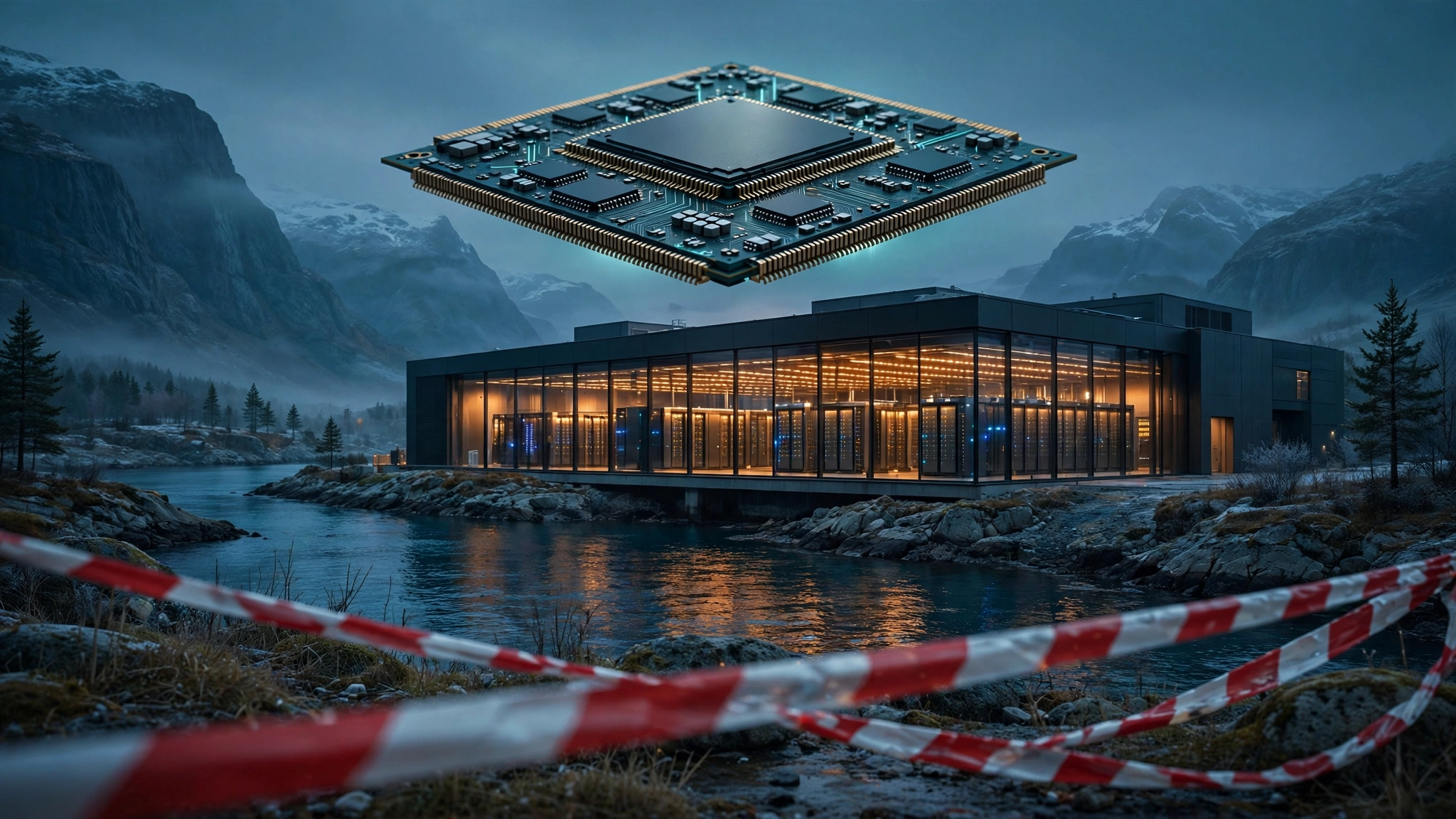
The exposure is stark in Nscale's own filing. ByteDance's Singapore-based unit, Spring, accounted for about $24 million of Nscale's $33 million in 2025 revenue — roughly 73 percent. That money bought access to 2,304 Nvidia B200 chips at Nscale's data centre in Glomfjord, Norway. The deployment was financed in part by a $105 million loan from Macquarie, which required Nscale to monitor how Spring used the chips and report any suspicious configurations.
Yet Nscale's updated IPO prospectus makes no mention of its commercial relationship with ByteDance, according to The Observer. When Nscale filed its S-1 in September, the Financial Times noted the prospectus did not name ByteDance anywhere; only an appendix mentioned Spring.
Nscale declined to comment, citing its pre-IPO quiet period. ByteDance did not immediately respond.
Suppliers linked to a blacklisted Chinese group
The scrutiny does not stop at the customer. In a regulatory filing submitted in November, Nscale said it was reviewing its ties to a company placed on a US trade blacklist, without disclosing the company's name. Reporting by the Financial Times identified the suppliers behind Nscale's Glomfjord site as Aivres and Kaytus — subsidiaries of Chinese technology group Inspur, which the US Commerce Department placed on its Entity List over allegations it supplied technology to the Chinese military. Neither subsidiary is itself blacklisted, but the links add another question IPO investors will ask.
The customer mix is changing — but the clock is ticking
Nscale's reliance on ByteDance is shrinking by design. The company reported $140.6 million in revenue for the first half of 2026, against $10.4 million a year earlier, and its largest customer accounted for 52 percent of first-half revenue — a share the company expects to fall below 20 percent this year as far larger contracts with Microsoft and Anthropic scale up.
Even so, a pending licence decision on a former anchor customer is exactly the kind of unresolved risk IPO buyers discount. Nscale is pursuing a US listing at a reported target valuation of about $30 billion, though some investors privately consider $16 billion to $19 billion a more reasonable range. Nscale was already weighing delaying the listing until 2027 as doubts about AI infrastructure spending grew.
The BIS rule is already reshaping the offshore GPU rental market. Moonshot AI cancelled a $150 million Nvidia chip rental in Indonesia after the same rule landed — a reminder that the licence requirement applies to every neocloud with a Chinese customer, not just Nscale.