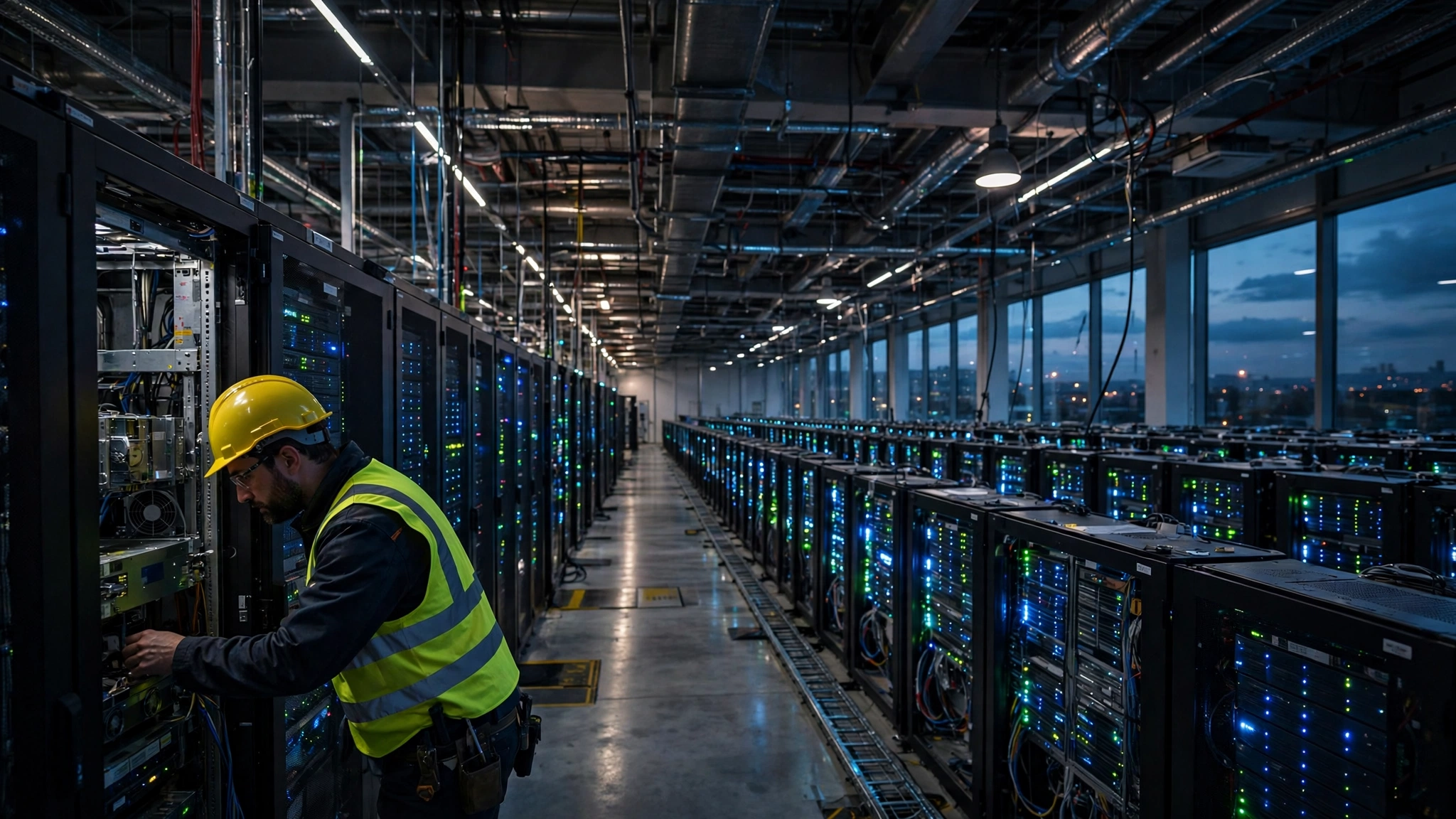
Microsoft is tightening oversight of the neocloud data-centre providers it rents GPU capacity from, stepping away from projects it judges too risky and debating internally whether to sign any new deals at all, Bloomberg reported on Thursday. The report, carried by Reuters on Friday, names three providers caught in the review: Nebius, IREN and Nscale.
The market reaction was swift. Shares of Nebius and IREN fell more than 13 percent in afternoon trading, while CoreWeave dropped 11 percent, as investors reassessed a business model built on hyperscalers pre-booking third-party GPU capacity.
Three providers, three different problems
The reporting names a different problem at each provider, which matters: this is not a single failure repeated three times, but a set of separate execution issues landing on one customer's desk in the same quarter.
At Nebius, the most concrete compliance detail sits in New Jersey, where a site was fined $1 million for running generators without permits. Bloomberg said Microsoft sent its own employees to the site to check that facilities were being built to its specifications and complied with regulations.
At IREN, the reported concern is cabling at a site in Texas. The two companies met in the week before the story and negotiated a revised timeline, one that could delay completion by several weeks or months. Neither company has published the new schedule.
Nscale has the longest list of reported setbacks. Microsoft declined to exercise an option to more than double the size of its existing agreement to rent computing power at a Texas data centre, with some of that capacity subsequently taken by robotics company Figure AI. It also stepped away from a letter of intent to lease 1.35 gigawatts from Nscale in West Virginia. And weeks ago, it pulled out of a deal to anchor Nscale's flagship data centre in Loughton, Essex — a roughly $3 billion agreement — after power-connection delays pushed supply into the 2030s.
A shift toward building its own capacity
Microsoft is putting more weight on expanding the data centres it owns, though it has not fully ruled out further neocloud deals. A company spokesperson described the tighter checks as "normal and responsible practices for managing large, complex infrastructure projects," and said Microsoft's approach combines owned data centres, leased facilities and strategic partnerships with third-party providers.
The pullback comes as the AI infrastructure boom faces growing scrutiny. The Nasdaq suffered its worst day in 19 months on Thursday as investors questioned the pace of data-centre spending, while governments from New York to Amsterdam are tightening restrictions on new builds. In Texas, governor-elect Gina Hinojosa has said she would ban new data-centre projects until state lawmakers pass rules for the industry.
Why it matters for the AI build-out
Neoclouds leaned on Microsoft contracts to raise debt and equity for construction, so if the anchor tenant slows down, the financing logic holding each project together comes under pressure. Lenders who underwrote construction loans against a Microsoft lease will now ask harder questions about milestones, permits and power connections.
For Microsoft, the trade is control against speed. Owned builds are slower to start but steadier once under way; leasing bought flexibility, and the West Virginia and UK walk-aways prove that flexibility is real. The message from Redmond is that future neocloud deals will face a higher bar than the ones signed during the rush to secure GPUs.
By Hamza Faisal


