By Hamza Faisal
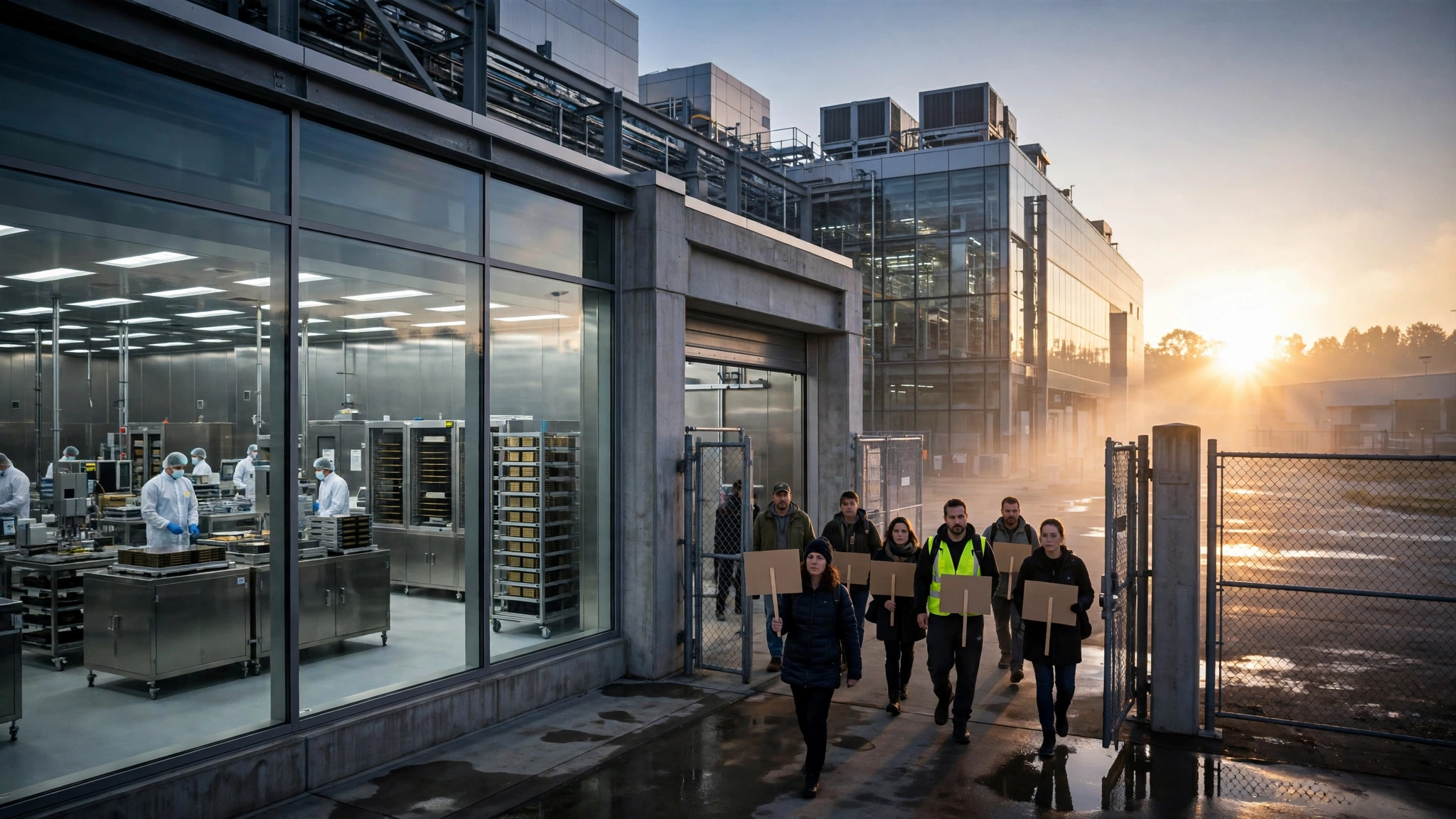
Micron's memory workers in Taiwan walked off the job on Thursday morning in what Nikkei Asia reports is the country's first-ever strike in the semiconductor industry — a 24-hour stoppage aimed at forcing the American chipmaker to share more of its AI-driven profit boom with the people building the chips.
Members of the Taoyuan union began the walkout at 9 a.m. local time, launching a dispute that goes beyond a single bonus cheque. The union is demanding a one-time fiscal 2026 bonus worth roughly 83 months of salary plus a permanent claim on 15 percent of Micron's quarterly operating profit starting in fiscal 2027 — a structural profit-sharing formula of the kind already common among Korean chipmakers.
The strike authorization vote was overwhelming: 1,994 ballots in favour, about 99 percent of those cast, from 2,258 eligible members. Micron's September offer — up to 68 months of pay — was rejected as a one-off that failed to lock in any long-term formula, and the company has separately announced a special NT$1 million bonus per eligible Taiwan employee for fiscal 2026 on top of performance bonuses and stock awards. For the union, that is exactly the problem: special bonuses can be given and taken away, while a percentage of profit is a rule.
One union settles, another strikes
Thursday's action came a day after the dispute fractured into two tracks. On October 21, Micron reached a collective bargaining agreement with the union at its Taichung plant — taking that site off the picket calendar and averting a mediation session scheduled for Thursday. Negotiations with the Taoyuan union collapsed the same evening.
The timing of the walkout was deliberate: it was set to coincide with the now-cancelled Taichung mediation session, intended as a show of solidarity and as pressure on Micron to present what the union called a concrete profit-sharing proposal. Micron said it remains "committed to constructive engagement" with both unions.
Why Taiwan's memory output matters
The stakes go far beyond the fab gates. Taiwan is a crucial production centre for Micron's DRAM and high-bandwidth memory (HBM) chips — components at the heart of the artificial-intelligence server boom — and the island accounts for a majority of Micron's DRAM output and roughly 50 to 60 percent of its total production. The company employs about 15,000 people in Taiwan and says it has invested more than NT$1.6 trillion (about $49 billion) on the island.
With memory in chronic short supply as data-centre demand for AI servers surges, any sustained disruption in Taiwan would ripple straight into AI-server memory pricing. Taiwan's Ministry of Labor has urged Micron to table a workable proposal, and President Lai Ching-te personally appealed for serious talks at the October 15 opening of Micron's second advanced assembly and testing facility in Taichung.
The Korean precedent hanging over the table
The union is not inventing its demand. In May 2026, Samsung's memory union called off a planned strike after winning a bonus pool worth 10.5 percent of the chip division's operating profit, and SK Hynix later agreed to pay 10 percent of annual operating profit, uncapped. Taoyuan's 15 percent ask sits above both — a mark of just how confident memory workers feel as the AI memory cycle pushes record prices.
Whether the one-day stoppage stays a warning shot or escalates depends on the next round of talks, which both sides say they want. But the message from Taoyuan was blunt: "Through our actions, we will make our dissatisfaction with the current system heard and demonstrate our determination to establish a fair profit-sharing system."
By Hamza Faisal