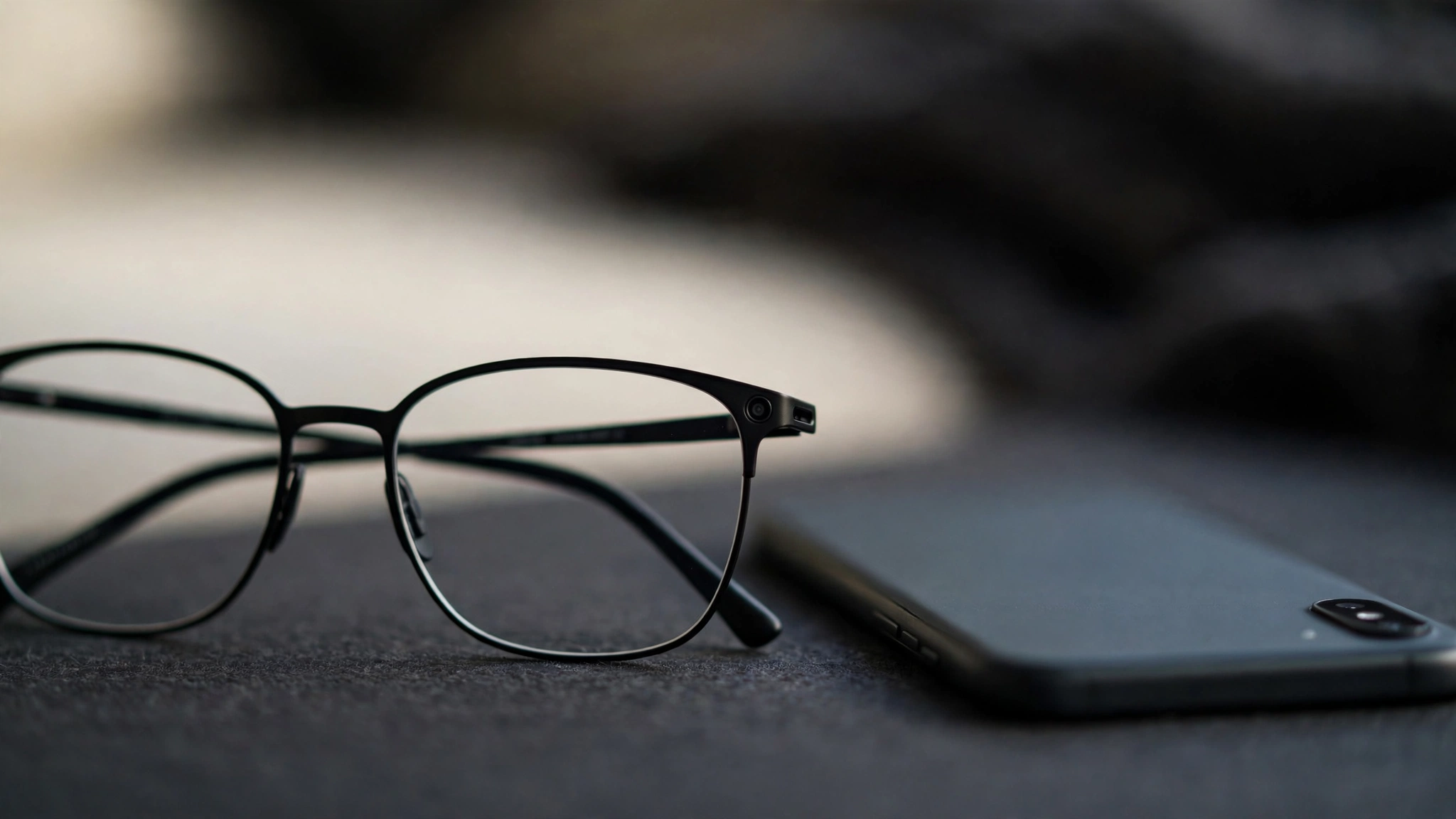
Apple's long-rumoured smart glasses are finally taking shape — and they will look a lot more like "AirPods for your face" than a miniature Vision Pro.
According to Bloomberg's Mark Gurman, writing in Sunday's edition of his Power On newsletter, Apple plans to unveil its first pair of smart glasses at its Worldwide Developers Conference in June 2027, with shipments beginning before the end of that year. The prototypes, known inside Apple by the code name N50, are reportedly slightly thinner than Meta's second-generation Ray-Ban glasses, and Apple is testing multiple styles and colours.
The first model will not display augmented reality imagery at all. Instead, wearers will interact through Siri, which will use the glasses' cameras to answer questions about their surroundings and reach into apps on a paired iPhone by voice. Gurman names Uber, OpenTable, Starbucks, Amazon and Fandango as examples: a wearer could book a ride, reserve a table or order coffee without taking out their phone.
Siri does the heavy lifting
The bet is that a smarter Siri can carry a device with no screen of its own. The glasses will connect to a recent iPhone, which provides extra processing power and memory; Android phones will not be supported. Internal prototypes run a stripped-down version of visionOS 28, the operating system built for the Vision Pro, on a processor derived from older Apple Watch chips, alongside custom wireless components and a real-time vision engine.
That plan depends on the broader Siri overhaul Apple is working on. The company began introducing the necessary Siri controls in this month's first beta of iOS 27.3, giving developers more precise control over app actions. Apple plans to release support for its own apps in December, with third-party app support following in 2027 — and App Store submissions for the new Siri integrations are scheduled to open in spring 2027, giving developers time to prepare.
Hardware mostly done, software running late
Gurman reports that work on the glasses began in the early 2020s and the hardware is largely settled. The remaining obstacles are software and artificial intelligence, which are running behind schedule and could push the launch back.
One detail that may not survive to the shipping product is the charging system: prototypes use a magnetic connector on the left arm that lets testers recharge the glasses while wearing them. Gurman says it remains unclear whether Apple will keep that system in the final design.
The glasses are part of a wider push to connect Siri across devices that can interpret their surroundings. Camera-equipped AirPods are reportedly still planned for late 2027, and Siri is expected to tie the glasses, the AirPods and Apple's HomeView smart display — which went on sale on November 13 — into a single experience.
A crowded race Apple is joining late
Apple would arrive in a market Meta already dominates. Meta's Ray-Ban glasses have defined the display-less category, and Google and Samsung opened preorders this week for $395 Gemini smart glasses ahead of a December 10 launch. Apple's pitch is different: not a screen on your face, but a voice-first companion that borrows the iPhone's apps and processing.
Whether that pitch lands will depend on Siri. Apple has spent the past year rebuilding its assistant, and the glasses put the new Siri at the centre of the product. If the software slips, Gurman warns, the 2027 dates could slip with it. For now, though, the plan is set: WWDC in June, and glasses on faces before the year is out.
Apple has not announced the product; the details rest on Gurman's sources.