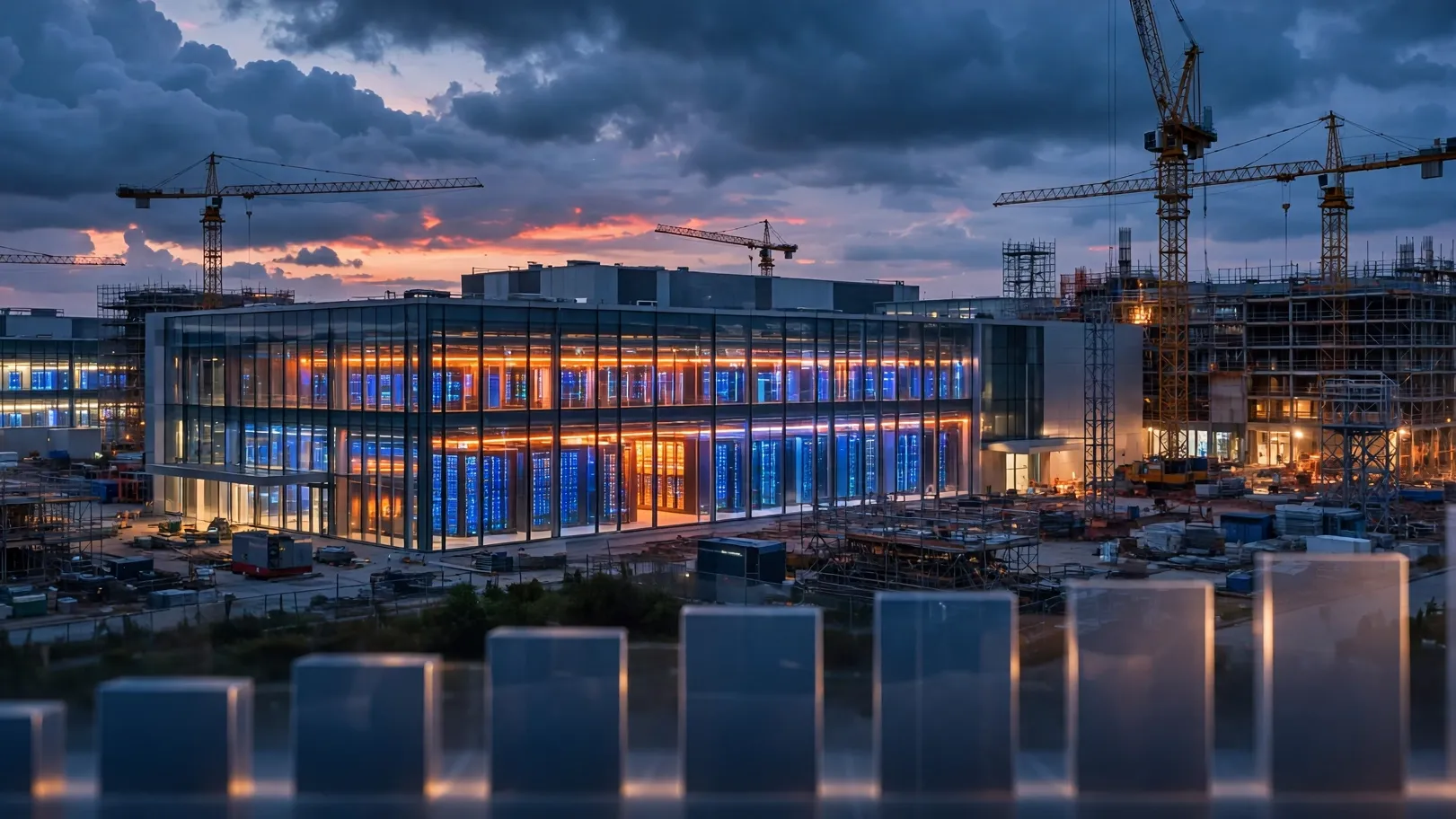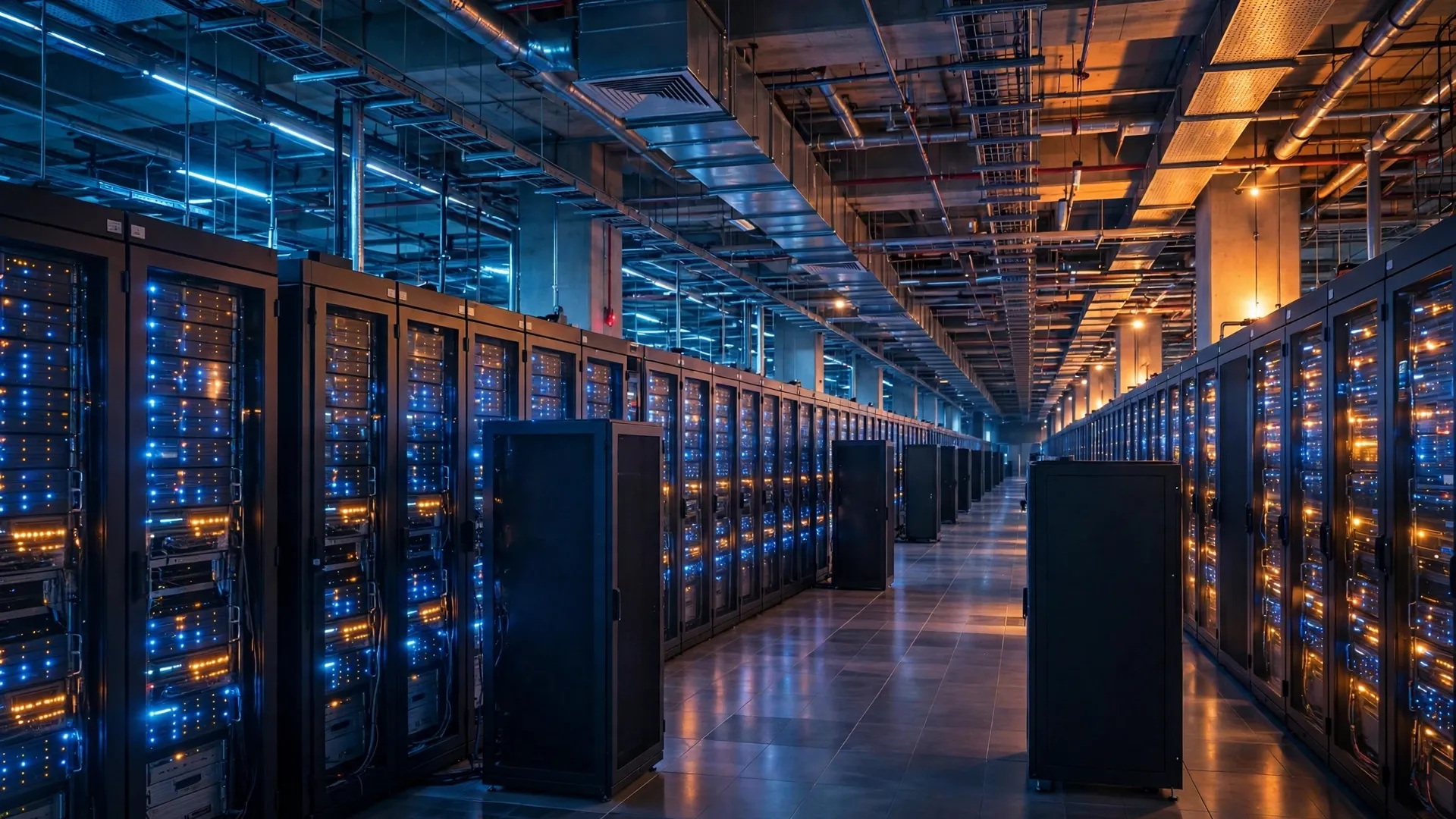
India has pulled in more than $300 billion in data-centre investment commitments in the past year, but a new report argues the boom is building infrastructure for the world's cloud giants rather than for India's own artificial intelligence industry. The Rhodium Group's "Hyperscaler Heaven? A Reality Check on India's AI Ambitions," written by Ankit Tiwari and Reva Goujon, finds domestic demand for AI computing far behind the capacity now being built — and warns the gap could define where India sits in the global AI race.
Operational data-centre capacity in India is projected to triple by 2030, and could grow as much as six-fold, the report notes. The build-out has been supercharged by policy: the February Union Budget for FY26 offered foreign hyperscalers a 20-year tax holiday when they sell services overseas, plus a goods and services tax input credit on capital assets, while data centres were declared core infrastructure, easing land acquisition and access to cheap credit.
Subsidised chips sit idle
The demand side, Rhodium argues, tells a very different story. The IndiaAI Mission, a $1 billion programme launched in 2024 to subsidise AI compute for startups and researchers, has seen nearly 80 percent of its graphics processing units sit unused, despite prices set at less than 40 percent below market rates. Coverage of the report puts utilisation at roughly 20 percent.
India's largest GPU-as-a-service operator illustrates the tilt. Yotta, which markets itself as India's "Trusted Sovereign AI Cloud," derives an estimated 80 percent of its revenue from foreign clients, according to the report. The company has agreed to distribute capacity through Nvidia's global compute marketplace, DGX Cloud Lepton, and plans to allocate half of its $7 billion worth of Nvidia GPU purchases this year to that platform. Domestic enterprise AI workloads, meanwhile, continue to route through global cloud providers rather than Indian servers.
A geopolitical prize, not just a market
Rhodium frames the boom as part of a larger contest. The United States has AI demand outstripping its own capacity and is racing to deploy infrastructure and services into third markets before China scales a full-stack alternative, the report says. India, for its part, has aligned its semiconductor export control list with US controls and adopted trusted-source requirements for telecom networks that effectively exclude Chinese equipment — positioning itself as a safe harbour for Western compute.
The risk, the authors argue, is that India ends up as the landlord rather than the tenant: hosting the world's AI infrastructure while its own developers remain customers of foreign clouds. Infosys estimates India's total addressable AI services market at $300–400 billion by 2030, but that prize depends on domestic firms actually using the capacity being built in their backyard.
Power and water will decide the pace
Physical constraints add a second reality check. Research from the Council on Energy, Environment and Water puts India's installed data-centre capacity at around 1.5 gigawatts by mid-2025, up from about 520 megawatts in 2020, and projects 4.5 to 9 gigawatts by 2030. Data centres already account for roughly 0.8 to 1 percent of India's electricity use, a share projected to reach 35–45 terawatt-hours a year by 2030, while the sector used an estimated 150 billion litres of water for cooling in 2025.
For now, the report's message is blunt: India can build compute, but it has not yet built the domestic demand to use it. Until Indian startups and enterprises become the main customers of Indian data centres, the $300 billion boom will mostly scale other countries' clouds.
By Hamza Faisal