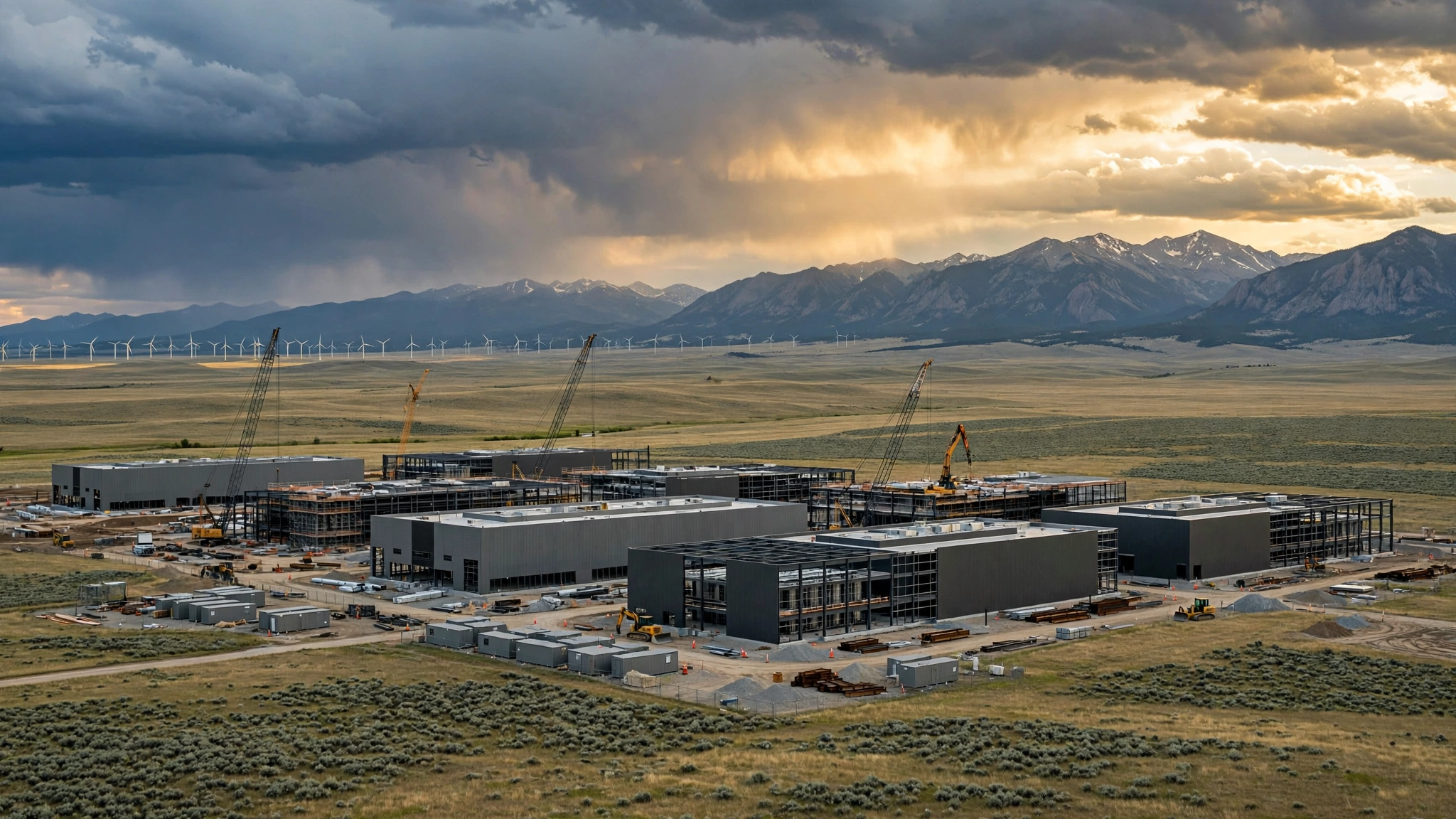
Google is heading to Wyoming. The company announced on November 5 that it will invest $17 billion to build its first data center in the state, a sprawling campus in Laramie County that underscores how far the AI infrastructure boom is spreading — and how much political resistance it is now meeting along the way.
The campus will sit on 716 acres in the Switchgrass Industrial Park, about eight miles south of Cheyenne, and is planned to include four data center halls plus office, logistics and network buildings, with completion expected around 2031. It is Google's first data center in Wyoming, and one of the largest single investments the company has ever made in a single site.
The announcement comes at an awkward moment for the industry. Just two days earlier, Democrats made broad gains in the US midterm elections, with opposition to data center development cited as a factor in several races. Of 41 data center-related ballot measures voted on this week, all but one went against data centers, according to Ballotpedia. Investors are also reassessing the buildout after a sharp selloff sent the Nasdaq down 5.52 percent on November 5.
A fuel-cell plant with carbon capture
The Wyoming project is designed to answer some of those concerns head-on. Google said it will pay for 100 percent of the electricity the data center uses and cover the infrastructure needs directly driven by its growth, so local ratepayers do not pick up the bill.
Part of the power will come from a planned 702-megawatt fuel-cell development equipped with carbon capture and storage, which Google describes as the first of its kind at commercial scale and the largest planned development of its kind to date. The fuel cells, supplied by Bloom Energy and manufactured in the United States, will convert natural gas into electricity, and the captured carbon dioxide will be stored permanently at Tallgrass Energy's nearby Eastern Wyoming Sequestration Hub.
American Electric Power, which is developing the fuel-cell plant, plans to invest about $4 billion in the project under a 20-year power purchase agreement with Google, with construction beginning in 2026 and full operation expected by the end of 2028. Google said the Wyoming project brings its total contracted carbon-capture capacity to nearly one gigawatt.
The full power-resource mix for the campus totals about 2.7 gigawatts, including reserve capacity, under agreements announced in October by utility provider Black Hills Corp. Google is developing the site in partnership with Tallgrass Energy, Black Hills Energy, AEP and Related Digital.
Why Wyoming, why now
Wyoming offers what data center builders increasingly prize: open land, cheap power resources and a welcoming political climate. The state is a Republican stronghold where Donald Trump won more than 70 percent of the presidential vote in 2024, and its officials have courted the project. Google said it expects the development to generate hundreds of millions of dollars in new property tax revenue for Laramie County and its school district.
The bigger picture
Data centers were once treated as uncontroversial economic development; this week they became a ballot-box issue, and the companies building them are now expected to show their work — on power, on water, on taxes and on carbon.
Google's pitch is that the Wyoming project does exactly that: a huge investment, paid-for power, carbon capture at scale and hundreds of millions in local tax revenue. Whether that formula is enough to keep the buildout moving in less friendly states is the question the whole industry will be watching. In Wyoming, at least, the answer for now is yes.
By Hamza Faisal


