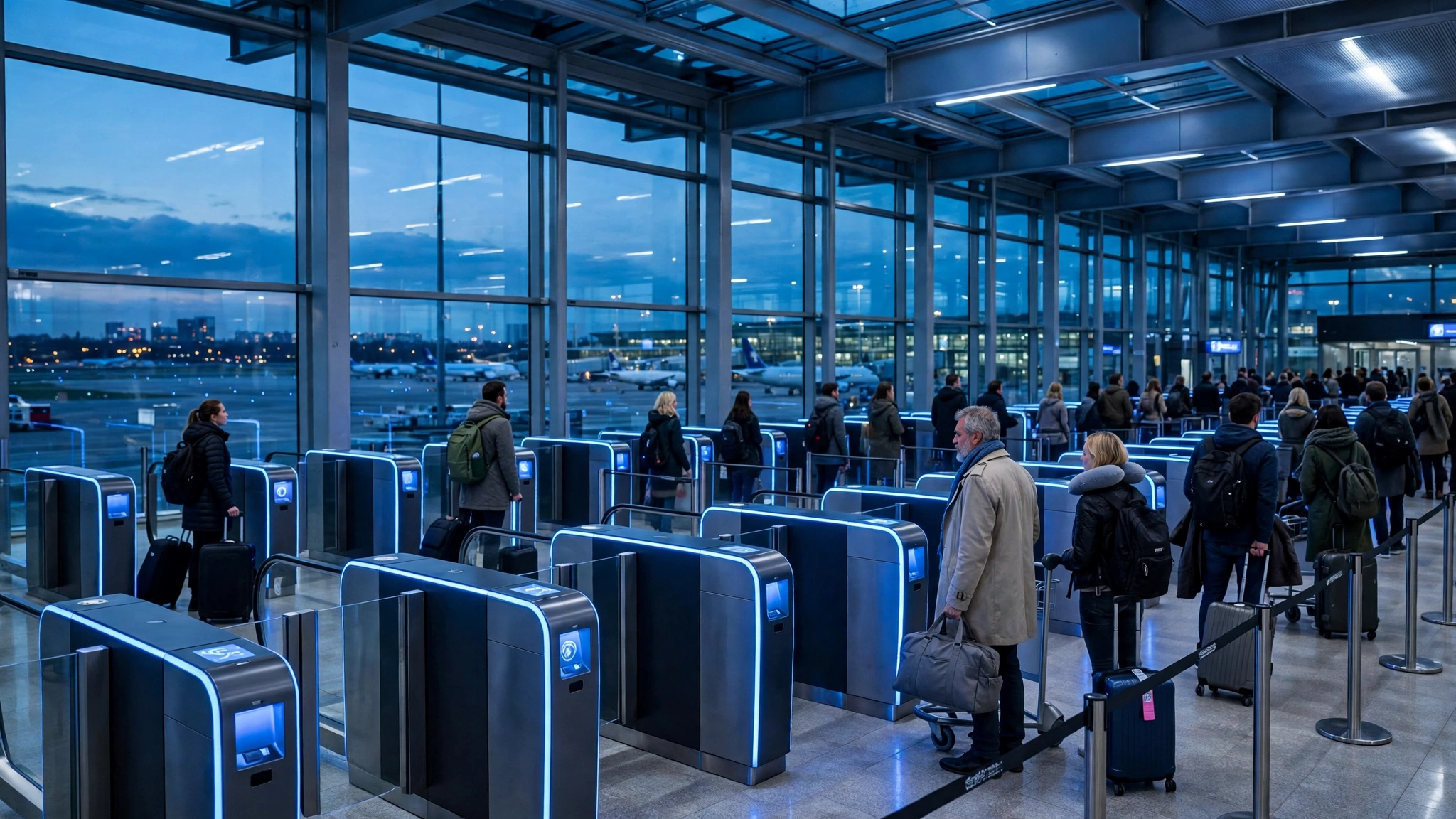
The European Union has sued IBM, Atos and Leonardo over years of delays in building its biometric Entry/Exit border system, the Financial Times reported on Monday. The bloc's IT agency, eu-LISA, confirmed the legal action, saying the dispute concerns the system's troubled development — not how it works today.
The Entry/Exit System, known as EES, electronically records the entry and exit of non-EU nationals at the external borders of the 29 Schengen countries. Travellers register by scanning their passports and having their fingerprints and photographs taken. The system is designed to spot people who overstay their visas, tackle identity fraud and help prevent illegal migration.
A system four years late
A consortium of IBM Belgium, Atos Belgium and Leonardo won the core contract to build and maintain the central EES system in 2019, on a six-year deal. The system was originally meant to go live in 2022, but deadline after deadline slipped — including a November 2024 launch date that the EU abandoned just weeks before it was due to start.
The rollout eventually began in stages in October 2025, and the system only became compulsory at every border crossing in April this year. Along the way the contract's value grew from about €142 million to about €212 million in 2021. Technical glitches, including malfunctioning fingerprint scanners, left travellers queuing for hours at airports across southern Europe during the summer of 2026.
A dispute years in the making
According to the Financial Times, citing internal communications, the consortium "repeatedly missed deadlines and disputed the agency's warnings and fines." The row over money goes back years: in an October 2021 letter, Atos Belgium and IBM Belgium contested "both the principle … and the calculation" of a fine imposed by eu-LISA, blaming the pandemic and other factors outside their control.
eu-LISA filed the lawsuit in Estonia, where the agency is headquartered, in December 2025, the newspaper reported. The case was brought at Harju county court, Estonia's largest district court. No hearing date has been set, and the amount the agency is claiming has not been disclosed.
Borders keep running
eu-LISA stressed that the court case will not disrupt travel. "The proceedings concern the system's development phase and have no impact on its current operation," a spokesperson said, adding that the system is fully operational across Europe. The European Commission has described the case in the same terms.
Reuters, which also reported the lawsuit, said it could not immediately verify the Financial Times account. IBM, Leonardo, Atos and eu-LISA did not immediately respond to requests for comment sent outside regular business hours.
The case is the latest fallout from one of the EU's largest technology projects, and its outcome could shape how the bloc contracts big IT work in future. For now, the message from Brussels is that the queues at the border are a matter for the courts — while the system itself keeps running.


