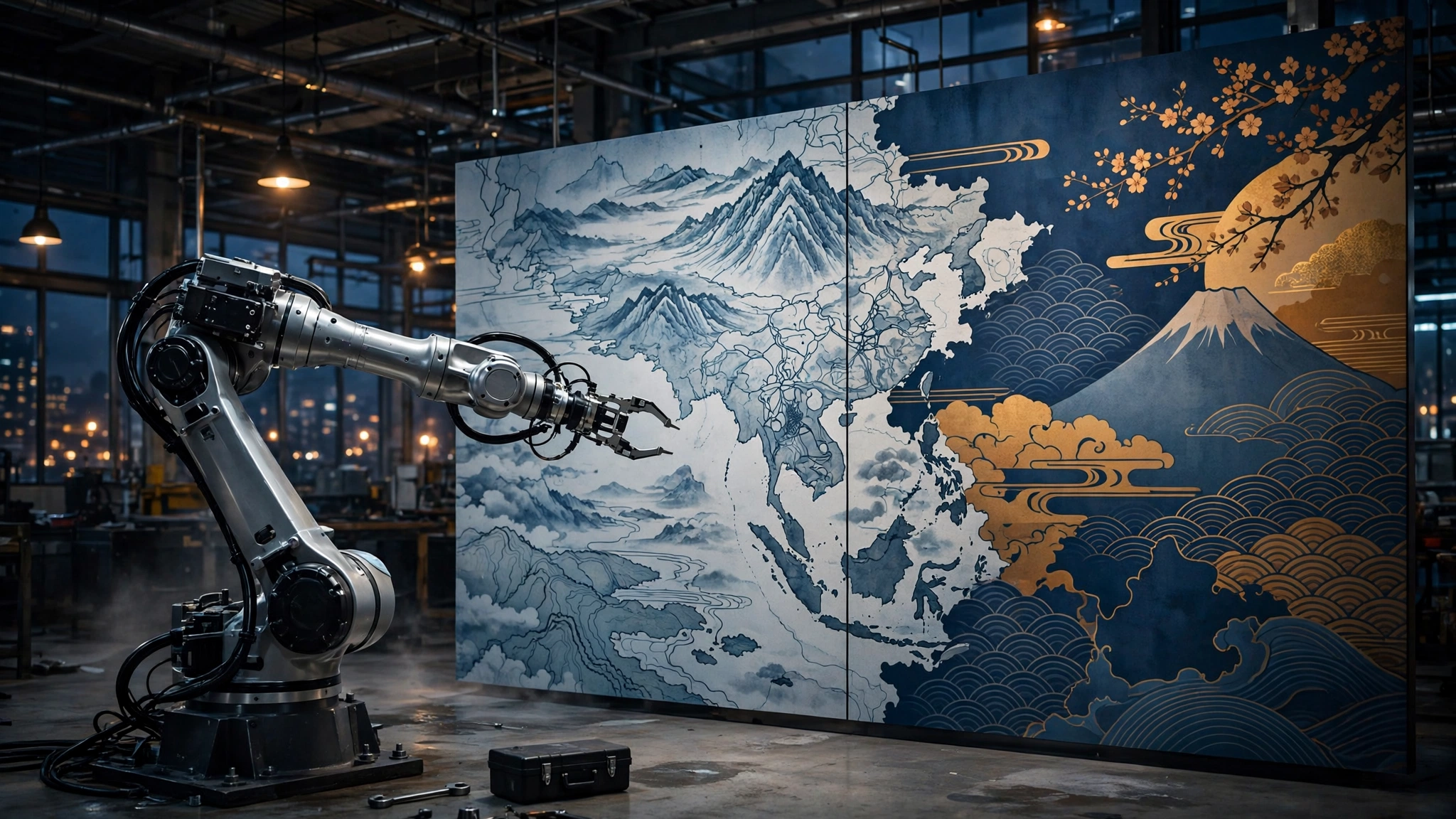
China has told SoftBank it will not allow the Japanese investor's $5.4 billion acquisition of ABB's robotics division to go ahead, the Financial Times reported on Thursday, citing multiple people familiar with the matter. The decision, relayed by China's top economic planner, lands a heavy blow on chief executive Masayoshi Son's ambition to turn SoftBank into a central player in artificial intelligence — including the physical, factory-floor kind.
SoftBank agreed in October 2025 to buy the Swiss engineering group's robotics business for about $5.375 billion, with completion planned for mid-to-late 2026. The unit employs more than 7,000 engineers and has roughly 500,000 robots installed at manufacturers around the world, including BMW. For Son, who has cast robotics as the next frontier of AI, it was meant to be a cornerstone deal.
Why Beijing balked
According to the FT report, SoftBank was informed of the decision by China's National Development and Reform Commission (NDRC). SoftBank had expected approval until last week, the newspaper said, and is now trying to establish what went wrong and whether it can seek approval again. The grounds for the decision were not disclosed.
The concern at the heart of the reported block is data. The NDRC was worried that operational data from ABB's robots could be transferred overseas and used to train AI models, including those developed by OpenAI, in which SoftBank is a major investor, the FT reported. That worry carries weight because China is ABB's biggest robots market, representing around 30 percent of the division's business — giving Beijing effective leverage over any change of ownership.
Reuters, which carried the FT's report, said it could not immediately verify it, and that SoftBank and ABB did not respond to requests for comment. China's NDRC could not be reached.
A setback for Son's physical AI bet
The reported block is a setback for what Son calls physical AI: machines that do not just answer questions but act in the real world, learning from the factory floors, warehouses and production lines where they work. ABB's robotics arm would have given SoftBank exactly that — hardware, engineers and a vast installed base generating real-world data.
Investors reacted swiftly. SoftBank shares fell about 5.5 percent in Tokyo on Thursday, a sign of how much of Son's AI story rested on the deal closing. The transaction had already won unconditional approval from the European Commission in March, while Washington's review had not concluded.
What happens next
SoftBank's options now look narrow but not closed. It could try to reapply, rework the deal's structure to address Beijing's data concerns, or walk away — leaving ABB to keep, or find another buyer for, a robotics business that remains one of the world's largest. Neither SoftBank nor ABB has laid out a public plan for what comes next.
Whatever happens, the episode underlines how industrial technology has become geopolitical. Robots are no longer just machines to be bought and sold; the data they collect is now treated as a strategic asset, and the biggest robotics market in the world has just shown it is willing to use that leverage. As China expands its own humanoid robotics and physical AI ambitions, deals like SoftBank's will face a harder road.


