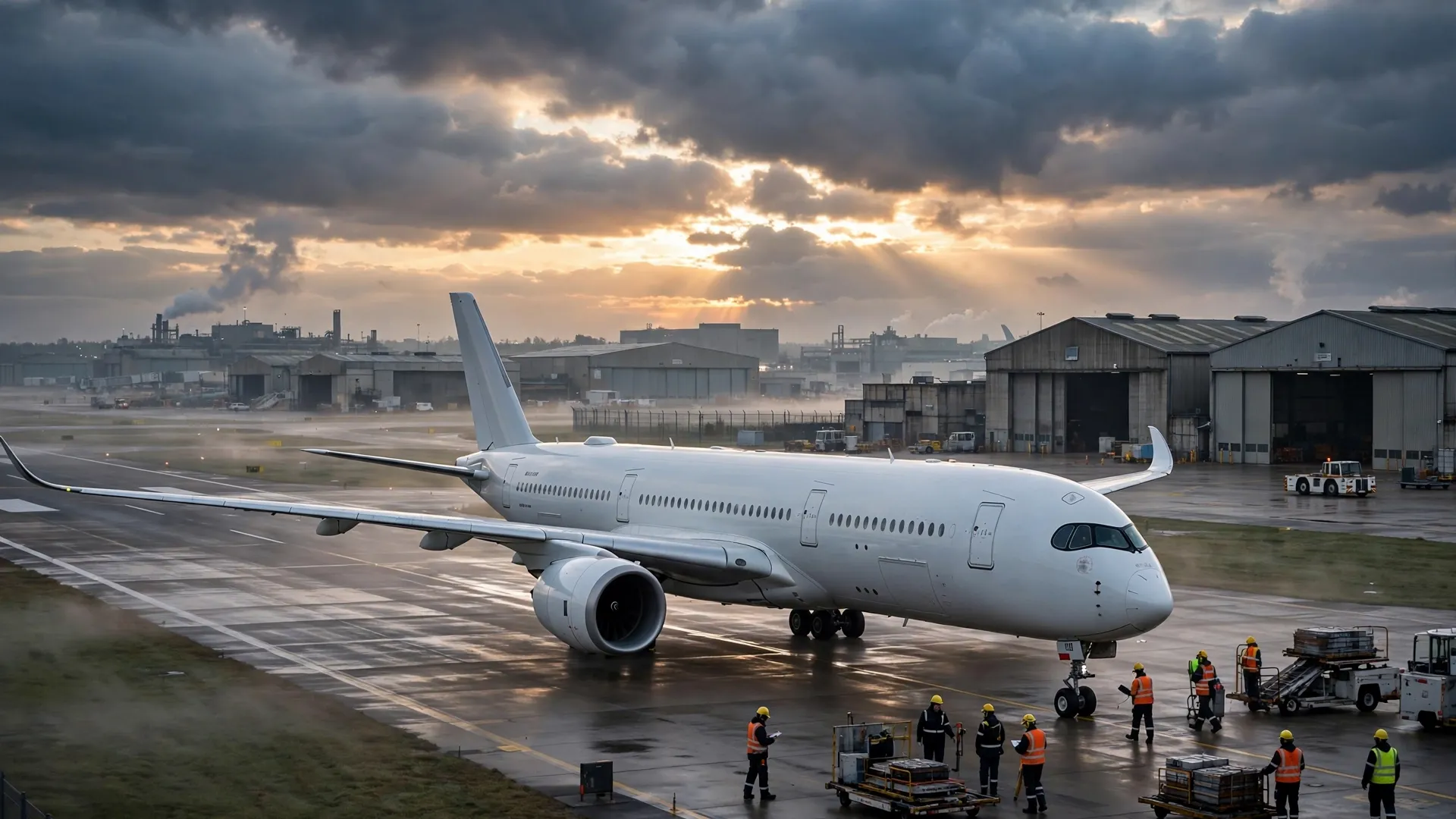
Boeing reported another quarterly loss on Tuesday, as persistent production problems in its commercial airplane business overshadowed stronger results from its defense and services divisions. The planemaker posted revenue of $24.19 billion for the third quarter, up about 4 percent from a year earlier, but its adjusted loss of 34 cents per share came in wider than the 21-cent loss analysts had expected, according to data compiled by LSEG. On a reported basis, the company lost 26 cents per share.
The results, released before the US market opened, extend a long and difficult turnaround for a company still working through years of crises that dented its reputation and left it carrying heavy debt. The headline numbers show how uneven that recovery remains: the jetliner business is still losing money, while the rest of the company is carrying the quarter.
Commercial airplanes drag on the quarter
Boeing Commercial Airplanes saw revenue dip slightly to $10.7 billion, with an operating loss of $697 million and a margin of negative 6.5 percent. In its earnings release, the company attributed the performance to less profitable jetliner deliveries and higher production costs, including from its supply chain.
The central problem remains the pace of 737 production. Boeing has struggled to lift output from 42 jets a month to 47 a month, a target it had hoped to reach during the summer. Chief executive Kelly Ortberg said at an industrial conference in September that the company had not been able to make wings fast enough, a bottleneck that has kept the ramp slower than planned.
Boeing had already reported its delivery tally for the quarter earlier in October: 161 commercial aircraft, including 124 737s, 22 787s, 10 767s and five 777s.
The quarter did bring one jetliner milestone: US regulators certified the two latest 737 MAX variants, the 737-7 and the 737-10.
Defense and services carry the results
The defense business provided the clearest bright spot. Higher deliveries, improved operational performance and a $252 million sale of a subsidiary contributed to nearly $500 million in quarterly earnings, with an operating margin of 6.2 percent, up from 1.7 percent in the same period last year. During the quarter, Boeing also won the US Navy's sixth-generation F/A-XX fighter contract, a major long-term win for the division.
Boeing Global Services, which handles aftermarket parts and support, posted quarterly earnings of $1 billion and an operating margin of 18.3 percent, again the company's most profitable segment by margin.
On the balance sheet, Boeing ended the quarter with $25.2 billion in net debt, down slightly from $25.9 billion in the previous quarter and $30.4 billion a year ago. Its total order backlog reached a record $745 billion, a sign that demand for its aircraft and services remains strong even while production and profitability lag.
What the miss means for the turnaround
The year-on-year comparison flatters the result. In the third quarter of 2025, Boeing lost $7.47 per share, a figure that included a $4.9 billion charge on the 777X program. Much of the apparent improvement since then reflects the absence of that charge rather than a sudden leap in underlying profitability.
For investors, the more telling question is whether stronger deliveries and services margins can translate into durable cash generation.
For now, the story of Boeing's quarter is a split one: a commercial business still wrestling with factory-floor constraints, and defense and services divisions doing enough to keep the turnaround moving, but not yet enough to return the company to profit.