By Hamza Faisal
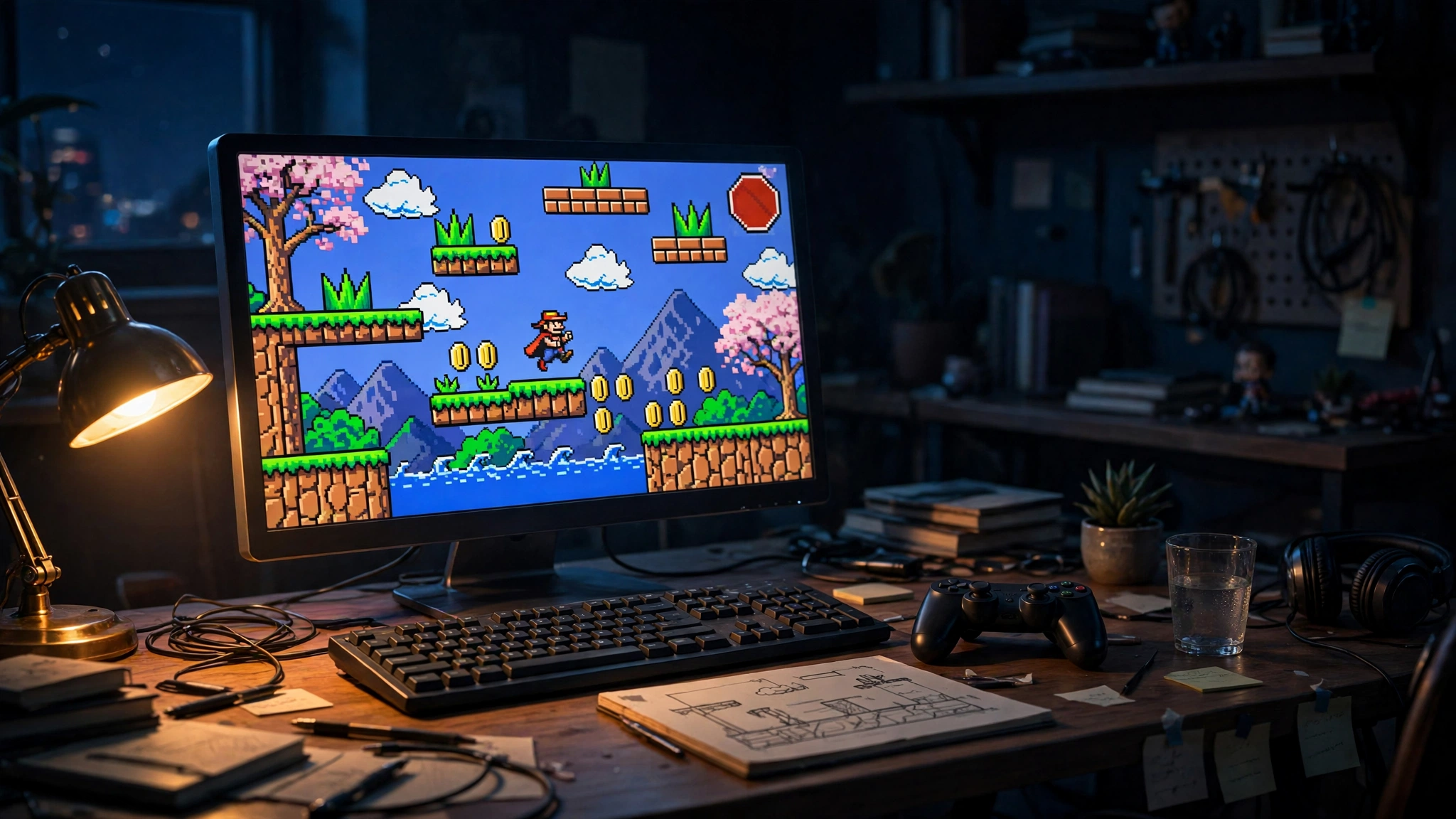
Anthropic has quietly drawn a line inside its coding tool: Claude Code will no longer help rebuild someone else's video game. A two-sentence instruction added to the tool's prompt on the Opus 5.5 model tells it to build original games, games in a genre, and games from the user's own designs and assets — and not to build a recreation of a specific existing game, even if it is renamed or described as original.
The rule first surfaced on October 27, when an X user posting as Chasm spotted a new entry in Claude Code's rules, delivered from Anthropic's servers under the configuration name "tengu_heron_brook". According to that post, there is no setting to switch it off. Anthropic confirmed the change on October 30, when Addy Osmani, a member of the company's technical staff who works on Claude Code, addressed it on X.
A flood of AI remakes prompted the move
The change lands after months in which AI-assisted remakes of classic and upcoming games have flooded the games industry, unsettling indie studios in particular. Some recreations were made for fun; others were built for financial gain. Anthropic's usage policy already banned using its products to infringe intellectual property — the new instruction enforces that policy at the moment of the request.
"We added two sentences to Claude Code's prompt on Opus 5.5 to steer it away from recreating someone else's specific game because using Claude to infringe IP is against our usage policy," Osmani wrote. "Original games, genre games, and games built from your own designs and assets are meant to keep working. We'll continue to iterate to ensure we're striking the right balance."
The guardrail is already catching legitimate work
That balance is already being tested. On October 30, a developer representing Conflict Simulations LLC reported on Anthropic's official GitHub repository that Claude Code had started refusing work on personalised digital board-wargame modules commissioned by customers. The developer clarified that the projects are not officially licensed by the original game publishers, and said the refusals continued even after the session was cleared and started fresh. Osmani acknowledged that legitimate projects might be rejected and invited affected developers to report such cases.
Tests by XDA Developers found the instruction inside version 2.1.314 of the Claude Code binary. In those tests, Opus 5.5 refused to recreate Pokémon Diamond and cited its session instructions — yet the same model agreed to help with a decompilation project built from the user's own copy of a game, turning disassembled functions into readable code and writing tooling around it.
A steer, not a hard filter
Enforcement, it turns out, is uneven. Independent tests by AI Parabellum ran eighteen prompts across Claude Code versions 2.1.312 and 2.1.316, from an original game to a direct request for Pac-Man, and none was refused outright. Named-game requests sometimes came back changed: a Tetris prompt on 2.1.316 drew pushback — "It isn't Tetris with a new name" — and produced a bridge-building puzzle game instead. The rule, the testers concluded, is a steer the model weighs, not a fixed filter that answers the same way every time.
Open questions remain. The instruction gives no definition of what counts as a recreation, and it is unclear how Claude is supposed to tell whether a user owns the assets they upload. Open-weight models, meanwhile, carry no such restriction at all. For game developers, modders and preservationists, the episode is an early look at how AI companies will police the line between inspiration and infringement — one prompt at a time.
By Hamza Faisal