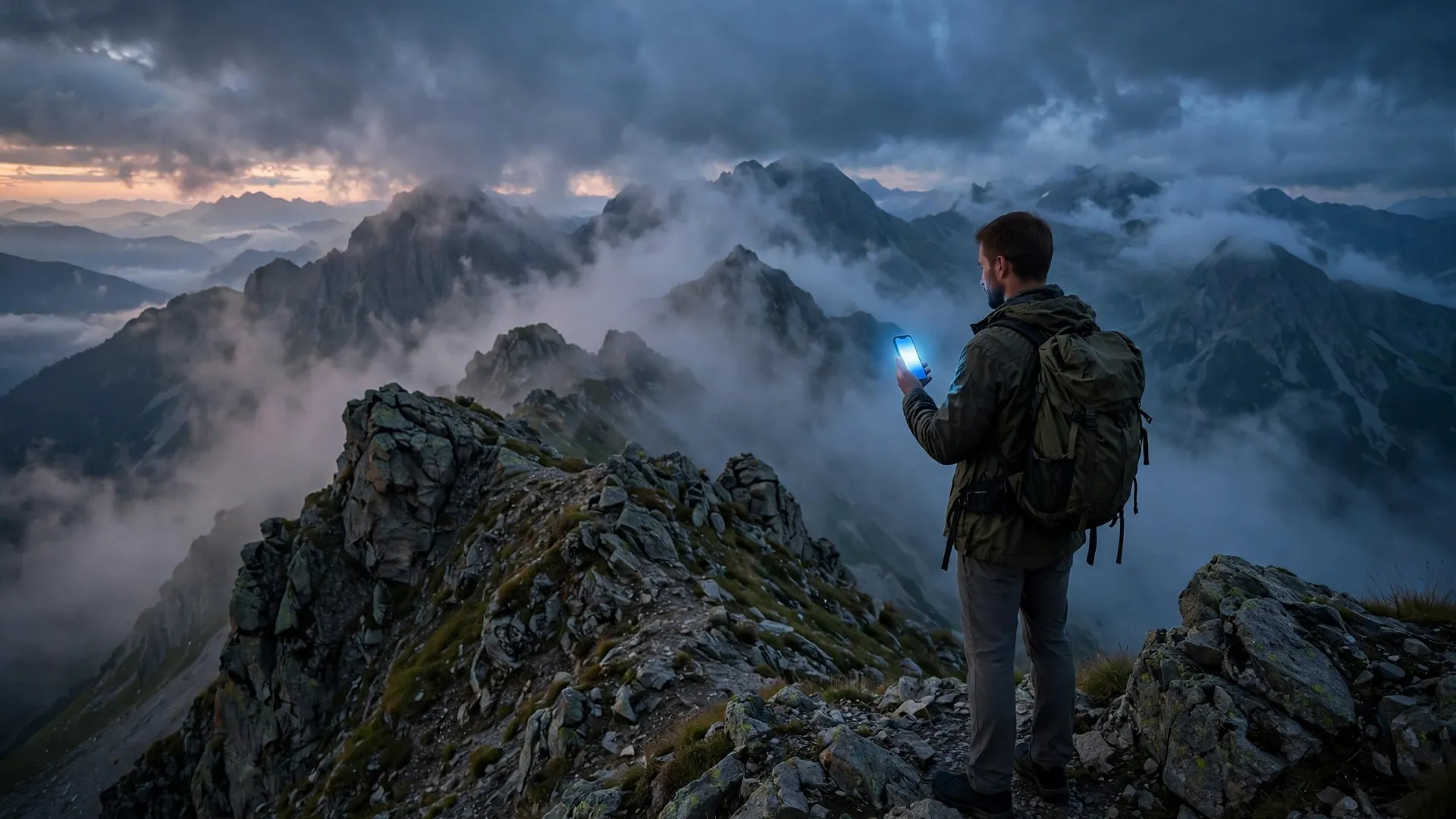
Three 20-year-olds set out on Mount Shasta in northern California with too little food, an overestimate of their own fitness and a trip plan shaped in part by Google's Gemini chatbot. They reached the summit at 7:30 p.m., started down in the dark, and by morning they were lost on a rock face, one of them with an injured knee, calling for help. It is one of several cases in a new WIRED report on hikers planning backcountry trips with AI chatbots.
Nick Meyers, program manager for the U.S. Forest Service's Mount Shasta Wilderness Climbing and Avalanche Center, told WIRED the Shasta group had at least tried to do some research. But in his view, they had, in effect, switched their brains off. The chatbot's guidance, he suggested, replaced the critical thinking that backcountry planning demands.
A pattern rescuers keep seeing
The Shasta incident is not an isolated case, according to the report. Meyers described another Mount Shasta visitor who pitched her tent beside a "No Camping" sign and insisted the spot was allowed because AI had told her so. His team also met a man at a trailhead carrying an AI-generated map that placed prominent features on the wrong side of a nearby mountain.
In British Columbia, a helicopter crew rescued a 16-year-old from a ledge on the Widowmaker Arete on Crown Mountain. The teenager had used Anthropic's Claude chatbot to help plan the trip, though he later said he had also consulted Google Maps and the AllTrails app.
Search-and-rescue veterans quoted by WIRED see the trend as the latest version of an old problem: a decade ago social media sent inexperienced hikers chasing photogenic summits; now the same dynamic arrives with hallucinated route details.
Why confident answers are the danger
The core problem, experts say, is not that chatbots are always wrong — it is that they sound certain even when they are not. Chris Flathmann, a professor of human-centered computing at Clemson University, told WIRED that chatbots can hallucinate, presenting false information with confidence. That can lead to what he calls "cognitive surrender," in which the user stops reasoning critically.
"If AI pretends to be an expert on a subject the user does not know, the user lacks the tools to challenge it," Flathmann said. A chatbot may stitch together route advice from Reddit threads or outdated videos, or invent trail conditions entirely — and a first-time visitor has no easy way to tell.
At Grand Teton National Park in Wyoming, Superintendent Chip Jenkins told WIRED that the share of visitors who say they use AI for travel information has climbed from zero to 26 percent in about a year. "And I'm guessing that curve is not going to flatten," he said.
The numbers do not tell a simple story
Notably, the report does not show chatbot use driving a surge in accidents yet. Meyers said his office averages about a dozen rescues a year and that 2026 is shaping up to be an average year. In Wyoming, search-and-rescue calls have actually fallen, with 312 recorded so far in 2026, compared with 466 in all of 2025 and 377 in 2024.
The advice from rescuers is the same no matter what tool a hiker uses. Before heading somewhere new, double-check any plan against current maps and websites from the public-land agency that manages the area, trail association sites or guidebooks — and, where possible, talk to a guide, a forest officer or a park ranger.
"If you're going to go into places that will kill you," Meyers said, "you should take your planning seriously."