Anthropic has given employers a new window into how their staff use artificial intelligence. Its Smart Reports feature, now generally available for Claude Enterprise customers, reads a sample of a team's Claude conversations and turns them into a management dashboard: what work got done, what it cost, where people got stuck, and which sessions drifted off-topic.
The launch, announced on October 28 alongside in-app surveys and pooled group budgets, is the first time Claude itself has summarised employees' conversations for their bosses. Anthropic pitches it as a way to measure the return on AI spending. Critics see something else: a surveillance tool dressed up as analytics.
What Smart Reports actually show
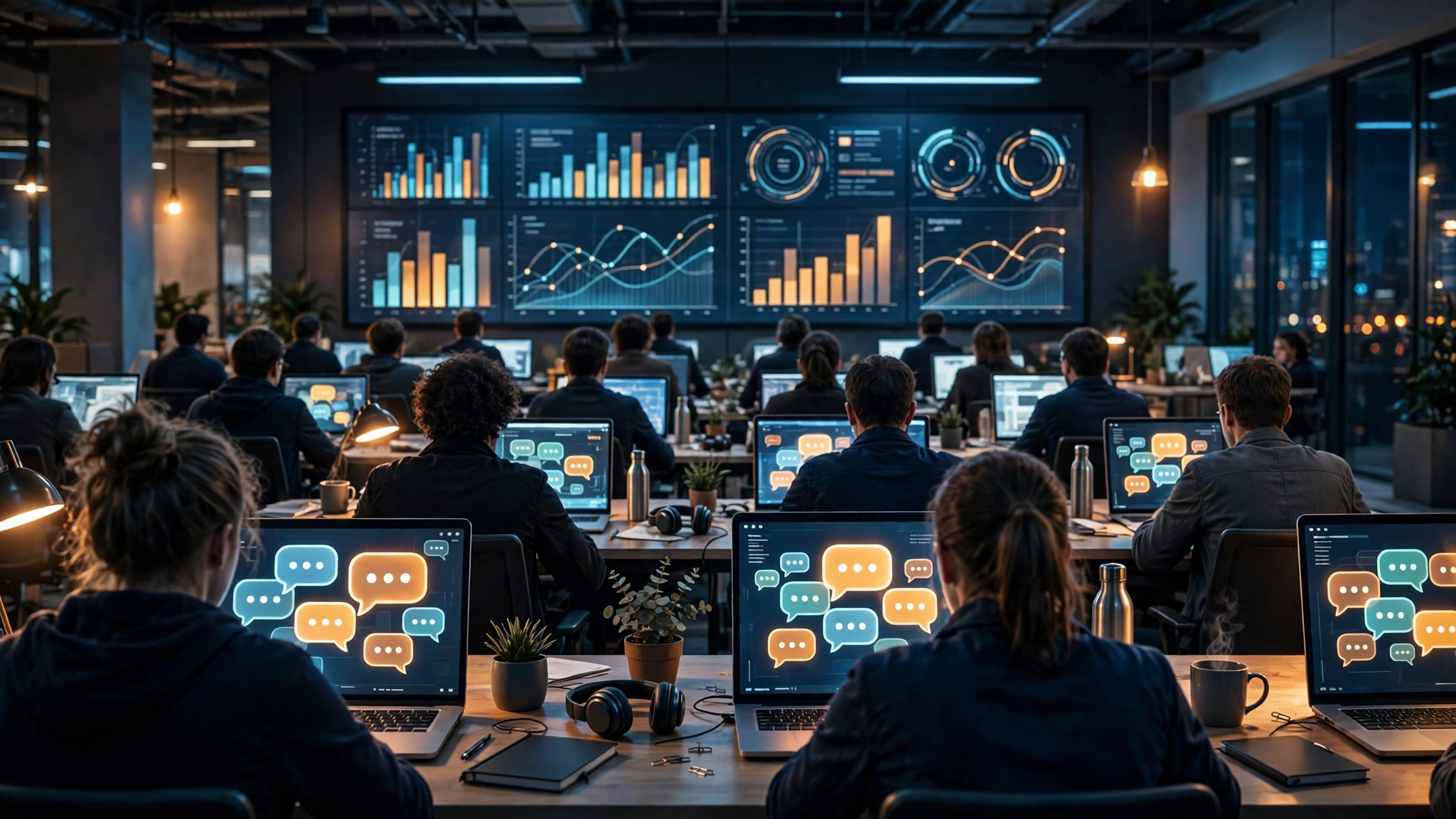
An administrator picks a team, a reporting window of up to the previous 28 days, and which Claude products to include — standard chat, Claude Code, Claude Cowork, or the combined chat and Cowork experience. Claude then reads a sample of the transcripts in scope, not every conversation, and groups the activity into workstreams and output types, such as technical documentation or software projects, alongside a tally of what the work cost at list price.
The report arrives as interactive charts. Managers can drill into a workstream, filter sessions by cost or output type, and ask their own questions about usage and spending. It also flags friction points and suggests fixes, such as turning a repeated task into a reusable skill. Each organisation gets up to 10 reports a month at no extra charge.
The most sensitive category is one Anthropic calls "inefficiencies": sessions that produced no usable output and sessions the system classifies as personal or off-topic. Anthropic stresses that personal and off-topic sessions appear only as an aggregate count and cost, with no summaries and no drill-down into individual chats — but for employees, a chat they assumed was private can still end up as a data point on a manager's dashboard.
The privacy guardrails — and their limits
Anthropic says Smart Reports are meant for understanding adoption and planning investment, not for judging individual performance or making employment decisions. Names are hidden by default: drill-downs show "User" rather than a name, unless an organisation owner switches on attribution — in which case a viewer's identity can be revealed on demand, with every reveal logged automatically.
The tool also refuses questions about protected topics, including race, religion, political views, health, union activity and harassment complaints. Sessions involving restricted topics are used only for aggregate analysis. The feature ships switched off — an organisation must enable it first.
Those safeguards have not calmed the reaction. On social media, workers have called the feature workplace surveillance, with one widely shared comment joking that "Claude needs to learn that snitches get stitches." Coverage has also noted the feature is not available everywhere, with UNILAD Tech reporting restrictions in more than 30 countries — a reminder that employment and data-protection rules differ sharply by jurisdiction.
Why employers want this — and why it matters now
For Anthropic, the pitch is straightforward: companies spending heavily on AI want proof the money is working, and Smart Reports connect spending to visible output.
For workers, the stakes are different. As AI assistants handle more of the working day — drafting documents, writing code, answering questions — the line between measuring a tool and monitoring a person gets thinner. Whether Smart Reports become a routine management report or a cautionary tale will depend less on what the dashboard shows than on how employers choose to use it — and whether employees ever find out it was switched on.