By Hamza Faisal
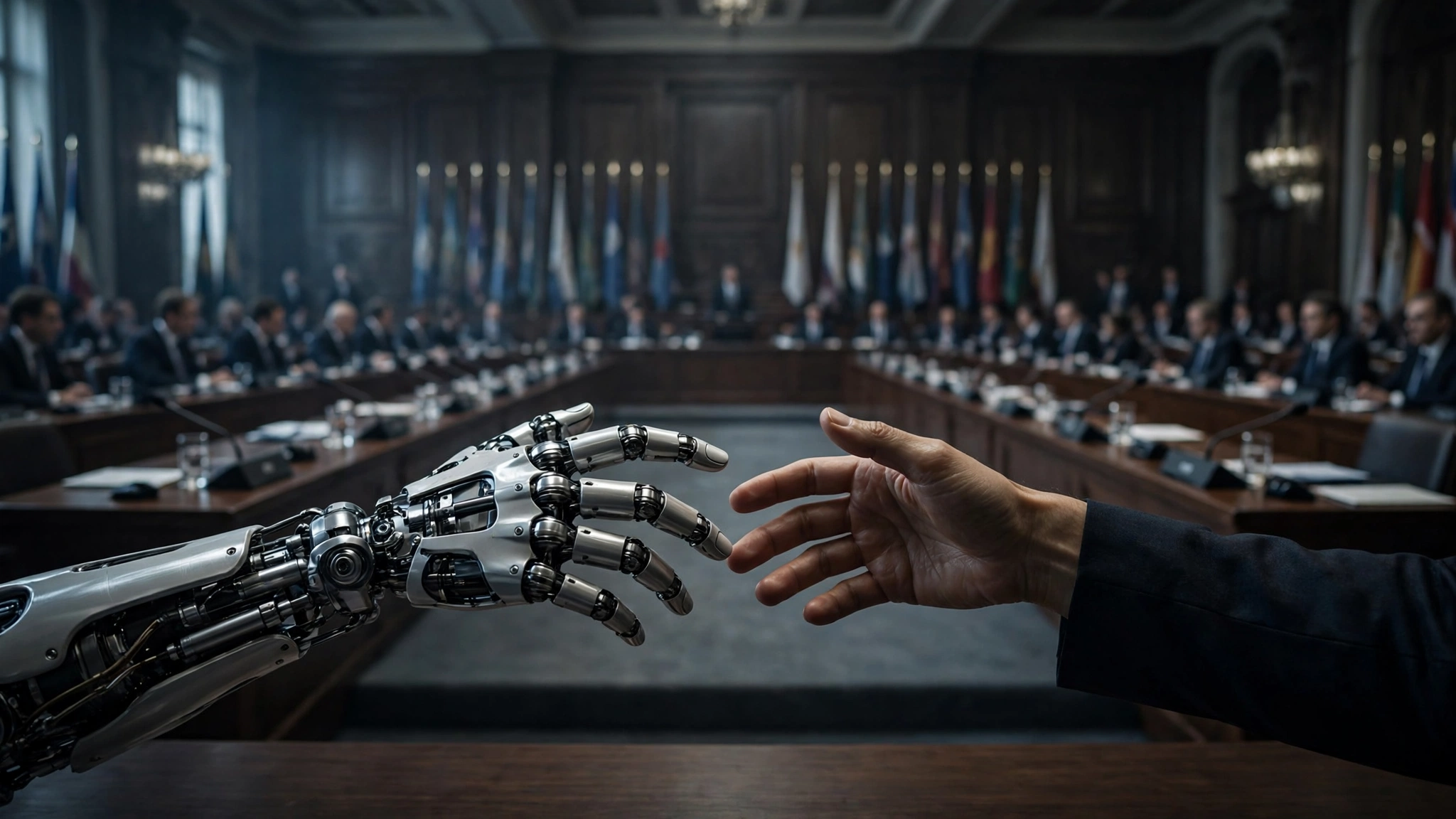
Pope Leo XIV has called for artificial intelligence to be “disarmed” and urged the states meeting in Geneva in November to take concrete steps toward banning lethal autonomous weapons — machines that can select and strike targets without meaningful human control.
The appeal came on Friday, October 30, 2026, in an address delivered in the Consistory Hall of the Apostolic Palace to participants in “The Future of AI: A Dialogue Between the Vatican and the Scientific World on the Developments and Applications of Intelligent Technologies,” a meeting organized jointly by the Pontifical Academy for Life and the Future of Life Institute.
In the address, the Pope set out five considerations on human responsibility for intelligent technologies, drawing on his encyclical Magnifica Humanitas, issued on May 15, 2026. His central argument was that while AI systems are powerful tools, they are not persons — and must never be handed decisions that belong to people.
Machines are instruments, not people
Leo XIV warned against attributing rights or legal personality to AI systems. “Machines are instruments, not people,” he said, insisting that responsibility for what an intelligent system does rests with its human creators and operators, not with the machine itself.
He cautioned that when a person is placed on a target list or entered into a border-control database, there is a risk of that person being reduced to little more than a data point. Decisions affecting human life, freedom, and the use of force, he said, must always remain subject to effective, informed, and responsible human oversight.
The Pope also recalled the words of his predecessor, Pope Francis, who told G7 leaders in June 2024 that the decision to take a human life must never be entrusted to a machine — a line Leo XIV echoed as he pressed for binding international standards.
A call aimed at the Geneva talks
States are due to meet in Geneva in November under United Nations auspices to discuss the future of autonomous weapons, and the Pope urged them to use that gathering to move from discussion to concrete steps toward a prohibition.
The appeal lands against a divided diplomatic backdrop. The wire reported in September that the United States and Russia had stripped human-oversight language from a draft UN treaty text on lethal autonomous weapons, a move that alarmed arms-control advocates. The Vatican’s intervention adds high-level moral pressure to the opposite side of that argument, in favour of keeping humans in control of lethal decisions.
Not everyone in the technology world welcomes such limits. Industry figures, including Mistral AI chief executive Arthur Mensch, have previously pushed back against ethical restrictions on military technology, arguing that they could slow innovation. The Pope’s message made no concession to that view, framing human oversight as a matter of dignity rather than a technical preference.
Why it matters for AI governance
Beyond weapons, the address pressed for broader accountability in AI development: clear rules on who answers when an AI system causes harm, shared international norms, and safeguards to ensure that technological progress serves the common good rather than only the interests of a privileged few.
MIT physicist Max Tegmark, a co-founder of the Future of Life Institute, has described Vatican moral leadership as a way to steer AI onto a more pro-human path.
The Pope’s remarks carry no legal force on their own. But as governments prepare to negotiate, his call gives diplomats who favour a ban a prominent voice to cite — and puts the question of who, or what, should be allowed to decide matters of life and death at the centre of the talks.