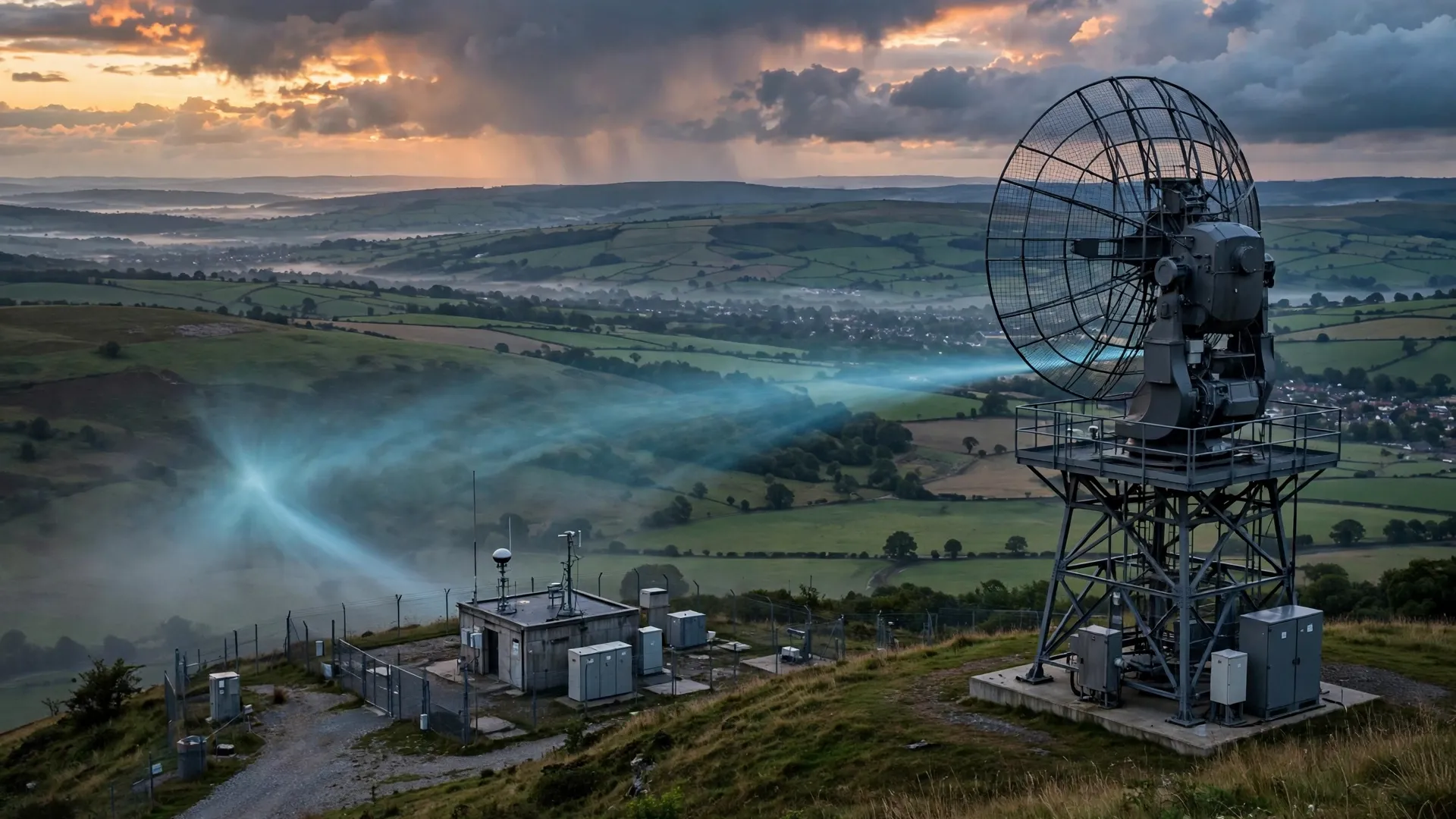
Romania has signed a 326.5 million lei contract with Thales for four deployable radar systems that will watch over both civil and military airspace and guide aircraft safely to the ground in poor visibility. The deal, signed on Tuesday, is worth about $68.1 million, or 61 million euros, excluding VAT, and was awarded to a consortium of Thales LAS France and Thales Romania.
The four mobile approach control and landing radar systems will be delivered in phases to four Romanian Air Force locations, with deliveries starting in 2028 and running through 2030 under a multi-year contract. Once in place, they will feed real-time target data to national and NATO command-and-control systems around the clock and in all weather conditions.
What the systems can do
Each deployable Ground Controlled Approach system combines three elements. The STAR NG is a scalable S-band primary surveillance radar for approach control, with coverage of up to 60 nautical miles across civil and military applications, including airports and air base environments. Alongside it, the RSM NG/IFF combines NATO Mode 5 and EUROCONTROL Mode S interrogation with ADS-B detection in a single system, allowing aircraft to be identified across key defence and civil standards.
Thales will also install four Precision Approach Radars, which give air traffic controllers precise, real-time information on an aircraft's position relative to the runway centreline and glide path. That matters most when visual references are limited: the systems support approaches and recoveries in challenging weather and low-visibility conditions, and at locations where fixed infrastructure may not be available or sufficient.
The systems are cybersecure by design and comply with the latest EUROCONTROL and ICAO recommendations, a point Thales stresses for interoperability with NATO on the alliance's eastern flank.
Why mobility matters now
The central selling point of the purchase is that the radars move. By selecting a deployable solution, Romania is strengthening its ability to relocate air operations and keep operating from alternative sites, reducing its reliance on fixed airbase infrastructure. If a fixed site is damaged, degraded or simply not where aircraft need to be, a mobile radar can restore the air picture somewhere else.
That resilience has a direct backdrop. Romania shares a 614-kilometre border with Ukraine and has repeatedly reported Russian drone incursions into its airspace since Moscow's full-scale invasion of Ukraine in 2022. Romania has begun shooting down drones that enter its airspace, making reliable detection and tracking a live operational requirement rather than a theoretical one.
Part of a wider radar build-up
Tuesday's contract is not Romania's first recent radar order from Thales. In July 2026, Bucharest signed a deal for 12 Ground Master 200 multi-mission radars under the European Union's SAFE financing framework, valued at about 247 million euros, with the first deliveries expected in 2027. The new deployable systems complement that air-surveillance layer with mobile approach and landing capability.
Thales brings almost 60 years of air traffic control and surveillance experience to the programme, with more than 1,200 systems delivered across more than 100 countries. Its Romanian team will work with the defence ministry and local stakeholders on deployment, integration and long-term availability.
"By choosing our deployable dual-use radars, Romania will be able to rely on the robustness and reliability of our global military air traffic control solutions," said Lionel de Castellane, Thales vice president for air traffic and coastal radars, "and count on our commitment to supporting its efforts to enhance its airspace and its interoperability with NATO."