By Hamza Faisal
Elon Musk just put the biggest "what if" in tech on the table officially: merging SpaceX and Tesla. Speaking on SpaceX's third-quarter earnings call on Tuesday, Musk revealed that both companies' boards have formed special committees of independent directors to review a possible merger — the first formal confirmation that the two giants are seriously talking.
The committees were created at the request of shareholders, Musk said, answering a question from Deutsche Bank analyst Edison Yu. "Because I'm a conflicted party, I can't actually be in the discussions of the special committees," he said. "So it's an odd kabuki dance where two groups of people are talking, and I can't be in the conversation."
Why Musk wants it
Musk is the chief executive and largest individual shareholder of both companies — he owns 48.4% of SpaceX with more than 82% of its voting power, and roughly 20% of Tesla — which is exactly why he has to sit this one out.
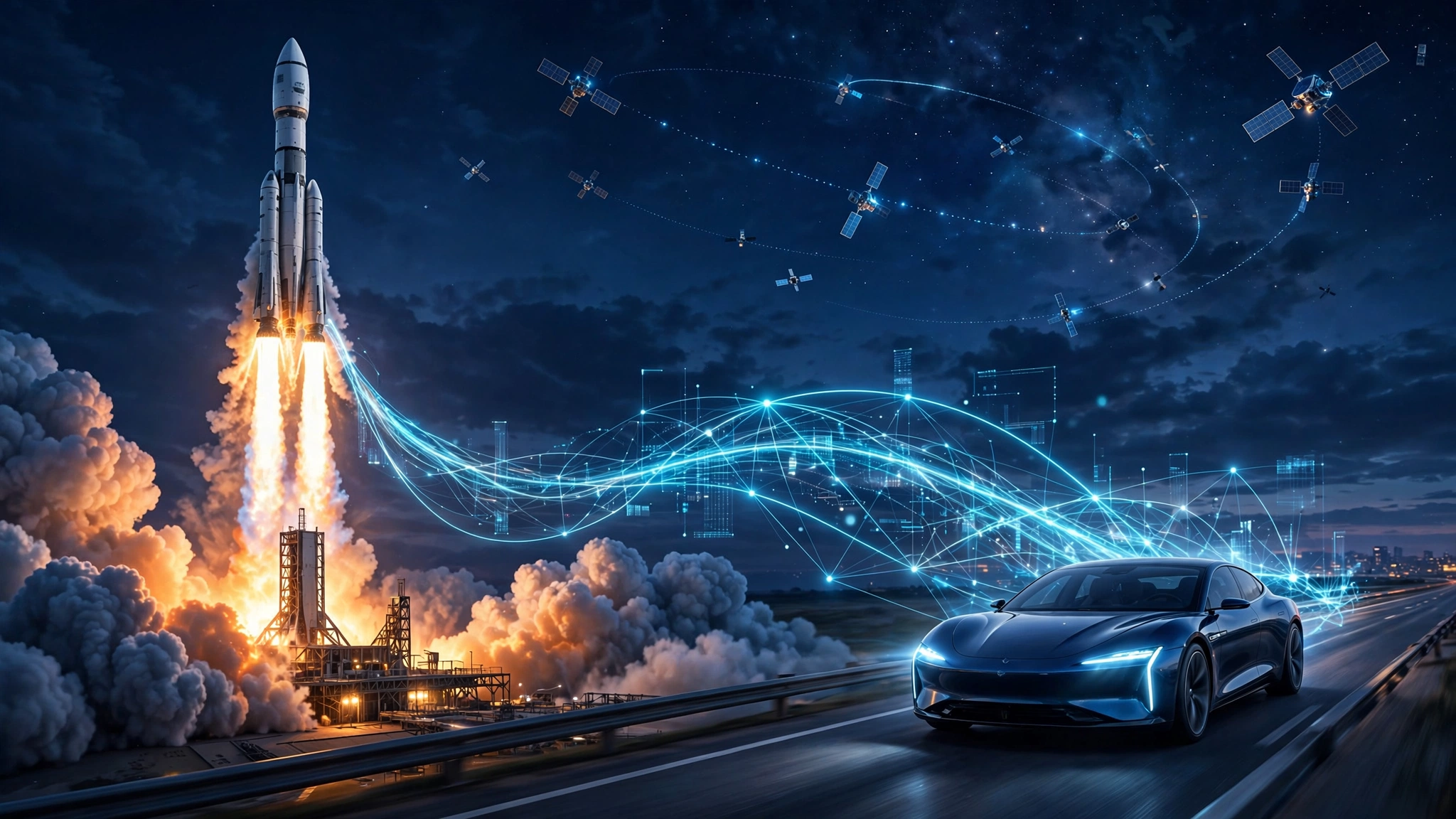
But he made his own view plain: "Do I think it would be a good idea? Yes. I think there is a great deal to be gained through cooperation." The case, he said, rests on shared work in superintelligence software, chip design, the Terafab, robotics — and the brute-force physics of getting mass to orbit for the satellite network. "We are almost at the singularity of superintelligence," he said. "There are significant advantages to combining the two companies."
No deal yet — and a high bar
Musk was quick to cool any assumption that a merger is inevitable. "Some people out there assume that a SpaceX and Tesla merger is a certainty, and I think that would be overstating it," he said. The committees have not agreed on any terms, and any transaction would need shareholder approval on both sides — including, on Tesla's side, a majority of ALL outstanding shares, not just those that vote. "That's quite a high hurdle," Musk admitted.
Barclays analyst Dan Levy suggested in an October 14 note that a deal could be announced before Tesla's annual meeting in December — a timeline that now has its first official scaffolding.
The numbers behind the moment
The disclosure landed on a monster quarter for SpaceX. The company posted a $4.4 billion net profit — versus a $1.1 billion loss a year earlier — on revenue that jumped 161% to $14.58 billion, its first profit as a public company after its record June 12 IPO at $135. Its AI unit alone pulled in roughly $7.6 billion. SpaceX shares rose about 5% in extended trading; Tesla added 2%.
The committees themselves are drawn from the independent directors on each board — seven at Tesla under Nasdaq rules, including chair Robyn Denholm, and six at SpaceX — though Musk did not name the members. Whatever they decide, the final call belongs to the shareholders. "At the end of the day the shareholders have to be supportive of this," Musk said.
By Hamza Faisal