By Hamza Faisal
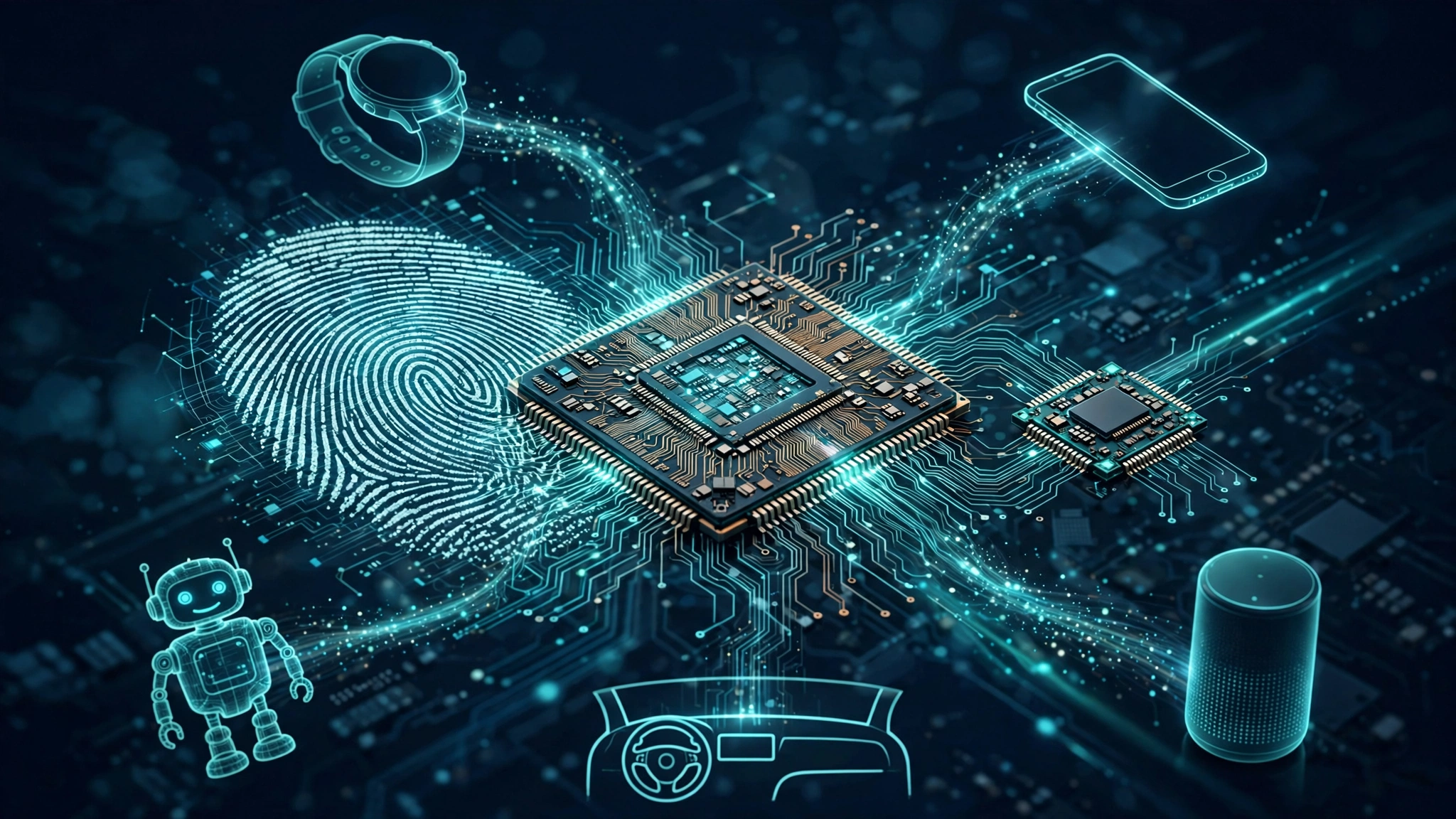
Chinese chipmaker Goodix has unveiled a new fingerprint and security portfolio built for a world where everything from phones to robots to car dashboards needs to prove who is touching it. The lineup, announced on October 19, pairs the company's fingerprint sensors with embedded security hardware aimed at locking down on-device identity for IoT and AI edge gadgets.
Three tiers, one new combination
Goodix is offering three tiers of fingerprint authentication. The familiar Match-on-Host (MoH) keeps matching logic on the device's main processor, while Match-on-Chip (MoC) moves the entire biometric pipeline — image capture, feature extraction, template storage and matching — inside the fingerprint module itself. Matching inside the module means fingerprint data never leaves it, and it offloads work from the host processor, which the company says suits lightweight, long-battery-life devices that need fast response.
The new headline act is an integrated Fingerprint MoC + eSE solution: a high-performance embedded secure element (eSE) chip paired with the MoC module. The eSE stores critical assets like API keys and account login tokens behind hardware-enforced physical isolation, and the fingerprint module sends its match results to the secure element over an encrypted channel so the eSE can confirm the real user authorized the interaction.
Built for the AI-agent era
The security pitch is squarely aimed at agentic AI. The solution supports FIDO2 authentication and a full implementation of TLS 1.3, with API keys and OAuth tokens managed inside the secure element throughout their lifecycle and communications encrypted end to end — what Goodix describes as a zero-trust architecture on the device: never trust, always verify.
Notably, the eSE enforces security policies such as requiring biometric authorization for high-risk operations and keeps tamper-resistant audit logs that even AI agents running on the device cannot alter. When credentials are used to reach cloud-based large language models, they travel over an encrypted channel from the secure element to the cloud and are never exposed in plaintext to the host processor.
Capacitive, optical and ultrasonic
The portfolio spans Goodix's three sensing technologies. Capacitive sensors support flat, curved, round, square and narrow-strip designs; optical sensors work beneath OLED displays and support larger sensing areas; and the ultrasonic option targets screenless IoT and AI devices, with finger-press detection that works even with wet or oily fingers.
Goodix points to IDC data estimating that China's market for secure AI agent applications will reach US$1.6 billion by 2028, growing at a compound annual rate above 230 percent. The company says it will keep pushing deeper integration of biometrics and security with customers and partners worldwide, targeting AI smartphones and PCs, wearables, smart homes, robots and intelligent cockpits.
By Hamza Faisal