By Hamza Faisal
Zipline, the drone delivery company that spent a decade being told its idea would never work, is now worth $21.5 billion. The company announced on Thursday that it has raised $1.5 billion at that post-money valuation, nearly tripling its worth since January — and Walmart is betting the idea has finally arrived, signing a national deal to add 300 more Zipline delivery sites.
The round was led by Paradigm, WCM Investment Management and Layer Global, with Valor Equity Partners, Fidelity Management & Research, Uber, Tiger Global, J.P. Morgan, ARK Invest and Salesforce Ventures joining. It is Zipline's third raise of the year, after more than $600 million in January at a $7.6 billion valuation and a $200 million extension in March — about $2.3 billion in 2026 alone. Bloomberg had reported in September that Zipline was in talks to raise about $1 billion at roughly $20 billion; the final deal came in above both figures.
Walmart's 300-site bet
Walmart signed a multi-year national agreement to launch 300 additional Zipline sites, with room to grow further. When Walmart announced its millionth drone delivery in May, its whole programme ran from 66 stores in four states. Zipline's Walmart business until now covered a single metro area and one Arkansas hub. The release names no states and no date for the first of the 300 new sites.
Zipline says the money will go into expanding US manufacturing and hiring to build a nationwide delivery network. It says it has made more than one million deliveries in the Dallas-Fort Worth area in 2026, the median October order arriving 19 minutes after checkout. Among its longest-tenured restaurant partners, its share of delivery revenue climbed from 10.8 percent in March to 34.9 percent in October, while delivery sales rose 26 percent — figures it presents as evidence drone orders are new business, not orders moved off other apps.
From 'almost dead' to $21.5 billion
Chief executive Keller Rinaudo Cliffton marked the raise with a thread on X, writing that for its first ten years investors did not think the company was "investable" and that about two years ago it "almost died". Zipline began on a cow farm, working out of run-down construction trailers.
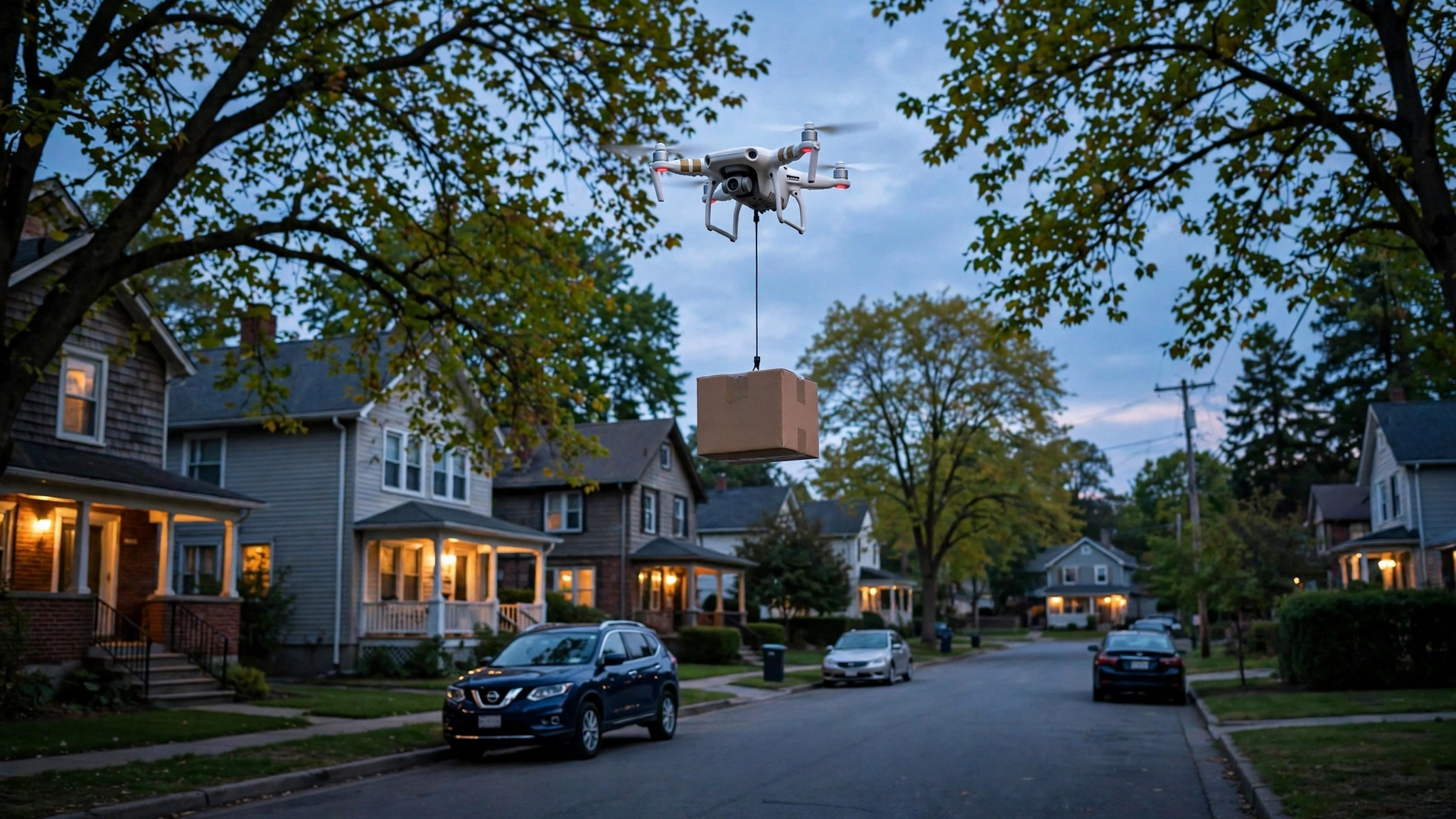
Its Platform 2 aircraft made its first customer delivery in January 2025, and Rinaudo Cliffton says flight volume has grown about 100 times over the past 18 months, with more than a million deliveries a year per metro. The company says its drones have flown more than 150 million autonomous miles with no safety incidents, and that its aircraft are six times quieter than the closest competitor during delivery. The Platform 2 drone carries up to 8 pounds, serves a radius of about 10 miles at around 70 mph, and lowers packages from about 330 feet.
The rule that could unlock the map
Zipline still flies under Federal Aviation Administration Part 135 air carrier approvals. The FAA's Part 108 rule, which would make beyond-visual-line-of-sight flight routine instead of waiver by waiver, was pending review at the White House regulatory office on November 5. A final rule would lower the cost of scaling to hundreds of new sites.
The timing is notable: Amazon asked to withdraw a Prime Air pad application in Massachusetts on October 30, a reminder that drone delivery's biggest names have stumbled where Zipline is now expanding. After a decade of being called uninvestable, Zipline's pitch is no longer that drones can deliver — it is that they already do, at a scale Walmart is now willing to pay to multiply.